Holika Dahan 2026: Muhurat, Story & Bonfire Ritual
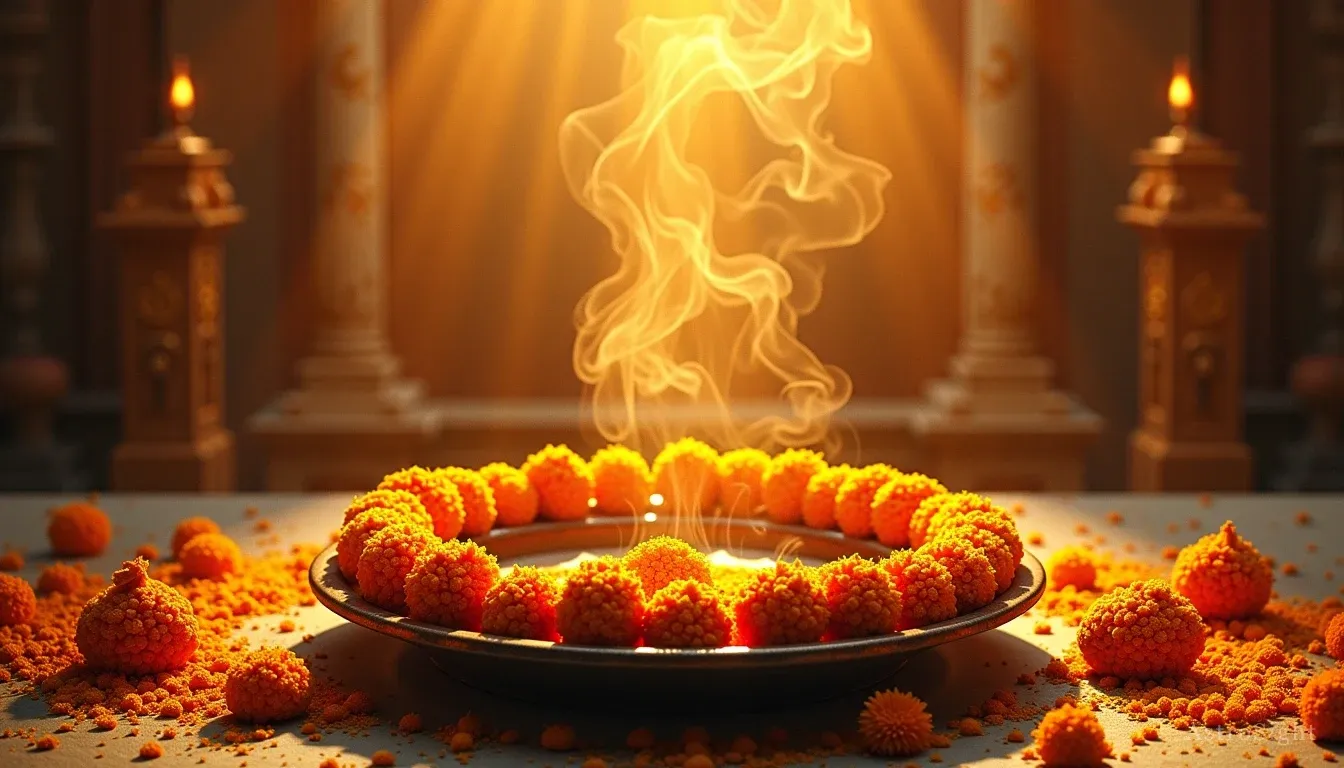
Holika Dahan 2026 falls on March 3, 2026 (Tuesday evening) — the bonfire ritual on the eve of Holi that commemorates the burning of the demoness Holika and the survival of the devoted Prahlad. The Holika Dahan Muhurat requires careful Panchang consultation because Bhadra (inauspicious period) falls
Holika Dahan 2026 falls on March 3, 2026 (Tuesday evening) — the bonfire ritual on the eve of Holi that commemorates the burning of the demoness Holika and the survival of the devoted Prahlad. The Holika Dahan Muhurat requires careful Panchang consultation because Bhadra (inauspicious period) falls on Phalguna Purnima morning — Holika Dahan must be performed only after Bhadra ends, specifically in the Pradosh Kaal (twilight window) on March 3 evening. The Skanda Purana is explicit: "Holika Dahan during Bhadra destroys the performer's family." The exact Bhadra end time on March 3, 2026 varies by city — verify in the 2026 Panchang.
Reviewed by Dr. Meenakshi Sharma, M.A. Sanskrit & Vedic Studies, Varanasi — as of May 2026.
In Vedic astrology, Holika Dahan occurs on Phalguna Purnima — the full moon when the Sun is in Aquarius (Saturn's sign) and the Moon is in Leo (the Sun's sign). This Sun-Moon exchange (Parivartana Yoga) creates an unusual mutual strength between the two luminaries. The burning of Holika at this moment is astrologically significant: it is fire (Sun's element) transforming the negative (Holika's attempt at coercion) into blessing (Prahlad's protection). Check your Sun and Moon placements with the free birth chart calculator.
The Complete Holika Dahan Story
The story from the Bhagavata Purana (7th Skandha): King Hiranyakashipu of the Asuras performed severe austerities to Brahma and received a complex boon — he could not be killed by man or animal, by any weapon, inside or outside any building, during day or night, on the ground or in the air. With this near-invincibility, he conquered all three worlds and declared himself the supreme god, forbidding worship of Vishnu.
His own son Prahlad, however, was an unshakeable Vishnu devotee from birth. Hiranyakashipu tried to kill Prahlad multiple times: throwing him from a cliff (Vishnu caught him), crushing him under an elephant (the elephant was unable to hurt him), poisoning him (the poison became nectar), throwing him into the ocean (the ocean returned him safely), instructing a teacher to have him killed (the teacher refused, moved by Prahlad's purity).
Hiranyakashipu's sister Holika had a divine boon — a fire-protective shawl that made her immune to flames when worn. Hiranyakashipu ordered Holika to sit in a bonfire holding Prahlad. Holika agreed. As the fire rose, Prahlad chanted Vishnu's name with complete devotion. The fire-protective shawl flew from Holika's body and wrapped itself around Prahlad instead. Holika burned; Prahlad emerged unharmed. Vishnu's devotion proved stronger than the demoness's boon.
Why Is the Holika Dahan Muhurat Critical?
The Holika Dahan timing has two requirements from the Skanda Purana:
1. The Purnima tithi must be active at the time of Dahan — specifically the Pradosh Kaal when Purnima is present 2. Bhadra must not be present — Holika Dahan performed during Bhadra is specifically prohibited as it harms the performer's family rather than protecting it
On March 3, 2026, the Bhadra period is expected to fall in the morning-afternoon hours. After Bhadra ends (typically in the evening), the Pradosh Kaal window (sunset to approximately 1.5 hours after sunset) is the proper Holika Dahan Muhurat. Exact timing varies by city — verify in the 2026 Panchang for your specific location.
How Is Holika Dahan Performed?
The complete Holika Dahan ritual:
Preparation (before the Muhurat): 1. The bonfire pyre is built in a central community space — traditionally the crossing of two roads (Chauraha) or the community courtyard 2. Materials: wood, cow dung cakes, dried grass, and in some traditions an Eranda (castor) tree branch planted at the center at Vasant Panchami (40 days before) — this branch represents Prahlad 3. A clay effigy of Holika (or simply a wooden pole representing her) is placed at the center or base of the pyre
At the Muhurat: 4. The Pandit or community elder lights the fire at the exact Muhurat time 5. The assembled community performs Parikrama (7 circumambulations clockwise around the burning fire) while chanting: Om Namah Shivaya or Vishnu's names — the fire purifies sins with each circumambulation 6. Unripe barley stalks (Chhemra), raw coconut, sesame seeds, and a handful of rice are thrown into the fire as offerings 7. Families carry their own small pots of unripe grain to throw into the fire — the roasted grain (Holika Prasad) represents the first grain of the spring harvest purified by fire
The next morning: 8. Collect the sacred ash (Holika ki Vibhuti) from the cooling bonfire 9. Apply the ash to the forehead as tilak — this ash carries protective energy for the year, connecting the wearer to Prahlad's protection 10. Some bring a small amount of the ash home to place in the Puja room as protection throughout the year
Why Is the Holika Dahan Ash Sacred?
The Narada Purana identifies the Holika Dahan ash as specifically potent because it is the ash of a demoness (Holika) who tried to harm a Vishnu devotee — and was destroyed by the devotee's faith. The ash represents the defeat of malevolent intent and the permanence of divine protection. Applying this ash on Holi morning is the original tradition — before the color festival began (the color tradition developed later in the Braj region).
Align Your Spiritual Path with Your Purpose
Your birth chart reveals your dharma — the path aligned with your soul purpose. Get expert analysis connecting spiritual direction with practical life choices.
Get Your Career Report
Dr. Meenakshi Sharma
PhD in Vedic Astrology, 20+ Years Experience
Dr. Meenakshi Sharma is a distinguished Vedic astrologer with a PhD in Vedic Astrology and over 20 years of professional experience in the ancient science of Jyotisha. Her extensive practice encompasses thousands of chart readings, predictive analyses, and remedial consultations, making her uniquely qualified to bridge traditional Vedic wisdom with contemporary applications. As a contributing writer for AstroSight, Dr. Sharma specializes in natal chart analysis, predictive astrology, and Vedic remedial measures, sharing her deep knowledge through insightful articles that make complex astrological concepts accessible to practitioners at all levels. Her approach combines rigorous academic training with ethical consultation standards, empowering clients through education and practical guidance while maintaining authentic adherence to classical Vedic principles.