

Bhai Dooj 2026: Date, Tilak Muhurat & Story
_Reviewed by Shri Ankit Bansal, Vedic Astrology Consultant with 15+ years of experience. As of 2026._
_Reviewed by Shri Ankit Bansal, Vedic Astrology Consultant with 15+ years of experience. As of 2026._
---
Bhai Dooj 2026 falls on Wednesday, November 11 — the second day (Dwitiya) of the bright fortnight (Shukla Paksha) in the month of Kartik. Bhai Dooj is one of the most emotionally significant festivals of the Diwali cluster: a sister applies a tilak on her brother's forehead, prays for his long life and protection from untimely death, and the brother gives a gift in return as a symbol of his protection and care.
As of 2026, Diwali is celebrated on November 8 (Kartik Amavasya), making Bhai Dooj exactly 3 days later on November 11. The festival is known by different names across India: Bhai Dooj or Bhai Bij in North India and Gujarat, Bhai Phota in West Bengal, Bhai Tika in Nepal, and Yama Dwitiya across classical Sanskrit texts.
The astrological significance of Bhai Dooj connects directly to Yama, the god of death and dharma, who is the ruler of the south direction and governs lifespan (Ayu). A sister's tilak on this day is considered a direct supplication to Yama himself — through the medium of his sister Yamuna — asking for protection of her brother's life. In Vedic astrology, the 8th house governs longevity, and the 3rd house governs siblings. When a sister performs this ritual on the auspicious Kartik Dwitiya, she activates the 3rd house protection energy for her brother's 8th house (lifespan).
Bhai Dooj marks the end of the 5-day Diwali festival cluster: Dhanteras (November 6) → Naraka Chaturdashi/Choti Diwali (November 8) → Diwali (November 8) → Govardhan Puja (November 10) → Bhai Dooj (November 11). You can generate your personalized Panchang for November 11, 2026 using the birth chart calculator.
What Is the Story of Bhai Dooj — Yama and Yamuna?
The story of Bhai Dooj is the story of Yama (the god of death) visiting his twin sister Yamuna (the sacred river goddess) on this auspicious day. Yama and Yamuna are the twin children of Surya (the Sun god) and Sanjna (Surya's wife). Yamuna is also called Yami in the Vedas — she is the twin soul of Yama.
According to the Puranic narrative, Yamuna had long invited her brother Yama to visit her home for a meal. Yama, occupied with his cosmic duties of receiving the souls of the deceased, kept postponing the visit. On this day — the 2nd day of Kartik Shukla Paksha — Yama finally visited Yamuna's home.
Yamuna received her brother with great affection. She prepared his favorite foods, applied a tilak of curd, rice grains (akshat), and kohl on his forehead, garlanded him with flowers, and performed his Aarti. She prayed for his welfare and long life (paradoxically — the god of death receiving a longevity prayer from his sister reflects the tradition's poetic depth). Yama was so moved by her devotion that he granted her a boon: any brother whose sister applies the Bhai Dooj tilak with love on this day will be protected from untimely death and from Yama's premature summons.
From that day forward, Kartik Shukla Dwitiya became Yama Dwitiya — the day when Yama himself honors the bond between brothers and sisters by extending his protection to all brothers whose sisters perform the tilak ritual.
What Is the Exact Tilak Muhurat for Bhai Dooj 2026?
The most auspicious time for Bhai Dooj tilak on November 11, 2026 is the Aparahna Kala — the afternoon period, approximately 1:10 PM to 3:20 PM IST. This timing is derived from the Panchang for Kartik Shukla Dwitiya, which places the Aparahna (post-midday) period as the most auspicious for the Bhai Dooj ceremony.
The Aparahna Muhurat (approximately 1:10 PM – 3:20 PM) is the classical recommended window. This is based on the standard Muhurta calculation that the 4th Muhurta of the day (counting from sunrise) falls in the early afternoon and carries the most auspicious energy for sibling rituals.
If the afternoon window is not feasible due to practical constraints, the morning period (9 AM – 11 AM) is the secondary acceptable window. The Dwitiya tithi (the 2nd lunar day) must be active at the time of the tilak. In 2026 Dwitiya ends at about 3:53 PM on November 11, so the tilak should be done on November 11 before then.
For the precise Panchang-based muhurat for your specific city (as sunrise times vary across India), consult a local Panchang or a Vedic astrology expert.
How Do You Perform the Bhai Dooj Tilak Ritual?
The ritual steps for Bhai Dooj are distinct from regular tilak ceremonies because this tilak is a protective prayer addressed to Yama on behalf of the brother.
Step 1: The sister prepares the tilak ingredients — fresh curd (dahi), rice grains (akshat), kohl (kajal/surma), and kumkum. Some traditions also add a small amount of sandalwood paste.
Step 2: The brother sits facing east or north, on a wooden plank (not directly on the floor). The sister faces him.
Step 3: The sister draws a small square with rice flour or turmeric on the floor in front of the brother. This represents the altar.
Step 4: The sister applies the tilak with her right ring finger — first the curd, then the rice grains pressed gently into the curd, then the kohl mark around the forehead, and finally the kumkum dot in the center. This 4-layer tilak is specific to Bhai Dooj and distinguishes it from regular puja tilaks.
Step 5: The sister performs the Aarti of her brother — moving the Aarti plate (with a lit diya) in clockwise circles 3, 5, or 7 times.
Step 6: The sister feeds her brother with her own hands — the first bite of sweets or food must come from the sister's hand. This is called the "sister's morsel" and is the most emotionally significant moment of the festival.
Step 7: The brother gives a gift to the sister. The gift tradition is called "Shagun" — it can be money, jewelry, clothes, or any meaningful item. The amount or value is less important than the intention of protection and care it represents.
What Does the Tilak Contain and Why?
The 4-layer Bhai Dooj tilak has specific symbolic and protective meaning for each ingredient.
Curd (Dahi): Curd is the auspicious food of Vishnu and Krishna — it represents purity, prosperity, and life-sustaining nourishment. Applying curd as the base of the tilak invokes Vishnu's protection for the brother.
Rice grains (Akshat): Rice grains represent Lakshmi (the goddess of wealth) and completeness (the grain is intact, unhusked = unbroken life). Pressing rice grains into the curd creates a texture the tradition calls "the grip of life" — the sister's wish that her brother's life grip remain firm.
Kohl (Kajal/Surma): Kohl applied around the forehead is a protection against the evil eye (Nazar) and against negative energies. The eye of evil cannot fix itself on a forehead marked with protective kohl. In the Yama mythology, kohl represents the night — and on the night of death's visit, the sister marks her brother's forehead against that darkness.
Kumkum: The red kumkum dot is the final seal — red is the color of Mars (protection, vitality) and of Shakti (the divine feminine protective power). The sister's kumkum on her brother's forehead is her Shakti energy placed as a shield on his person.
What Are the Regional Variations of Bhai Dooj?
Bhai Dooj is celebrated across India with regional variations that reflect local culture and tradition.
| Region | Name | Key Variation |
|---|---|---|
| North India | Bhai Dooj / Bhai Bij | Standard tilak + Aarti + gift; observed on Kartik Dwitiya |
| West Bengal | Bhai Phota | Sister places elaborate phota (mark) with sandalwood paste; specific Bengali chant recited |
| Nepal | Bhai Tika | 5-color tilak including rice flour, curd, oil, sindoor; extended 2-day celebration |
| Maharashtra | Bhau Beej | Observed as part of Diwali cluster; Puran Poli prepared for the brother |
| Gujarat | Bhai Bij | Combined with business new year; brother visits sister's home |
| South India | Yama Dwitiya | Classical Sanskrit name; regional variations in tilak ingredients |
The Bengali Bhai Phota is the most elaborate variant. The sister recites a specific chant in Bengali while applying the phota: "Bhaiyer kopale dili phota, jamduarer kaanthe kata" — "I place the mark on my brother's forehead; I place thorns at Yama's gate." This chant is a direct address to Yama, invoking the mythological precedent of the festival.
The Nepali Bhai Tika extends across 2 days and uses a 5-color tilak made from 5 different materials — each color representing one of the 5 elements (Pancha Bhuta) and one of the 5 protective deities. The brother receives gifts from the sister over both days.
What Is the Astrological Significance of Yama on Bhai Dooj?
Yama is the lord of the south direction and the ruler of death, dharma, and the final accounting of karma. In Vedic astrology, Yama governs Saturn's domain — delay, ending, and the final stage of any cycle. The 8th house in the birth chart (the house of longevity, transformation, and death) falls under Yama's jurisdiction.
The Bhai Dooj ritual directly addresses the 8th house danger of untimely death (Akal Mrityu). The sister's tilak and prayer, performed with Yama's explicit blessing (as granted in the mythological precedent), places a protective seal on the brother's 8th house for the coming year. This is why the festival recurs every year — the protective seal needs annual renewal.
From an astrological perspective, Kartik Shukla Dwitiya (the day of Bhai Dooj) falls when the Moon is 2 days past Amavasya (new moon) and beginning to wax. The 2nd lunar day in Kartik is considered auspicious for all rituals involving protection from death and negative forces, as the Moon's increasing light (Shukla Paksha) represents the growth of life force.
The Sun in the month of Kartik (late October to mid-November in the Gregorian calendar) is in Libra (Tula Rashi), moving toward Scorpio. Scorpio is the natural 8th house sign, ruling over transformation and death. This solar position makes Kartik the time when death-related themes are most present in the year's consciousness — and therefore the most powerful time for rituals that address those themes proactively.
What Are Good Gift Ideas for Brothers on Bhai Dooj?
The gift from brother to sister (Shagun) is the material expression of the brother's protective role. Traditional gifts include:
Silver items — coins, jewelry, utensils — as silver is the Moon's metal and represents emotional protection. Gold items — for brothers with financial means — represent the highest auspiciousness. Cash (currency) in auspicious amounts (multiples of 11: Rs 51, Rs 101, Rs 501, Rs 1001) is the most common modern gift.
Clothing — a saree or salwar kameez chosen by the brother with care carries the sentiment of the protective role. Sweets (mithai) — the brother returning the sister's feeding gesture with sweets from his own hands. Electronic items, books, or other personal-use items are modern equivalents.
The sister's gift to the brother is the tilak, Aarti, and the meal prepared with her hands. No material counter-gift from sister to brother is required — her service and prayer are the complete offering. In some families, sisters give brothers a small gift as well, but this is a modern social addition, not part of the classical ritual.
How Does Bhai Dooj Connect to the Full Diwali Festival Structure?
Bhai Dooj completes the 5-day Diwali cluster, and each day carries a specific Vedic significance.
| Day | Date (2026) | Festival | Significance |
|---|---|---|---|
| Day 1 | November 6 | Dhanteras | Yama Deepam; worship of wealth and health |
| Day 2 | November 8 | Naraka Chaturdashi | Krishna kills Narakasura; Abhyanga Snan |
| Day 3 | November 8 | Diwali (Lakshmi Puja) | Main festival; Amavasya night Lakshmi worship |
| Day 4 | November 10 | Govardhan Puja | Krishna lifts Govardhan Hill; Annakut |
| Day 5 | November 11 | Bhai Dooj | Yama Dwitiya; sister's tilak for brother's longevity |
The 5-day structure moves from material prosperity (Dhanteras) through the conquest of evil (Naraka Chaturdashi) to the heart of the festival (Lakshmi worship on Diwali) and then to the community (Govardhan Puja for farmers) and finally to the family bond (Bhai Dooj). The arc is complete — from individual wealth to family relationship, the festival covers all primary domains of a flourishing human life.
What Gifts Can Sisters Give Brothers on Bhai Dooj?
While the classical ritual focuses on the brother's gift to the sister, modern Bhai Dooj celebrations have sisters gifting brothers as well.
Appropriate gifts from sisters to brothers include: sweets made by the sister's hands (the most traditional and emotionally significant), a wallet or belt in brown or black leather (Mars-related protective item), a pen or book (Mercury items for career success), a watch (Saturn item for discipline and time management), or a white item (shirt, kurta) representing purity and new beginnings.
Gifts to avoid: sharp items (knives, scissors, or anything pointed symbolically cuts the relationship), black clothing (associated with grief), or items that are broken or second-hand.
The sister can also visit her brother's birth chart calculator to identify his current Dasha period and choose a gift color or item aligned with his planetary energy for extra auspiciousness.
Align Your Spiritual Path with Your Purpose
Your birth chart reveals your dharma — the path aligned with your soul purpose. Get expert analysis connecting spiritual direction with practical life choices.
Explore Our Reports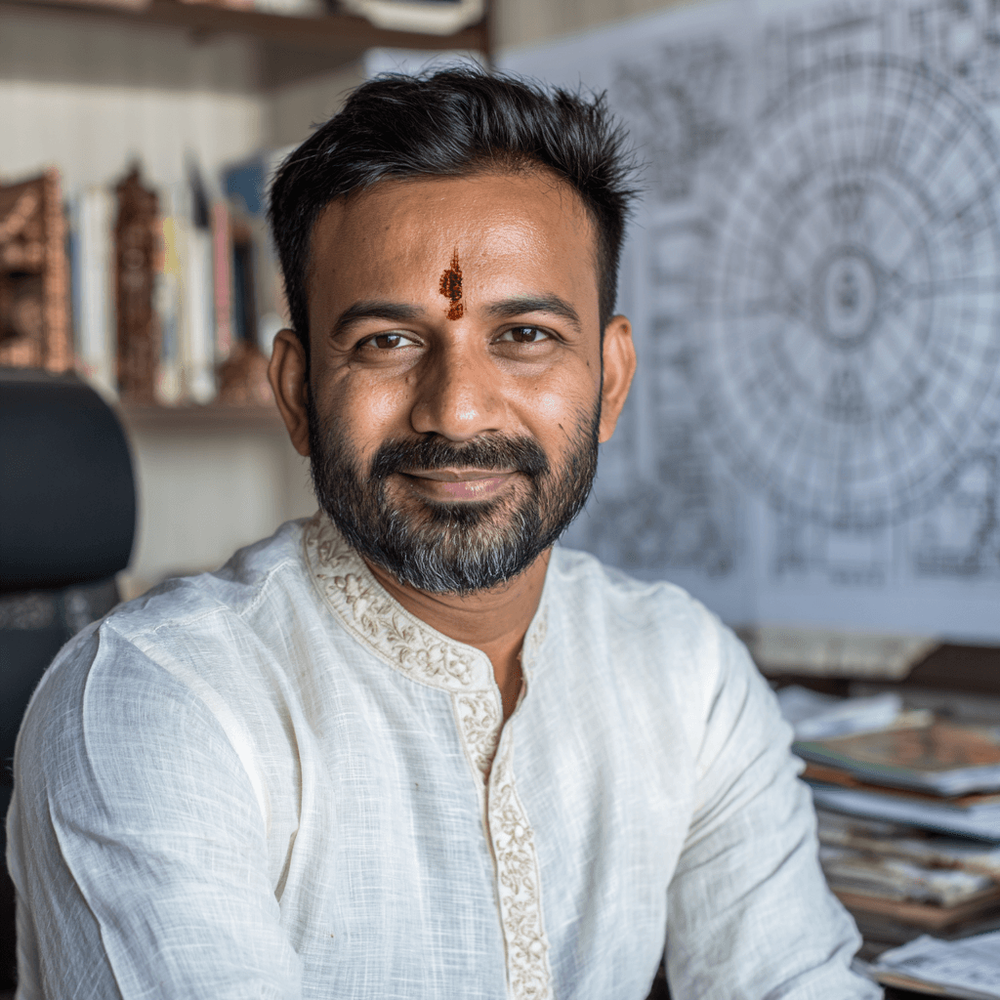
Shri Ankit Bansal
Vedic Astrologer · Numerology and Vastu Expert, 15+ Years
Shri Ankit Bansal is a renowned numerology and Vastu expert with over 15 years of specialized experience in these ancient Indian sciences. His extensive practice encompasses thousands of consultations in numerological analysis, name corrections, business numerology, and comprehensive Vastu assessments for residential and commercial properties. As a contributing writer for AstroSight, Shri Bansal combines his deep understanding of numerical vibrations with practical Vastu principles to provide holistic solutions that harmonize living and working spaces with cosmic energies. His expertise spans personal numerology charts, business name analysis, property Vastu audits, and remedial measures that blend traditional wisdom with modern lifestyle requirements. Through his methodical approach and proven track record, Shri Bansal has established himself as a trusted authority in helping clients optimize their environment and numerical influences for enhanced prosperity, health, and overall well-being.


