Holi 2026: Holika Dahan Muhurat & Festival Meaning
Holi 2026 falls on March 4, 2026 (Wednesday) — the color festival on Phalguna Purnima (the full moon of Phalguna month). Holika Dahan 2026 is March 3, 2026 (Tuesday evening), the bonfire ritual where the demoness Holika's defeat is commemorated. Holi is the second largest Hindu festival after Diwali
Holi 2026 falls on March 4, 2026 (Wednesday) — the color festival on Phalguna Purnima (the full moon of Phalguna month). Holika Dahan 2026 is March 3, 2026 (Tuesday evening), the bonfire ritual where the demoness Holika's defeat is commemorated. Holi is the second largest Hindu festival after Diwali and is celebrated as the arrival of spring (Vasant), the triumph of devotion over arrogance, and — in the Braj tradition (Mathura-Vrindavan) — as Krishna's and Radha's divine play with color.
Reviewed by Dr. Meenakshi Sharma, M.A. Sanskrit & Vedic Studies, Varanasi — as of May 2026.
In Vedic astrology, Holi falls on the Phalguna Purnima — the full moon of the most spring-like month. The Sun transits Aquarius to Pisces around this time (Piscean themes of dissolution, unity, celebration), and the Moon is full in Leo (the Sun's sign — maximum luminosity, celebration, creative joy). The energetic quality of Holi astrologically is the apex of the winter-spring transition: the last full moon before the Hindu New Year (Gudi Padwa/Ugadi in Chaitra). Check your Sun and Moon signs to understand how Holi's energies specifically affect you with the free birth chart calculator.
What Is the Holika Dahan Story?
The Holika Dahan story from the Bhagavata Purana (7th Skandha): King Hiranyakashipu, a demon who had obtained a boon making him nearly impossible to kill (not by man or animal, not inside or outside, not during day or night, not by any weapon), declared himself the supreme god and forbade Vishnu worship throughout his kingdom. His own son Prahlad, however, was a devoted Vishnu worshipper who refused to stop. Hiranyakashipu tried multiple methods to kill Prahlad: poisoning, crushing by elephant, throwing from a cliff — all failed because Vishnu's protection was complete. Finally, Hiranyakashipu asked his sister Holika — who had a boon making her immune to fire — to sit with Prahlad in a bonfire. Prahlad accepted, chanting Vishnu's name. In the fire, Prahlad's Vishnu-devotion made him fireproof, while Holika's boon was nullified because it applied only to fire she entered alone. Holika burned; Prahlad walked out unharmed. This event is the Holika Dahan — celebrated on Phalguna Purnima evening.
What Is the Holika Dahan Muhurat for 2026?
Holika Dahan 2026: March 3, 2026 (Tuesday evening)
The Holika Dahan Muhurat is calculated based on the Pradosh Kaal on Phalguna Purnima evening, with the specific requirement that the Bhadra period (an inauspicious period in the Panchang) must be avoided. Holika Dahan should not be performed during Bhadra. For the exact Muhurat window on March 3, 2026, verify with a city-specific 2026 Panchang.
General Holika Dahan timing: sunset to midnight on Phalguna Purnima evening. The bonfire is lit at the auspicious time, burned through the night, and its ash (Vibhuti) is collected on Holi morning for application to the forehead.
How Is Holika Dahan Performed?
The Holika Dahan ritual: 1. A large bonfire is prepared with wood, cow dung cakes, and unprocessed grain (representing the year's agricultural produce) 2. A clay idol of Holika (holding Prahlad) is placed at the center or a symbolic effigy of Holika is created 3. At the Muhurat time, the fire is lit — the community gathers around the bonfire 4. Circumambulation (Parikrama) of the bonfire 7 times with Vishnu prayers 5. The burning of the Holika effigy symbolizes evil's defeat 6. The bonfire burns through the night 7. In the morning: collect the sacred ash (Holika Vibhuti) and apply to the forehead — this ash carries protective energy for the year
What Is the Significance of Holi Colors?
The color festival (Dhuleti — the morning after Holika Dahan) has the Braj tradition's divine play (Lila) of Krishna and Radha as its devotional basis. The Padma Purana and the Braj Bhakti Vilasa describe Krishna's playful drenching of Radha and the Gopis with colored water and powder. Each color has a specific Vedic meaning in the Holi tradition: Red (Gulal) = love, prosperity, fertility; Yellow (Haldi powder) = auspiciousness, healing; Green = spring, new growth, Parvati's marital energy; Blue = Krishna's color, the cosmic; Pink = joy and celebration.
The deeper theological meaning: on Holi, all social distinctions dissolve — caste, class, age, and gender become temporarily invisible when everyone is covered in the same colors. The Bhagavata Purana's teaching that Krishna played equally with all — the Gopis from different families, different backgrounds — becomes embodied in the Holi celebration.
What Is Braj Holi and Why Is It Special?
The Braj region (Mathura, Vrindavan, Govardhan, Barsana, Nandgaon — all in Uttar Pradesh) celebrates the world's most intense Holi — running for 7-10 days beginning with the famous Lathmar Holi of Barsana (where women beat men with sticks, following the story of Krishna's playful visits to Radha's village). The Braj Holi is a UNESCO-recognized cultural event and draws hundreds of thousands of visitors annually.
The Braj Holi sequence for 2026: Lathmar Holi in Barsana approximately February 28 → Nandgaon February 29 → Vrindavan March 1-2 → Mathura March 3-4 (Holika Dahan and Dhuleti).
What Is Vasant Panchami's Connection to Holi?
The Holi season officially begins on Vasant Panchami (the 5th day of Phalguna Shukla Paksha — in 2026, approximately January 29). On Vasant Panchami, the Holika bonfire pyre is set up and the Eranda (castor) plant is planted at its center. The fire is then lit 40 days later on Holika Dahan. This 40-day interval explains the spring-arrival symbolism of Holi.
Align Your Spiritual Path with Your Purpose
Your birth chart reveals your dharma — the path aligned with your soul purpose. Get expert analysis connecting spiritual direction with practical life choices.
Get Your Career Report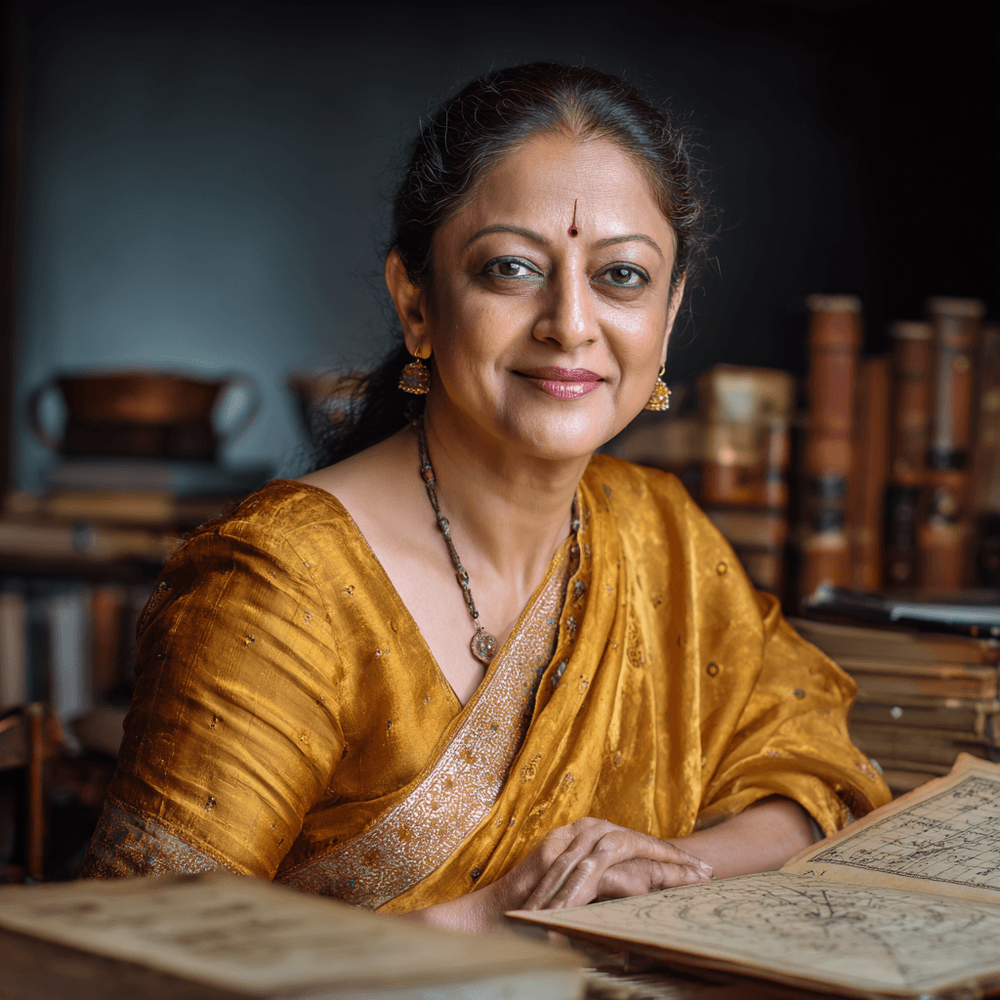
Dr. Meenakshi Sharma
PhD in Vedic Astrology, 20+ Years Experience
Dr. Meenakshi Sharma is a distinguished Vedic astrologer with a PhD in Vedic Astrology and over 20 years of professional experience in the ancient science of Jyotisha. Her extensive practice encompasses thousands of chart readings, predictive analyses, and remedial consultations, making her uniquely qualified to bridge traditional Vedic wisdom with contemporary applications. As a contributing writer for AstroSight, Dr. Sharma specializes in natal chart analysis, predictive astrology, and Vedic remedial measures, sharing her deep knowledge through insightful articles that make complex astrological concepts accessible to practitioners at all levels. Her approach combines rigorous academic training with ethical consultation standards, empowering clients through education and practical guidance while maintaining authentic adherence to classical Vedic principles.