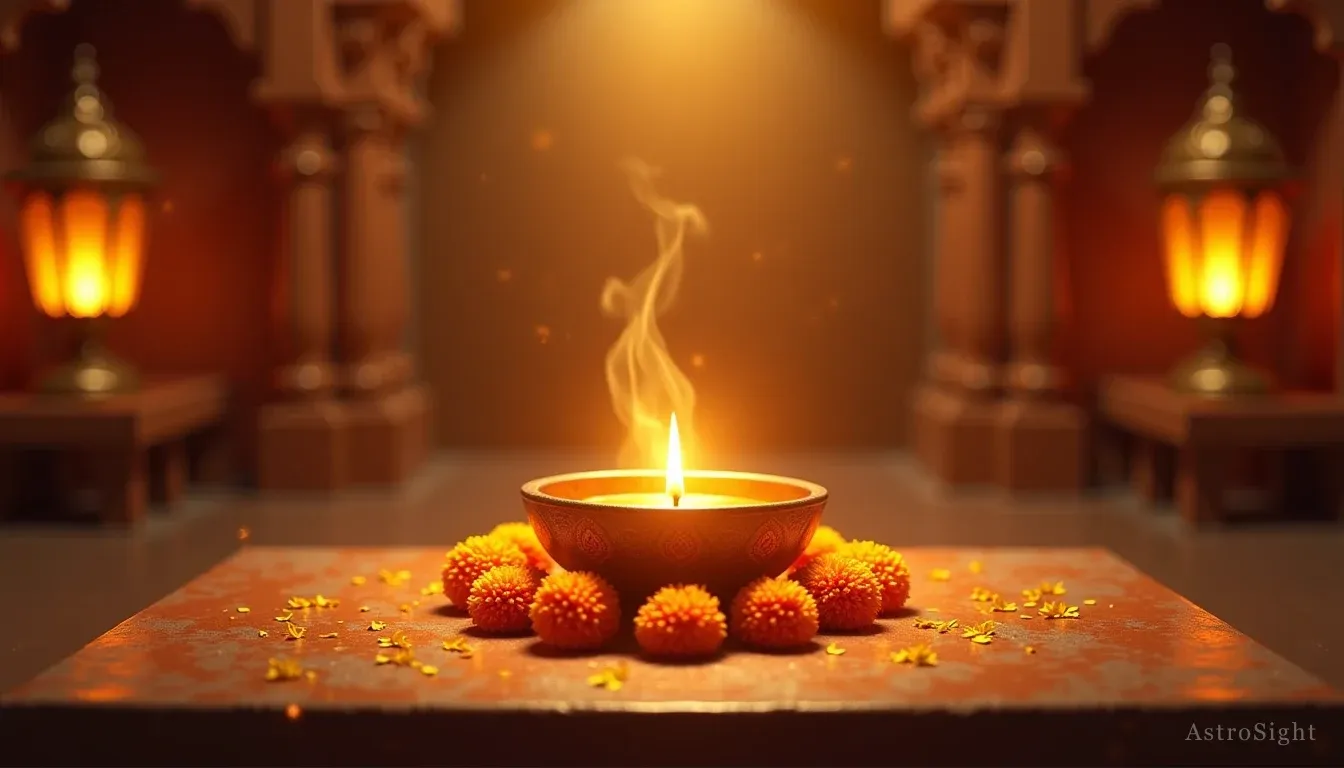
Chhath Puja 2026: Date, 4-Day Sun Worship & Bihar Tradition
Chhath Puja 2026 spans November 13-16, 2026 — the most intense Sun worship festival in India, celebrated primarily in Bihar, Jharkhand, Eastern Uttar Pradesh, and the Nepali Terai region. Unlike other Hindu festivals, Chhath Puja worships both the rising Sun (Usha Arghya) and the setting Sun (Sandhy
Chhath Puja 2026 spans November 13-16, 2026 — the most intense Sun worship festival in India, celebrated primarily in Bihar, Jharkhand, Eastern Uttar Pradesh, and the Nepali Terai region. Unlike other Hindu festivals, Chhath Puja worships both the rising Sun (Usha Arghya) and the setting Sun (Sandhya Arghya) — recognizing the Sun not only in its strength (rising, energetic) but also in its decline (setting). The Sandhya Arghya (sunset offering on Day 3) to the setting Sun is the most distinctive and visually striking ritual in Indian religious practice: millions stand in river water at sunset, offering a bamboo basket of fruits and sweets to the departing Sun.
Reviewed by Dr. Meenakshi Sharma, M.A. Sanskrit & Vedic Studies, Varanasi — as of May 2026.
In Vedic astrology, Chhath Puja falls in the Kartik month when the Sun is in Libra — its debilitation sign. The Sun in Libra is at its weakest solar power. The Chhath Puja tradition of worshipping the Sun specifically during its debilitation period represents a profound Vedic principle: devotion is most powerful when offered at the moment of weakness, not strength. The Sun returns from debilitation strengthened by this human devotion. Check your Sun placement and the state of your 10th house using the free birth chart calculator.
The 4 Days of Chhath Puja 2026
Day 1 — Nahay Khay (November 13, 2026)
Nahay Khay = "bathe and eat." The first day establishes the fast's beginning: devotees (Vratis) take a sacred bath in a river or holy water body, then cook a simple meal of rice, chana dal, and lauki (bottle gourd) — cooked without onion, garlic, or spices. This single meal on Nahay Khay is the last food until Usha Arghya on Day 4. The Vrati (the person observing the fast, usually a woman) takes her first meal; all family members also eat the pure Nahay Khay meal together.
Day 2 — Kharna (November 14, 2026)
Kharna = auspicious eating. The Vrati fasts throughout the Kharna day without food or water. In the evening after sunset, a Rasiao-Kheer (rice kheer in earthen pot, cooked on a wood fire) and Roti are prepared. The Vrati first offers this kheer to the rising Moon and Chhath Maiya (the deity), then distributes it as Prasad to family and neighbors. After distributing, the Vrati eats a small amount. This is the last food before the 36-hour waterless fast begins.
Day 3 — Sandhya Arghya / Sanjh Arghya (November 15, 2026)
Sandhya Arghya (sunset offering) is the main Chhath day — the one that fills riverbanks and ghats across Bihar with millions of worshippers. The Vrati (after 36+ hours without food or water) carries a bamboo basket (Soop) filled with: sugarcane, thekua (wheat-jaggery sweet), rice ladoos, seasonal fruits (banana, orange, pear), coconut, and earthen pots. She stands in the river water and offers the basket to the setting Sun while facing west. The sun setting into the water, the basket of harvest offerings, the Vratis in their yellow and orange sarees standing in water — this is one of the most visually arresting sights in Indian religious practice.
Day 4 — Usha Arghya (November 16, 2026)
Usha Arghya (sunrise offering) — the Vratis return to the river before sunrise, standing in the water again, and offer the same type of basket to the rising Sun (facing east). After the Usha Arghya, the 36-hour fast is broken with the Prasad (the thekua and fruits from the offering basket). The Chhath Puja Prasad is among the most sacred in any Hindu tradition — it is offered directly to the Sun's light with nothing intermediate.
What Is Thekua?
Thekua (also called Khajuria or Thikri) is the signature Chhath Puja offering and Prasad — a hard, sweet biscuit made from whole wheat flour (atta), jaggery, and cardamom, deep-fried in ghee. The dough is pressed through a wooden mold with geometric patterns. Thekua is prepared at home by the Vrati's family in large quantities — offered to the Sun, then distributed as Prasad. The specific wheat-jaggery combination represents the harvest's core offering (grain + sweetness).
What Is the Chhath Maiya Deity?
Chhath Maiya is the presiding deity of Chhath Puja — identified variously as the Sun's sister, a form of Usha (the dawn goddess), or Shashthi Devi (goddess of the 6th day, Chhath = sixth). The worship is directed at both the Sun (Surya) and Chhath Maiya. In the folk songs (Chhath Geet) of Bihar and Jharkhand, Chhath Maiya is addressed as a maternal figure who grants children, health, and prosperity to devotees who endure the rigorous 4-day fast.
Align Your Spiritual Path with Your Purpose
Your birth chart reveals your dharma — the path aligned with your soul purpose. Get expert analysis connecting spiritual direction with practical life choices.
Explore Our Reports
Dr. Meenakshi Sharma
PhD in Vedic Astrology, 20+ Years Experience
Dr. Meenakshi Sharma is a distinguished Vedic astrologer with a PhD in Vedic Astrology and over 20 years of professional experience in the ancient science of Jyotisha. Her extensive practice encompasses thousands of chart readings, predictive analyses, and remedial consultations, making her uniquely qualified to bridge traditional Vedic wisdom with contemporary applications. As a contributing writer for AstroSight, Dr. Sharma specializes in natal chart analysis, predictive astrology, and Vedic remedial measures, sharing her deep knowledge through insightful articles that make complex astrological concepts accessible to practitioners at all levels. Her approach combines rigorous academic training with ethical consultation standards, empowering clients through education and practical guidance while maintaining authentic adherence to classical Vedic principles.