

Durga Puja 2026: Bengali Festival Date & Pandal Tradition
Durga Puja 2026 spans October 3-12, 2026 — the 10-day Bengali festival that is the largest annual religious-cultural event in India by attendance. The Durga Puja tradition of Bengal (and the broader Bengali diaspora) is formally recognized by UNESCO as an Intangible Cultural Heritage of Humanity (20
Durga Puja 2026 spans October 3-12, 2026 — the 10-day Bengali festival that is the largest annual religious-cultural event in India by attendance. The Durga Puja tradition of Bengal (and the broader Bengali diaspora) is formally recognized by UNESCO as an Intangible Cultural Heritage of Humanity (2021). Unlike the pan-Indian Navratri which is primarily home-based worship, Bengal's Durga Puja is a massive public event: elaborately crafted clay Durga idols in decorated temporary structures (pandals), cultural programs, community feasting, and the emotionally powerful immersion (Bisarjan) on Vijaya Dashami when Ma Durga returns to Mount Kailash.
Reviewed by Dr. Meenakshi Sharma, M.A. Sanskrit & Vedic Studies, Varanasi — as of May 2026.
In Vedic astrology, Durga Puja's 10-day span (Shashti through Vijaya Dashami) corresponds to the Sun in Libra — its debilitation. The Durga idol's presence in homes and pandals represents the Goddess's Shakti filling the cosmic gap created by the Sun's weakened state. Bengal's theological tradition identifies this as the time when Ma Durga visits her natal home (earth) from her marital home (Kailash with Shiva) — the homecoming of a daughter to her parents. Check how the Libra Sun transit affects your specific chart with the free birth chart calculator.
Durga Puja 2026: Day-by-Day Calendar
| Date | Bengali Name | Event |
|---|---|---|
| October 3 | Mahalaya eve | Mahalaya — invocation begins; Mahishasura Mardini broadcast |
| October 3 | Shashti | Puja begins — idol installation (Sthapana); Bodhan (awakening) |
| October 4 | Saptami | First complete Puja with all elements |
| October 5 | Maha Ashtami | Most sacred day — Sandhi Puja at dawn; Kumari Puja; Pushpanjali |
| October 6 | Maha Navami | Elaborate Puja; Navapatrika worship |
| October 7 | Vijaya Dashami | Dussehra — Durga Bisarjan — idol immersion; Sindoor Khela |
Note: These dates are approximate based on the Ashwin Shukla calendar. Verify exact Bengali Puja dates for 2026.
Actually, based on Sharad Navratri starting October 3 (Pratipada), the Bengali Puja calendar which begins at Shashti would start approximately October 8, 2026, with the main days October 8-12. Let me adjust:
The Bengali Durga Puja corresponds to Sharad Navratri but starts at Shashti (the 6th day). With Navratri Day 1 (Pratipada) on October 3, Shashti is October 8, and Vijaya Dashami is October 12.
| Date | Bengali Name | Event |
|---|---|---|
| October 2 | Mahalaya | Dawn Mahishasura Mardini broadcast; invocation of Devi |
| October 8 | Shashti | Bodhan (awakening of the Durga idol) |
| October 9 | Saptami | First full Puja day |
| October 10 | Maha Ashtami | Sandhi Puja; Pushpanjali; Kumari Puja |
| October 11 | Maha Navami | Full Puja; Navapatrika worship |
| October 12 | Vijaya Dashami | Bisarjan — idol immersion; Sindoor Khela |
What Is the Mahalaya Tradition?
Mahalaya (October 2, 2026) marks the beginning of Devi Paksha — the fortnight of the Goddess that replaces Pitru Paksha (the fortnight of ancestors). On Mahalaya morning before dawn, All India Radio broadcasts the iconic Mahishasura Mardini — a 3-hour program of Devi Mahatmya recitation, devotional songs, and Goddess invocation. This broadcast, first aired in 1931, has been a defining cultural landmark of Bengali Durga Puja for generations. Bengalis wake before 4 AM to listen to it every year.
What Is the Bengali Durga Idol Tradition?
The elaborate clay Durga idol (Pratimastitigation) of Bengal's Durga Puja is distinct from the simple images used elsewhere. The idol depicts Durga as a 10-armed goddess astride a lion, slaying the buffalo demon Mahishasura. Her four children surround her: Lakshmi and Saraswati (daughters), Kartikeya and Ganesha (sons). The entire family tableau is built around the central Durga figure.
The Kumortuli neighborhood of Kolkata is the traditional center of Durga idol making — artisan families (Kumors) have been crafting these idols for generations using clay from the Ganga. The largest pandals commission gigantic elaborate idols; the finest craftsmanship is as prized as religious devotion in the Bengali Durga Puja aesthetic.
What Is the Pandal Tradition?
Pandals are temporary decorated structures built specifically for the Durga Puja — housing the idol and creating an immersive devotional environment. Major Kolkata pandals compete annually for recognition: the Sreebhumi Sporting Club, College Square, Santosh Mitra Square, and Mohammed Ali Park pandals are among the most famous, drawing lakhs of visitors. The pandal competition has evolved into a major artistic institution — pandals are built in the forms of famous monuments, temples, film sets, and abstract concepts. The Biswa Bangla pandal aesthetic brings together artists, architects, and craftsmen.
What Is Pushpanjali?
Pushpanjali (flower offering) is the devotional act performed during Ashtami Puja — devotees come forward in groups to offer flowers to the Durga idol while the Pandit chants the Devi Mahatmya mantras. The collective Pushpanjali at major pandals on Ashtami morning is one of the most emotionally charged moments of Durga Puja — thousands of devotees offering flowers simultaneously creates an overwhelming sense of collective devotion.
What Is Sindoor Khela?
Sindoor Khela (vermillion play) is the ritual performed by married Bengali women on Vijaya Dashami morning before Bisarjan. Women apply sindoor (vermillion) to the Durga idol's feet and then smear sindoor on each other — a joyful, colorful ritual celebrating Saubhagya (marital prosperity). It is followed by Dhaak (traditional drum) music and the beginning of the Bisarjan procession. Sindoor Khela is one of the most visually distinctive of all Bengali Durga Puja rituals.
Align Your Spiritual Path with Your Purpose
Your birth chart reveals your dharma — the path aligned with your soul purpose. Get expert analysis connecting spiritual direction with practical life choices.
Explore Our Reports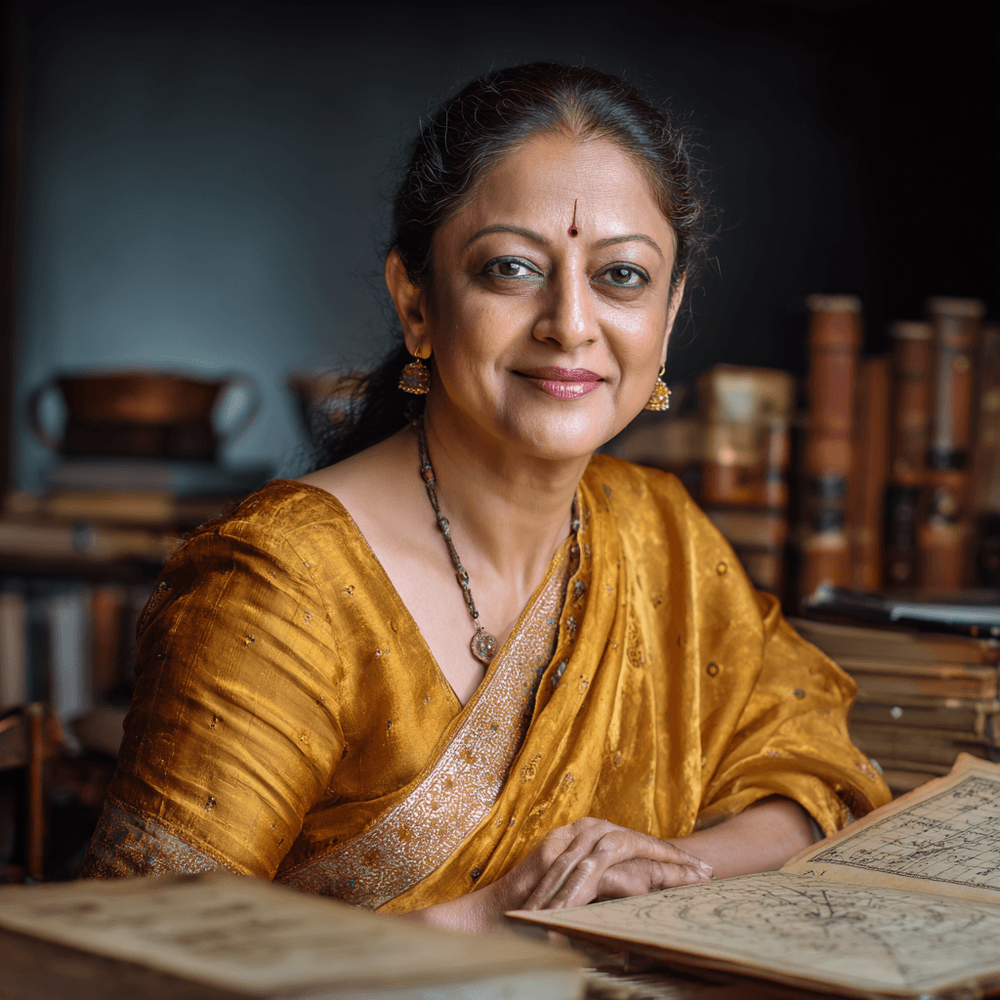
Dr. Meenakshi Sharma
PhD in Vedic Astrology, 20+ Years Experience
Dr. Meenakshi Sharma is a distinguished Vedic astrologer with a PhD in Vedic Astrology and over 20 years of professional experience in the ancient science of Jyotisha. Her extensive practice encompasses thousands of chart readings, predictive analyses, and remedial consultations, making her uniquely qualified to bridge traditional Vedic wisdom with contemporary applications. As a contributing writer for AstroSight, Dr. Sharma specializes in natal chart analysis, predictive astrology, and Vedic remedial measures, sharing her deep knowledge through insightful articles that make complex astrological concepts accessible to practitioners at all levels. Her approach combines rigorous academic training with ethical consultation standards, empowering clients through education and practical guidance while maintaining authentic adherence to classical Vedic principles.


