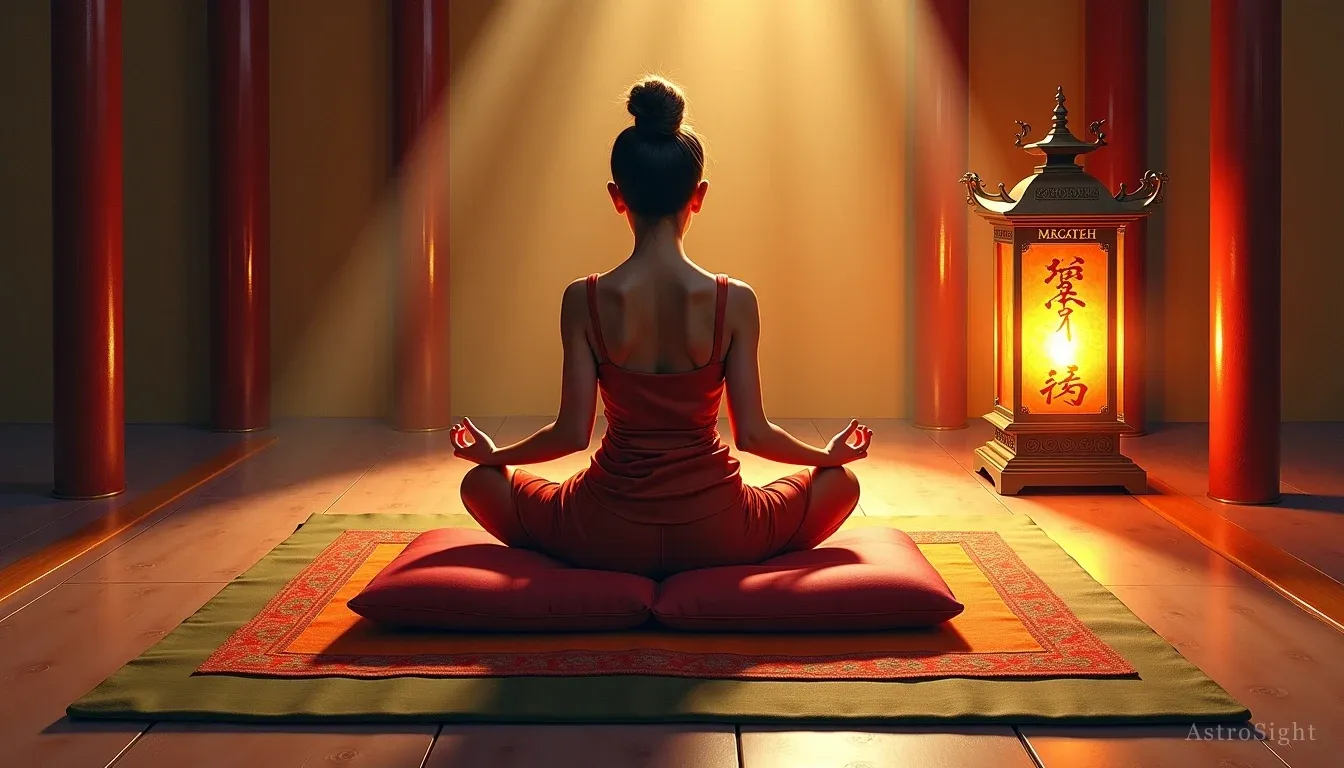
Putrada Ekadashi: Vrat for Childless Couples
Reviewed by Dr. Meenakshi Sharma, M.A. Sanskrit & Vedic Studies, Varanasi — as of May 2026.
Reviewed by Dr. Meenakshi Sharma, M.A. Sanskrit & Vedic Studies, Varanasi — as of May 2026.
Putrada Ekadashi is the name given to two specific Ekadashis in the Hindu calendar that carry a shared spiritual purpose: the blessing of children. "Putrada" means "child-giving" (Putra = child/son, Da = giver). As of 2026, this vrat continues to be observed by couples across India and the diaspora, drawing on the instructions preserved in the Bhavishya Purana and the living tradition of Vaishnava Ekadashi worship. This article covers both 2026 dates, the complete observance method, the origin story, the katha text, the spiritual logic behind the vrat, and how it relates to the broader tradition of Vishnu worship.
The Two Putrada Ekadashis: Paush and Shravana
Putrada Ekadashi occurs twice each year because two separate Ekadashis carry this name and this specific purpose:
Paush Shukla Ekadashi (Paush Putrada Ekadashi): Falls in the month of Paush (December-January) on the bright fortnight's 11th day. In 2026, this date falls in January. This Ekadashi is also called Vaikuntha Ekadashi in some North Indian regional traditions — the day when the gates of Vaikuntha (Vishnu's divine abode) are open.
Shravana Shukla Ekadashi (Shravana Putrada Ekadashi / Pavitra Ekadashi): Falls in the month of Shravana (July-August) on the bright fortnight's 11th day. In 2026, this date falls on August 4. It is also called Pavitra Ekadashi — the Ekadashi of purification. This is the more widely observed of the two for the specific purpose of seeking children.
Both Ekadashis are rooted in the same spiritual intention and follow the same observance method, though the katha (story) recited is specific to each. Use /panchang to confirm both 2026 dates and their Dwadashi paran (fast-breaking) times in your location.
> Quick Answer: Putrada Ekadashi falls twice a year: once in Paush month (December-January) and once in Shravana month (July-August, 2026 date: August 4). The Shravana one is also called Pavitra Ekadashi. Both are observed for the blessing of children, following the same method of Vishnu worship, fasting, katha recitation, and overnight jagaran.
Origin Story: King Suketumaan and Queen Shaibyaa
The origin narrative of Putrada Ekadashi is preserved in the Bhavishya Purana and is recited as the vrat katha during the observance. The story is narrated by Lord Krishna to King Yudhishthira.
King Suketumaan ruled the kingdom of Bhadravati. He and his queen Shaibyaa were deeply righteous, generous, and devoted to Vishnu. Yet despite their noble qualities and prayers, they remained childless for many years. The king fell into grief, wondering what karmic debt or past-life action had denied him the joy of parenthood. He considered renouncing his kingdom but his queen implored him to continue and seek the counsel of wise sages.
One day, while wandering alone in a forest in contemplation, Suketumaan came upon a peaceful hermitage where a gathering of great sages was observing a holy day. The king bowed and asked them to reveal a path to his suffering. The sages identified the day as Shravana Shukla Ekadashi — Putrada Ekadashi — and instructed the king in its complete observance: a full fast for the day and night, devoted Vishnu worship, recitation of Vishnu's names, and breaking the fast at the prescribed Dwadashi time after the paran.
The king and queen observed the vrat with complete sincerity and devotion. Within a year, Queen Shaibyaa conceived, and a noble son was born to them. This son grew to become a great king, and the lineage was restored. Lord Krishna concludes the narrative to Yudhishthira by stating that the power of this Ekadashi is such that even one sincere observance removes the karmic block to parenthood when the devotee approaches Vishnu with a purified heart.
> Quick Answer: The Putrada Ekadashi origin story from the Bhavishya Purana tells of childless King Suketumaan and Queen Shaibyaa of Bhadravati, who discovered the vrat through forest sages on a Shravana Shukla Ekadashi. After one sincere observance with complete fasting and Vishnu worship, the queen conceived and bore a noble son. Krishna narrates this to Yudhishthira as the proof of the vrat's power.
How to Observe the Vrat: Complete Method
The Putrada Ekadashi vrat follows the standard Ekadashi observance framework with the addition of the specific katha and intentions related to children. The complete method:
Dashami (Ekadashi Eve — the 10th day): 1. Eat a single sattvic meal before sunset. No non-vegetarian food, no onion, no garlic. 2. Avoid eating at night. 3. Maintain brahmacharya (celibacy for this period).
Ekadashi Day: 1. Wake before sunrise. Bathe with clean water. 2. Set up a Vishnu altar with the deity's image or Shaligram shila. 3. Offer tulsi leaves, white flowers, yellow flowers, incense, and a ghee lamp. 4. Recite "Om Namo Bhagavate Vasudevaya" — the twelve-syllable Vishnu mantra — 108 times. 5. Recite the Putrada Ekadashi Katha (see next section). 6. Fast completely. Water is permitted. In the stricter Nirjala method, even water is abstained from. 7. Stay awake at night (jagaran) — sing Vishnu bhajans, recite the Vishnu Sahasranama, or listen to devotional stories.
Dwadashi (the 12th day — fast-breaking): 1. Break the fast only after the prescribed paran time, which falls within a specific window on Dwadashi morning. 2. First eat tulsi leaves offered to Vishnu, then drink water, then eat simple sattvic food. 3. Give food, clothing, or other gifts to a qualified Brahmin as part of the dana (charitable gift) that completes the vrat.
> Quick Answer: Putrada Ekadashi observance: Dashami evening — eat one sattvic meal and sleep early. Ekadashi day — bathe before sunrise, worship Vishnu with tulsi and flowers, recite the Vishnu mantra 108 times and the Putrada Katha, maintain a complete fast and overnight jagaran. Dwadashi morning — break the fast at the prescribed paran time with tulsi, water, and sattvic food, then give dana.
The Putrada Ekadashi Katha: Summary
The Katha (sacred narrative) recited during the vrat is a condensed version of the King Suketumaan story. Key elements included in the traditional katha recitation:
1. The description of King Suketumaan's righteousness and his grief at childlessness. 2. The forest encounter with the sages and their identification of the day as Putrada Ekadashi. 3. The sages' description of Vishnu as Srushti-karta (creator), Pita (father of all beings), and Prana-data (giver of life) — the theological basis for asking him specifically for the blessing of children. 4. The king and queen's faithful observance, their night vigil, and their emotional surrender to Vishnu. 5. The birth of the noble son, his qualities, and the king's gratitude. 6. Krishna's declaration to Yudhishthira of the vrat's power and his instruction to share this knowledge with all who seek children.
The katha is read aloud or listened to in a group. Its recitation is as integral to the vrat as the fast itself — it focuses the mind on the devotional purpose and invokes the specific divine grace of the narrative.
> Quick Answer: The Putrada Ekadashi Katha from the Bhavishya Purana tells King Suketumaan's story — from childless grief, to the forest sages' guidance, to the faithful vrat observance, to the birth of a noble son. The katha is recited on Ekadashi day during the vrat. Krishna's declaration that this story removes karmic blocks to parenthood when heard with faith is the closing teaching of the katha.
What Offerings to Make: Tulsi, Flowers, Milk, and Fruits
The specific offerings for Putrada Ekadashi puja draw on the broader Vishnu puja tradition with emphasis on the following:
1. Tulsi (Holy Basil): The most sacred offering to Vishnu — never omitted. Offer fresh tulsi leaves in the flower garland and place individual leaves at Vishnu's feet. Tulsi is described in the Padma Purana as eternally dear to Vishnu; a flower offering without tulsi is incomplete. 2. Yellow flowers: Marigold, champa, and yellow chrysanthemum are Vishnu's preferred flowers. Yellow is the color of Jupiter (Guru) and connects to Vishnu's quality of gracious expansion. 3. Panchamrita: A mixture of milk, curd, honey, sugar, and ghee used to bathe the deity image on this day. 4. Fruits: Banana, mango, coconut, and pomegranate are auspicious offerings. Avoid sour fruits. 5. Sweets: Modak (rice-flour sweet stuffed with coconut and jaggery) or white pedha are appropriate prasad.
No non-vegetarian offerings are made on any Ekadashi.
> Quick Answer: Putrada Ekadashi offerings for Vishnu puja: tulsi leaves (mandatory), yellow flowers (marigold, champa), panchamrita (five-ingredient bath mixture), banana and other non-sour fruits, and white sweets (pedha or modak). Tulsi is described in the Padma Purana as eternally dear to Vishnu; omitting it makes the puja incomplete. No non-vegetarian offerings on any Ekadashi.
How This Ekadashi Differs from Other Ekadashis
All 24 Ekadashis of the year are Vishnu's sacred days and carry the instruction to fast, worship Vishnu, and observe jagaran. What makes Putrada Ekadashi unique:
1. It carries a specific named intention — the blessing of children — embedded in its story and its title. 2. The katha narrates a specific historical precedent (King Suketumaan) that directly parallels the devotee's prayer. 3. Its Phala Shruti explicitly promises the removal of obstacles to parenthood. 4. It is observed by both husband and wife together — most Ekadashis can be observed individually; Putrada Ekadashi is traditionally observed as a couple's vrat.
Other notable Ekadashis have different specific purposes: Nirjala (maximum merit through waterless fast), Devshayani (beginning of Chaturmas), Mokshada (liberation of ancestors), Kamada (wish-fulfillment). Putrada is uniquely and specifically the Ekadashi of the gift of children.
> Quick Answer: Putrada Ekadashi differs from other Ekadashis in three ways: it has a named specific intention (children), its katha provides a direct precedent story, and it is traditionally observed as a couple's vrat (both husband and wife together). Most Ekadashis can be observed individually; Putrada is explicitly a joint practice. Its Phala Shruti promises the specific removal of obstacles to parenthood.
The Astrological and Spiritual Basis
The Jyotisha tradition provides a framework for understanding why Vishnu is the deity approached for the blessing of children. In the horoscope, the 5th house governs children, creativity, past-life merit (purva-punya), and intelligence. The 5th house's natural karaka (significator) is Jupiter. And Jupiter is the most Vishnu-aligned of the grahas — the planet of grace, wisdom, and blessing. When the 5th house or Jupiter is afflicted in a birth chart, challenges with conception or with children's well-being arise as karmic patterns. Putrada Ekadashi, by directly invoking Vishnu's grace, engages the highest source of Jupiter's positive quality — Vishnu as the dispenser of grace and the creator of all living beings.
For couples observing this vrat, having a birth-chart reading through /birth-chart to understand the specific nature of 5th house and Jupiter placements provides context that can guide both the vrat observance and any additional planetary remedies that may support the intention.
> Quick Answer: In Jyotisha, children are governed by the 5th house and Jupiter (their natural significator). Jupiter is the most Vishnu-aligned planet. Putrada Ekadashi invokes Vishnu's grace to strengthen Jupiter's positive energy and the 5th house's merit. Couples experiencing delays can use /birth-chart to understand their 5th house and Jupiter placements, informing both the vrat observance and additional remedies.
Who Else Can Observe This Vrat
While Putrada Ekadashi is primarily associated with childless couples seeking conception, the tradition makes clear that the vrat's benefits extend more broadly:
1. Parents praying for a child's success, health, or protection — the "Putra" in Putrada encompasses the welfare of existing children, not only conception. 2. Parents seeking a good marriage for their children — Vishnu as the presiding deity of all auspicious events includes the event of a child's marriage within his blessings. 3. Single devotees — the vrat's merit purifies karma related to the 5th house, including one's own creative abilities and intelligence. 4. Grandparents and extended family — observing the vrat on behalf of a couple in the family is described as adding to the collective family karma.
The classical instruction is simply that anyone who approaches Vishnu on this day with a sincere heart and a specific prayer receives his attention and grace.
> Quick Answer: Putrada Ekadashi is not exclusively for childless couples. Parents praying for existing children's welfare, health, or marriage also observe it. Single devotees gain 5th house karmic purification. Grandparents and extended family observing the vrat on behalf of a young couple add to the family's collective auspicious karma. Vishnu's grace on this day is available to any sincere devotee.
Dwadashi Paran: The Fast-Breaking Timing
Breaking the Ekadashi fast at the correct time on Dwadashi (the 12th day) is described in the classical texts as essential to receiving the full benefit of the vrat. The paran window falls on Dwadashi morning between sunrise and the prescribed end time (which varies by Tithi duration). Breaking the fast before the paran window opens (i.e., on Ekadashi night itself) or after the window closes (Dwadashi ends) nullifies the vrat's merit. Use the /panchang tool to find the exact paran window for Putrada Ekadashi in your city in 2026 — the window varies by geographic location.
> Quick Answer: Dwadashi paran — the fast-breaking window — falls on the morning after Ekadashi, between sunrise and the prescribed end time. Breaking the fast outside this window (either too early on Ekadashi night or after Dwadashi ends) is described in classical texts as nullifying the vrat's full benefit. Use /panchang for location-specific 2026 paran timings for both Putrada Ekadashis.
---
Align Your Spiritual Path with Your Purpose
Your birth chart reveals your dharma — the path aligned with your soul purpose. Get expert analysis connecting spiritual direction with practical life choices.
Explore Our Reports
Dr. Meenakshi Sharma
PhD in Vedic Astrology, 20+ Years Experience
Dr. Meenakshi Sharma is a distinguished Vedic astrologer with a PhD in Vedic Astrology and over 20 years of professional experience in the ancient science of Jyotisha. Her extensive practice encompasses thousands of chart readings, predictive analyses, and remedial consultations, making her uniquely qualified to bridge traditional Vedic wisdom with contemporary applications. As a contributing writer for AstroSight, Dr. Sharma specializes in natal chart analysis, predictive astrology, and Vedic remedial measures, sharing her deep knowledge through insightful articles that make complex astrological concepts accessible to practitioners at all levels. Her approach combines rigorous academic training with ethical consultation standards, empowering clients through education and practical guidance while maintaining authentic adherence to classical Vedic principles.