
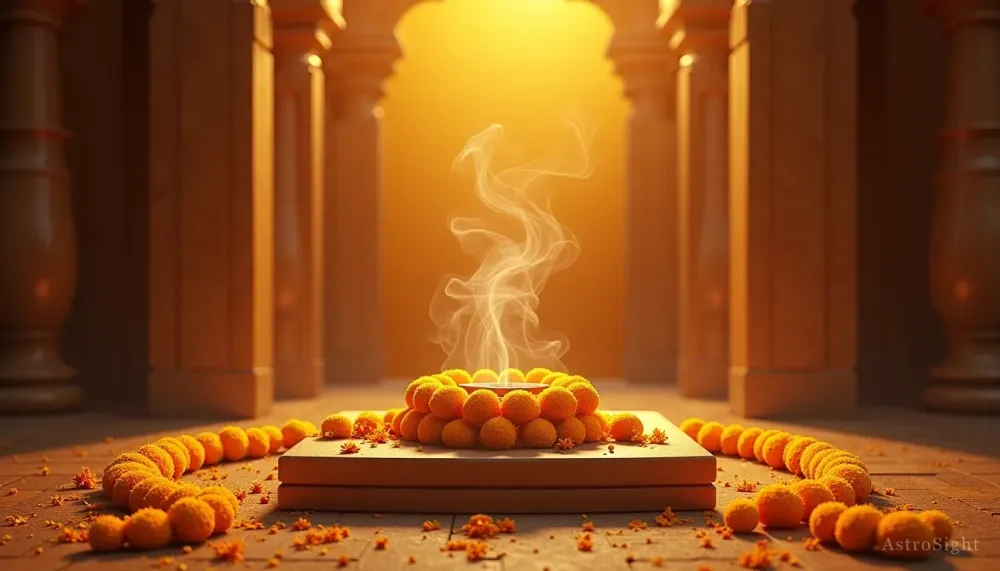
Dashami Tithi: Vijayadashami & Bay of Bengal Ritual
Reviewed by Dr. Meenakshi Sharma, Vedic Astrology & Spiritual Practices Expert — May 2026 Use the birth chart calculator to see how this applies to your personal Vedic chart.
Reviewed by Dr. Meenakshi Sharma, Vedic Astrology & Spiritual Practices Expert — May 2026 Use the birth chart calculator to see how this applies to your personal Vedic chart.
Dashami Tithi is the tenth lunar day of each fortnight — and Ashwin Shukla Dashami, known as Vijayadashami or Dussehra, is one of the most triumphal days in the entire Hindu calendar. As of 2026, it continues to be observed across India and the global Hindu community with the burning of Ravana effigies, the immersion of Durga idols in the Bay of Bengal and other water bodies across West Bengal, the worship of weapons, and the beginning of new journeys. The tenth tithi carries the energy of confirmed victory — not the moment of battle (Navami) but the moment the battle is definitively won.
> Quick Answer: Dashami Tithi is the tenth lunar day of each Paksha, ruled by Yama (the god of righteous order) and associated with victory. It is a Purna (complete) tithi. Ashwin Shukla Dashami is Vijayadashami (Dussehra) — the victory of Rama over Ravana and Durga over Mahishasura. In West Bengal, this day features the immersion of Durga idols in the Ganges and Bay of Bengal. This tithi supports new beginnings, journeys, and all victory-oriented actions.
What Is Dashami Tithi?
> Quick Answer: Dashami is the tenth tithi in the Hindu lunar calendar, spanning the Moon's travel from 108 to 120 degrees of separation from the Sun in Shukla Paksha. It belongs to the Purna (complete) tithi category, sharing this classification with Panchami (5th) and Purnima (15th). Purna tithis carry a quality of fullness and completion that makes them broadly auspicious for important undertakings.
"Dashami" derives from "dasha," meaning ten. Ten in Hindu cosmology represents a completed cycle and the beginning of a new one — the ten avatars of Vishnu (Dashavatara) complete the first cycle of divine incarnations, the ten directions (Disha) represent complete spatial orientation, and the ten Mahavidyas are the complete set of tantric Goddess forms. The tenth tithi carries this quality of a completed round — a victory that is total and whose benefits extend into the next cycle.
The Purna classification makes Dashami especially valuable in muhurta practice. Purna means "complete" or "full" — these tithis carry wholeness rather than depletion. For beginning new ventures, entering a new home, or commencing journeys, Dashami's Purna quality provides the fullest possible foundation.
The Nirnayasindhu identifies Dashami as one of the prime tithis for Vivaha (marriage) muhurta and for Yatra (travel), noting that its Purna character ensures that activities begun here begin from completeness rather than lack.
Vijayadashami: Ashwin Shukla Dashami
> Quick Answer: Vijayadashami (also called Dussehra) falls on Ashwin Shukla Dashami — the tenth day of the bright fortnight in Ashwin (September-October). It commemorates Rama's victory over the ten-headed Ravana (hence "Dasha-Hara" — removal of the ten heads/sins) and the simultaneous victory of Goddess Durga over the buffalo-demon Mahishasura on the tenth day. It is one of India's most widely celebrated national festivals.
The dual victory celebrated on Vijayadashami is theologically rich. Rama's victory over Ravana represents the triumph of Dharma over adharma, truth over deception, and righteousness over demonic arrogance. Durga's victory over Mahishasura (whose battle lasted nine days and concluded on the tenth) represents the triumph of Shakti over the forces that seek to overwhelm and oppress creation.
The Valmiki Ramayana's Uttara Kanda notes that Rama's defeat of Ravana occurred in Ashwin. The Devi Mahatmya (Markandeya Purana) describes the Mahishasura battle as lasting through Navami and concluding on Dashami. That both victories coincide on the same tithi is not coincidence but reflects the tithi's inherent character — Dashami is when victory becomes permanent.
The name "Dussehra" has multiple etymological interpretations. The most common is "Dasha-Hara" — remover of the ten. Ravana's ten heads represent the ten forms of adharma, the ten negative qualities of ego — arrogance, pride, anger, greed, lust, desire, delusion, attachment, jealousy, and cruelty. Rama's arrow removed all ten simultaneously.
Across North India, Dussehra is celebrated with the burning of giant effigies of Ravana, Kumbhakarna, and Meghnad — filled with fireworks, they are burned at dusk in massive public gatherings. The most famous burning occurs in Delhi's Ram Lila grounds, where the effigies reach 50-70 feet in height.
Durga Immersion: The Bay of Bengal Ritual
> Quick Answer: In West Bengal, Vijayadashami is Durga Puja's final day — the day when the large clay Durga idols that have been worshipped through Navratri are immersed in the Ganges, Hooghly river, or ultimately the Bay of Bengal. This immersion (Visarjan) represents Durga returning to Mount Kailash to her husband Shiva. The scene — thousands of idols entering the water simultaneously — is one of Hinduism's most visually striking rituals.
Durga Puja in West Bengal is the cultural and spiritual summit of the year. The four-day festival (Saptami through Dashami) culminates in the visarjan (immersion) on Vijayadashami evening. In Kolkata, the ghats of the Hooghly river fill with processions carrying the idols — sometimes twenty feet tall, elaborately sculpted and painted — through the streets to the water.
The immersion symbolizes the cycle of creation and dissolution. Durga, made of clay (earth element), is worshipped for four days as a living presence. On Dashami, she is returned to the water — the element of cosmic dissolution — from which she will re-emerge in the next cycle. The Brahma Vaivarta Purana describes the Goddess's departure from her maternal home (earth, creation) back to her husband's realm (dissolution, transcendence) as a moment of both grief and joy — grief at separation, joy at reunion.
The specific connection to the Bay of Bengal comes from Kolkata's position near the Bay — the Hooghly river where most immersions occur flows south toward the Bay. The Bay of Bengal, as a body of water that connects to the vast ocean, represents the return to primordial waters. Immersing the Durga idol into these waters is an act of cosmic reintegration.
The Skanda Purana's section on Durga Puja mentions the importance of immersion in flowing water (not stagnant ponds) as the proper conclusion to the festival — the Goddess should return through moving water to the infinite ocean. This text-based preference aligns with the Bengal tradition's use of the Hooghly and ultimately the Bay.
Vijaya Muhurta: The Victory Moment
> Quick Answer: Vijayadashami's most practical application is the Vijaya Muhurta — the specific window of time on this day considered the most auspicious of the entire year for beginning new journeys, new enterprises, new educational undertakings, or any important new action. This muhurta typically falls in the afternoon hours (aparahna) and is calculated from the Dashami's specific timing in the Panchang.
The Vijaya Muhurta is not a fixed clock time but a calculated window within Vijayadashami. It falls in the aparahna (afternoon) segment of the day — the period between roughly 12 PM and sunset, with the most auspicious portion being in the third quarter of this period. The Nirnayasindhu provides the calculation method, which traditional Panchang publications apply and publish for each year.
Using the Vijaya Muhurta to begin something new carries an extraordinary promise in classical texts: the action begun in this window inherits the victory energy of both Rama's triumph and Durga's triumph simultaneously. No other muhurta in the year concentrates two divine victories in a single window.
The practical applications of the Vijaya Muhurta are extensive: starting a new business, signing a contract, beginning a new educational program, entering a new house, commencing travel to a new destination, purchasing a vehicle, or starting any new job. The Dharmasindhu notes that even individuals who do not typically follow the Panchang for muhurta purposes specifically seek to begin major new endeavors on Vijayadashami.
The tradition of beginning new things on Vijayadashami is so deeply embedded in Indian culture that it has influenced secular practice — government inaugurations, school admissions, and business launches are routinely scheduled on this day regardless of the participants' level of traditional observance.
Weapons Worship: Shastra Puja on Dashami
> Quick Answer: Shastra Puja (weapon worship) is performed on Vijayadashami, continuing the Ayudha Puja tradition from Navami. Weapons, tools, and implements are ceremonially worshipped, consecrated, and then put back into use. The Kshatriya (warrior) tradition of polishing and worshipping weapons on this day connects to Rama's preparation for battle and his victory. In modern contexts, this extends to police and military equipment, professional tools, and vehicles.
The warrior tradition of weapon worship on Vijayadashami is documented in the Skanda Purana, which describes the Kshatriya ritual of taking weapons from their resting place, cleaning them, applying sindoor and turmeric, offering flowers and incense, reciting victory mantras, and then formally taking them up for use. This ritual simultaneously consecrates the weapons for righteous use and seeks divine blessing for the wielder's protection.
The most elaborate Shastra Puja in contemporary practice occurs at the Mysore Dasara — the royal celebration of Vijayadashami at the Mysore Palace in Karnataka, which has been observed continuously for centuries. The royal weapons, elephants, and entire court are processed in a grand Dasara procession, drawing hundreds of thousands of spectators. The procession's centerpiece is the golden howdah (seat) on the lead elephant, carrying the goddess Chamundeshwari (a form of Durga) in a palanquin.
Dashahara: The Ten-Sin Removal
> Quick Answer: Vijayadashami is also called Dashahara — the removal of ten sins. The ten sins (Dasha Papa) are: three of body (violence, theft, adultery), four of speech (lying, harsh words, slander, idle talk), and three of mind (covetousness, malice, wrong beliefs). Observing Vijayadashami with proper worship, fasting, and righteous intention removes these ten categories of error accumulated over the year.
The Dharmasindhu provides the theological basis for Dashahara as a day of purification from the ten sins. The connection between Ravana's ten heads and the ten categories of sin is explicitly stated: Ravana's defeat represents not merely external victory over a demon but the internal victory over the ten sinful tendencies that every person carries.
This interpretation elevates Vijayadashami from a historical commemoration to a present, applicable spiritual practice. When Rama's arrow burns Ravana's ten heads, it represents the aspirant's decisive rejection of the ten categories of adharma within their own life. The burning of Ravana effigies in public celebrations embodies this internal burning through external ritual.
The Brahma Vaivarta Purana's treatment of Dashahara notes that the purification is particularly effective when accompanied by: bathing in a sacred river, performing Vishnu worship (especially in Rama's form), distributing food to the poor, and avoiding all ten categories of sin for the entire day.
Monthly Dashami Significance
> Quick Answer: Beyond Vijayadashami, every Dashami of the year carries the Purna (complete) quality and is suitable for travel, new ventures, and marriage muhurtas. Monthly Dashami is also associated with Yama Danda — the staff of Yama (righteous law). In some traditions, ancestors are honored on certain monthly Dashamis that fall in Krishna Paksha. The day also carries significance for ending projects, completing cycles, and celebrating achievements.
The monthly significance of Dashami is primarily its Purna classification — in any month, a Shukla Dashami is among the best tithis for beginning a new venture, commencing travel, or scheduling important activities. The full expression of Purna energy in the lunar month's tenth day provides a dependable auspicious window twelve times a year.
Yama's connection to Dashami is subtle but present. Yama is the god of Dharmic order — the one who ensures that the moral law of karma operates without deviation. The tenth tithi, representing completion of a cycle, comes under Yama's domain insofar as it represents the accounting of what has been accomplished in the preceding nine days. This connection is reflected in the Yamadanda Shashthi observance (which also involves Yama), but Dashami carries a more direct Purna quality that overrides Yama's usually limiting associations.
Auspicious Activities on Dashami
> Quick Answer: Dashami is one of the most broadly auspicious tithis for practical purposes. It is excellent for: new journeys, starting businesses, marriage muhurtas, entering new homes (Griha Pravesh), educational beginnings (Vidyarambha — especially on Vijayadashami), weapon and tool worship, signing contracts, and any new undertaking that requires the energy of confirmed victory and completion.
The Dharmasindhu includes Dashami in its recommended list for Vivaha (marriage) muhurta. The Muhurta Chintamani notes Dashami as one of the preferred tithis for beginning any important undertaking. The combination of Purna (complete) classification and Vijayadashami's cultural weight as the year's premier auspicious day makes Dashami one of the most practically useful tithis in the calendar.
Marriage: Shukla Dashami in an auspicious month is among the best tithis for wedding ceremonies. The Purna quality ensures the marriage begins from completeness. Many traditional wedding muhurtas are scheduled on Dashami.
New journeys: The Vijaya Muhurta on Vijayadashami is the supreme travel beginning of the year. But any Shukla Dashami is favorable for commencing an important journey.
Griha Pravesh: Entering a new home on Dashami under the Vijaya quality invites the completed victory's energy into the household from the first day.
Vidyarambha: Beginning formal education on Vijayadashami has a long tradition. Students who begin on this day align their learning with the year's most triumphant day.
Activities to Avoid on Dashami
> Quick Answer: While Dashami is broadly auspicious, it is less suited for activities requiring deep inwardness, ancestral rites, or initiation of mourning-related activities. The day's completion and victory energy is forward-moving — it supports starting new chapters, not dwelling in what has ended. Some regional traditions caution against oil massage on certain Dashamis.
Dashami's forward-moving, victory energy means that activities requiring retreat, inwardness, or endings are less well-suited. The Pitru Karma (ancestral Shraddha) is better performed on Amavasya and the Krishna Paksha tithis corresponding to the ancestor's death date. The victory energy of Dashami pulls toward the future, not the past.
Oil massage and oil-related activities are cautioned on certain Dashamis in some regional traditions — particularly those in Kartik month, when the Kartik rules restrict oil use. This is a specific, contextual restriction rather than a universal Dashami caution.
Historical Significance from Ramayana
> Quick Answer: The Valmiki Ramayana's account of Rama's defeat of Ravana is the foundational narrative for Vijayadashami. The Adhyatma Ramayana adds that before his battle, Rama performed worship of the Goddess Durga (Sharadiya Navratri was observed by Rama for the first time on this occasion) and received her blessings for victory. The two great stories — Rama's and Durga's — thus converge on Ashwin Shukla Dashami.
The Adhyatma Ramayana's account of Rama performing Durga worship before his battle with Ravana is one of the most important narrative bridges in Hindu literature. Rama, unable to secure the help he needed, was advised by the sage Narada to perform Durga worship. He observed the nine-day Navratri (which was performed for the first time in creation on this occasion, establishing the tradition for all subsequent time) and on the tenth day — Vijayadashami — received the Goddess's blessing and proceeded to kill Ravana.
This story creates the theological basis for the dual celebration on Vijayadashami: Durga's own victory over Mahishasura (who also fell on Dashami) and Rama's victory (made possible by Durga's blessing). The tithi itself becomes the vessel that holds both.
The Brahma Vaivarta Purana confirms this narrative and adds that the Vijaya Muhurta on Vijayadashami was first calculated and used by Rama himself — the original beneficiary of Dashami's victory energy was the ideal king, making this muhurta the most royally endorsed in the tradition.
For the full context of how Dashami fits within the complete lunar cycle, see /spirituality/30-tithis-explained-shukla-krishna-paksha-meaning. The preceding Navami, which carries Maha Navami and Ram Navami's energy, is detailed at /spirituality/navami-tithi-ram-navami-other-significances.
Align Your Spiritual Path with Your Purpose
Your birth chart reveals your dharma — the path aligned with your soul purpose. Get expert analysis connecting spiritual direction with practical life choices.
Get Your Career Report
Dr. Meenakshi Sharma
PhD in Vedic Astrology, 20+ Years Experience
Dr. Meenakshi Sharma is a distinguished Vedic astrologer with a PhD in Vedic Astrology and over 20 years of professional experience in the ancient science of Jyotisha. Her extensive practice encompasses thousands of chart readings, predictive analyses, and remedial consultations, making her uniquely qualified to bridge traditional Vedic wisdom with contemporary applications. As a contributing writer for AstroSight, Dr. Sharma specializes in natal chart analysis, predictive astrology, and Vedic remedial measures, sharing her deep knowledge through insightful articles that make complex astrological concepts accessible to practitioners at all levels. Her approach combines rigorous academic training with ethical consultation standards, empowering clients through education and practical guidance while maintaining authentic adherence to classical Vedic principles.


