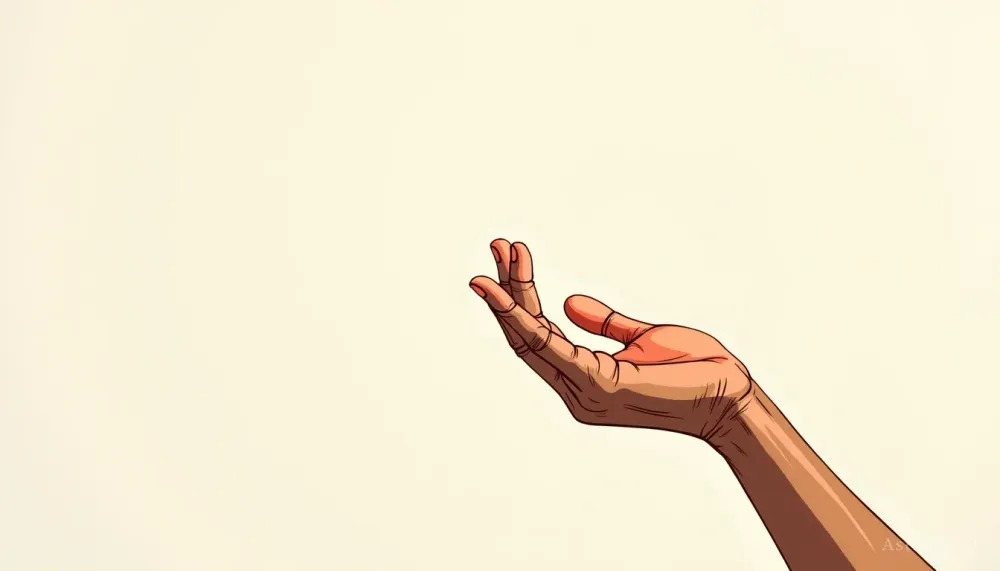
Mounts in Palmistry: 7 Mounts and What They Reveal
As of 2026, the mounts of the palm remain one of the least understood and most underutilized aspects of palmistry — even among people who have studied the major lines in depth. Yet in classical palmistry and in Hasta Samudrika Shastra, the mounts are as important as the lines. They provide the under
As of 2026, the mounts of the palm remain one of the least understood and most underutilized aspects of palmistry — even among people who have studied the major lines in depth. Yet in classical palmistry and in Hasta Samudrika Shastra, the mounts are as important as the lines. They provide the underlying planetary context for every line reading, reveal dominant character qualities, and show which areas of life carry the most energy and development. Use the birth chart calculator to see how this applies to your personal Vedic chart.
Reviewed by Shri Ankit Bansal, Vedic Astrologer & Founder of AstroSight, 2026
What Are the Mounts in Palmistry?
> Quick Answer: The mounts are the seven fleshy pads on the palm, each corresponding to one of the seven classical planets. A firm, well-developed mount amplifies the qualities of its planet in the person's life. A flat or underdeveloped mount indicates those planetary qualities are less prominent. An overdeveloped or excessively soft mount indicates excess or imbalance in that area.
The mounts are the raised, fleshy pads you can feel on your palm when you press its surface. There are seven principal mounts, each positioned beneath a finger or on the lateral edges of the palm, each corresponding to a classical planet in the Vedic and Western astrological systems.
In Hasta Samudrika Shastra, the mounts are called Parvatas — "parvata" meaning mountain or elevated place. The parvatas are the planetary stations on the hand. A developed, firm parvata indicates strong, positive planetary energy in that area of life. The lines that arise from or cross these mounts derive their meaning partly from the mount's condition.
B.V. Raman emphasized this point extensively: the lines cannot be read correctly without understanding the mount landscape they cross and originate from. A Heart Line ending strongly at the Jupiter mount is read differently from a Heart Line ending at a flat, underdeveloped Jupiter mount — in the first case, the idealism and ambition of Jupiter amplifies the Heart Line's expression; in the second, the Jupiter quality is absent.
How to assess a mount: 1. Press each mount gently with your fingertip 2. Note whether it feels firm and elastic, soft and puffy, or flat 3. Compare mounts to each other — the most prominent mount reveals the dominant planetary energy 4. Also check whether the mount is centered beneath its finger or displaced toward an adjacent mount
A mount slightly displaced toward an adjacent finger lends some of its qualities to that adjacent planetary domain — a Jupiter mount that leans toward Saturn mixes Jovian ambition with Saturnian discipline.
The Mount of Jupiter: Ambition and Leadership
> Quick Answer: The Jupiter mount sits below the index finger. A firm, well-developed Jupiter mount indicates ambition, leadership ability, spiritual inclination, and a desire for authority and influence. A flat Jupiter mount indicates lack of ambition or confidence. An overdeveloped, puffy Jupiter mount indicates arrogance, excessive self-importance, and domineering behavior.
Location: At the base of the index finger, the mount of Jupiter occupies the upper corner of the palm nearest the thumb side.
Associations: Jupiter is the planet of wisdom, expansion, authority, dharma, and prosperity. In Vedic thought, Jupiter (Guru/Brihaspati) is the teacher of the gods — the planet that governs right knowledge, spiritual guidance, and the exercise of legitimate authority.
What a prominent, firm Jupiter mount indicates: 1. Strong ambition and the desire to achieve 2. Natural leadership ability and a desire to guide others 3. Spiritual inclination — interest in religion, philosophy, or esoteric knowledge 4. Self-confidence and belief in one's own capacities 5. Strong will to succeed in life's outer goals 6. Often accompanies success in positions of authority, teaching, or spiritual work
What a flat or underdeveloped Jupiter mount indicates: 1. Low ambition and difficulty asserting oneself 2. Lack of self-confidence and a tendency to defer to others 3. Spiritual interests are present but not a driving force 4. The person achieves but without the leadership or ambition dimension
What an overdeveloped or excessively puffy Jupiter mount indicates: 1. Arrogance and self-importance 2. Domineering tendencies — the desire for authority without the discipline to use it wisely 3. Materialism — Jupiter's expansiveness turned toward acquiring without wisdom
Jupiter mount and the index finger: The index finger governs Jupiter's conscious expression. When the index finger is long and the Jupiter mount is well-developed, the Jovian qualities are expressed actively and confidently. A short index finger with a flat Jupiter mount indicates low confidence and difficulty taking leadership.
In Hasta Samudrika Shastra, a firm Jupiter mount is one of the most favorable signs for a person seeking positions of responsibility, spiritual development, or professional authority.
The Mount of Saturn: Discipline and Karma
> Quick Answer: The Saturn mount sits below the middle finger. A firm Saturn mount indicates discipline, introspection, philosophical depth, and a strong sense of duty and karma. A flat Saturn mount indicates avoidance of responsibility and lack of seriousness. An overdeveloped Saturn mount indicates excessive fatalism, melancholy, or morbid tendencies.
Location: Below the middle finger, at the center top of the palm.
Associations: Saturn is the planet of karma, discipline, structure, time, and fate. In Vedic thought, Shani (Saturn) governs the fruits of past karma, the discipline required to fulfill one's obligations, and the serious engagement with life's responsibilities.
What a prominent, firm Saturn mount indicates: 1. Seriousness, depth of character, and philosophical inclination 2. Strong sense of duty, responsibility, and karmic awareness 3. Capacity for sustained, disciplined work over long periods 4. Interest in metaphysics, spirituality, and the deeper questions of existence 5. Often accompanies careers in law, science, philosophy, research, or agriculture 6. Introversion and a preference for solitary reflection
What a flat Saturn mount indicates: 1. Avoidance of responsibility and unwillingness to commit 2. Frivolity — the person does not engage seriously with life's deeper obligations 3. Lack of discipline and difficulty following through on long-term commitments
What an overdeveloped Saturn mount indicates: 1. Excessive fatalism — the belief that nothing can be changed or that effort is futile 2. Melancholy, pessimism, and a morbid preoccupation with death or suffering 3. Misanthropy and extreme isolation 4. In classical texts, a greatly overdeveloped Saturn mount is associated with criminal tendencies when paired with certain other markings
The Fate Line (Bhagya Rekha) runs toward the Saturn mount and is read in direct relationship to it. A strong Saturn mount with a well-developed Fate Line indicates a person who engages seriously with their karmic work in the world — the dharmic weight of their life is consciously borne.
The Mount of Apollo (Sun): Creativity and Success
> Quick Answer: The Apollo mount sits below the ring finger. A firm, well-developed Apollo mount indicates creativity, artistic talent, love of beauty, a desire for fame, and the capacity for public success. A flat Apollo mount indicates modest creative drive and indifference to recognition. An overdeveloped Apollo mount indicates vanity and ostentation.
Location: Below the ring finger, the third of the four fingers.
Associations: The Sun (Apollo) governs creativity, self-expression, individuality, recognition, fame, and success. In Vedic thought, Surya (the Sun) is the Atmakaraka — the significator of the soul's essence. The Apollo mount reflects how fully the individual's essential nature expresses itself in creative and public life.
What a prominent, firm Apollo mount indicates: 1. Strong creative gifts — particularly in art, music, design, performance, or writing 2. Love of beauty and aesthetic refinement 3. Desire for recognition and a natural orientation toward public life 4. Warmth, generosity, and a sunny disposition 5. Capacity for significant success and distinction in creative or public fields 6. Often accompanies the presence of a clear Sun Line
What a flat Apollo mount indicates: 1. Modest creative interest and little drive toward fame or public recognition 2. Practical, functional orientation — the person values utility over beauty 3. Indifference to public recognition or artistic achievement
What an overdeveloped Apollo mount indicates: 1. Vanity and excessive concern with appearance and reputation 2. Ostentation — displaying wealth and achievement for its own sake 3. Exaggerated need for admiration that becomes a source of vulnerability
The Sun Line that runs toward this mount is the most important line reading in the Apollo zone. A well-developed Apollo mount with a clear Sun Line is the definitive formation of creative success and public recognition in classical palmistry.
The Mount of Mercury: Intelligence and Communication
> Quick Answer: The Mercury mount sits below the little finger. A firm Mercury mount indicates sharp intelligence, quick communication, business acumen, and adaptability. A flat Mercury mount indicates slower mental processing and less commercial instinct. An overdeveloped Mercury mount indicates cunning and a tendency toward manipulation or dishonesty.
Location: Below the little finger, on the upper outer edge of the palm.
Associations: Mercury (Budha) governs intelligence, communication, commerce, adaptability, the nervous system, and language. Mercury is the planet of the merchant, the writer, the speaker, and the connector.
What a prominent, firm Mercury mount indicates: 1. Quick, sharp intelligence and fast mental processing 2. Exceptional communication ability — verbal and written 3. Strong business instinct and commercial shrewdness 4. Adaptability and the ability to read people and situations quickly 5. Talent for languages, negotiation, and persuasion 6. Often accompanies success in business, writing, medicine, law, or any field requiring communication and quick thinking
What a flat Mercury mount indicates: 1. Slower mental processing and less verbal fluency 2. Limited commercial instinct 3. Straightforward, less adaptable communication style 4. Fewer interests in commerce or negotiation
What an overdeveloped Mercury mount indicates: 1. Cunning and a tendency toward manipulation 2. Dishonesty or deception when Mercury's sharp intelligence is not disciplined by ethical values 3. Excessive talkativeness and restlessness
The Mercury Line (when present) runs toward this mount and reinforces or modifies the mount's reading. A strong Mercury mount with a clear Mercury Line indicates both commercial intelligence and the health and nervous system resilience to sustain it.
The Mount of Venus: Love and Sensuality
> Quick Answer: The Venus mount is the large fleshy pad at the base of the thumb, encircled by the Life Line. A full, firm Venus mount indicates physical vitality, love, sensuality, warmth, and a generous affectionate nature. A flat Venus mount indicates less physical vitality and a cooler emotional temperament. An excessively large, soft mount indicates overindulgence and excess in sensual pursuits.
Location: The Venus mount is the largest mount on the palm — the prominent fleshy pad at the base of the thumb, inside the arc of the Life Line.
Associations: Venus (Shukra) governs love, beauty, sensuality, physical pleasure, family warmth, artistic appreciation, and material abundance. In Vedic thought, Shukra is the guru of the demons — the planet of earthly pleasure, refinement, and the enjoyment of incarnated life.
What a full, firm Venus mount indicates: 1. Strong physical vitality and abundant life force 2. Warm, generous, affectionate nature — genuinely loving and giving 3. Love of beauty, art, music, and sensory pleasure 4. Strong family bonds and delight in domestic life 5. Physical attractiveness and magnetic personal warmth 6. Often accompanies wealth through family or the comfortable enjoyment of material life
What a flat Venus mount indicates: 1. Lower physical vitality and a less sensually engaged orientation 2. Cooler emotional temperature — less demonstrative in affection 3. More ascetic or intellectually rather than physically oriented life 4. Less interest in family or domestic pleasures
What an excessively large, soft Venus mount indicates: 1. Overindulgence in sensual pleasures — food, sexuality, comfort 2. Laziness and difficulty with self-discipline 3. Sensual excess that becomes a drain on life energy rather than a source of vitality
In Hasta Samudrika Shastra, a well-developed Venus mount is closely linked to Lakshmi energy — the abundance and beauty that accompanies a life of genuine warmth and love. The Life Line circles the Venus mount, and the wider the arc of the Life Line, the more extensively it encompasses the Venus mount's energy, indicating greater physical vitality and life enjoyment.
The Mounts of Moon and Mars: Intuition and Courage
> Quick Answer: The Moon mount sits on the outer lower edge of the palm and governs imagination, intuition, travel, and the subconscious. A full Moon mount indicates creative imagination and psychic sensitivity. The two Mars mounts — Upper and Lower — govern offensive courage and endurance respectively. Well-developed Mars mounts indicate willpower, resilience, and the capacity to fight for one's goals.
Moon Mount:
Location: On the outer edge of the palm, in the lower section — opposite side from the Venus mount, below the little finger and Mercury mount.
Associations: The Moon (Chandra) governs imagination, intuition, the subconscious mind, emotional depths, travel, and the receptive dimension of consciousness.
What a full, firm Moon mount indicates: 1. Strong creative imagination — the person thinks in images, symbols, and dreams 2. Psychic sensitivity and heightened intuition 3. Love of travel and a restless desire for new environments and experiences 4. Emotional depth and sensitivity to atmosphere and mood 5. Often accompanies a strongly curved, downward-sloping Head Line — both indicators of imaginative, intuitive thinking
What a flat Moon mount indicates: 1. Limited imaginative life and practical, earthbound thinking 2. Less sensitivity to intuitive impressions 3. Preference for familiar environments over travel
What an overdeveloped, puffy Moon mount indicates: 1. Excessive fantasy and escapism 2. Disconnection from practical reality 3. In classical texts, associated with an overly restless life or excessive emotional reactivity
Mars Mounts:
Classical palmistry identifies two Mars mounts:
Upper Mars (also called Active Mars or Aggressive Mars): Located in the mid-palm area, between the Jupiter mount and the base of the Venus mount — roughly where the thumb's web meets the palm. Upper Mars governs offensive courage — the willingness to advance, fight, and take the initiative in challenges.
Lower Mars (also called Passive Mars or Resistant Mars): Located on the outer mid-palm, between the Mercury mount and the Moon mount. Lower Mars governs defensive courage, endurance, and the will to persist under pressure.
What well-developed Mars mounts indicate: 1. Upper Mars: boldness, initiative, willingness to fight for goals, offensive courage 2. Lower Mars: endurance, patience under fire, the ability to sustain effort under difficulty, defensive will
What flat Mars mounts indicate: 1. Upper Mars flat: avoidance of confrontation, fear of challenges, passivity 2. Lower Mars flat: lack of endurance, giving up under pressure, poor resilience
What overdeveloped Mars mounts indicate: 1. Upper Mars overdeveloped: aggression, belligerence, tendency toward violence or domination 2. Lower Mars overdeveloped: stubbornness and inability to yield even when change is appropriate
Reading Overdeveloped and Underdeveloped Mounts
> Quick Answer: A mount is "overdeveloped" when it is excessively large, puffy or soft to the touch, dominating the palm and overriding other features. It is "underdeveloped" when it is flat or absent. In classical palmistry, balance is ideal — firm but not swollen mounts indicate positive planetary expression without excess or deficiency.
The ideal mount is firm, elastic, and well-defined — prominent enough to indicate active planetary energy without being so overdeveloped that it indicates excess or imbalance.
Assessing mount development: 1. Firm and springy: The most favorable quality. The mount is well-developed and the energy is expressed constructively. 2. Hard and unyielding: The planetary energy is rigid and inflexible — the person applies its qualities in a fixed, unbending way. 3. Soft and puffy: The planetary energy is present but lacking direction and discipline. The person has the raw energy but wastes or misapplies it. 4. Flat: The planetary energy is minimal in the person's life and character.
Reading displaced mounts: When a mount is centered under its finger, the planetary energy is expressed directly. When a mount is displaced — leaning toward an adjacent finger — it blends the qualities of two planets. 1. Jupiter mount leaning toward Saturn: ambition disciplined by seriousness; leadership with karmic responsibility 2. Apollo mount leaning toward Saturn: creativity disciplined by structure; the serious artist 3. Apollo mount leaning toward Mercury: creativity in commercial domains; the enterprising artist 4. Mercury mount leaning toward Apollo: business with creative flair; the commercially creative person
In Hasta Samudrika Shastra, reading the mounts alongside the lines they accompany gives the most complete and accurate reading. The mounts are the ground; the lines are the paths that cross it. For a complete picture of all major lines and their interaction with the mounts, see /palmistry/palmistry-lines-heart-head-life-fate-decoded. A birth chart reading alongside your palm reading reveals the same planetary energies from a complementary angle.
Your Birth Chart Reveals Far More Than Palm Lines
Vedic astrology provides depth that palmistry cannot reach. Get a complete career and life direction analysis based on your exact birth chart.
Get Your JanampatriPersonalized Report
Janampatri (Birth Chart Report)
Your palm lines and your birth chart are two maps of the same destiny — see both together
- Personalized analysis based on YOUR exact birth chart
- Expert-prepared by Dr. Meenakshi Sharma
- Delivered as PDF within 24-48 hours
- Unlimited follow-up clarifications
By Dr. Meenakshi Sharma · Delivered in 24-48 hours

Shri Ankit Bansal
Vedic Astrologer · Numerology and Vastu Expert, 15+ Years
Shri Ankit Bansal is a renowned numerology and Vastu expert with over 15 years of specialized experience in these ancient Indian sciences. His extensive practice encompasses thousands of consultations in numerological analysis, name corrections, business numerology, and comprehensive Vastu assessments for residential and commercial properties. As a contributing writer for AstroSight, Shri Bansal combines his deep understanding of numerical vibrations with practical Vastu principles to provide holistic solutions that harmonize living and working spaces with cosmic energies. His expertise spans personal numerology charts, business name analysis, property Vastu audits, and remedial measures that blend traditional wisdom with modern lifestyle requirements. Through his methodical approach and proven track record, Shri Bansal has established himself as a trusted authority in helping clients optimize their environment and numerical influences for enhanced prosperity, health, and overall well-being.