Palmistry Lines: Heart, Head, Life, Fate Decoded
As of 2026, palmistry remains one of the most consulted branches of Vedic predictive science, with millions of people across India, Southeast Asia, and the West turning to their hands for self-understanding and life guidance. The lines etched into the palm form the foundation of this ancient discipl
As of 2026, palmistry remains one of the most consulted branches of Vedic predictive science, with millions of people across India, Southeast Asia, and the West turning to their hands for self-understanding and life guidance. The lines etched into the palm form the foundation of this ancient discipline — each one mapping a different dimension of human experience, from emotional life and mental constitution to career direction and physical vitality. Use the birth chart calculator to see how this applies to your personal Vedic chart.
Reviewed by Shri Ankit Bansal, Vedic Astrologer & Founder of AstroSight, 2026
What Are the Major Palmistry Lines?
> Quick Answer: The four major palmistry lines are the Heart Line, Head Line, Life Line, and Fate Line. Each runs across a different part of the palm and governs a distinct area of life — emotions, intellect, vitality, and career destiny respectively. Reading all four together gives a complete picture of a person's nature and path.
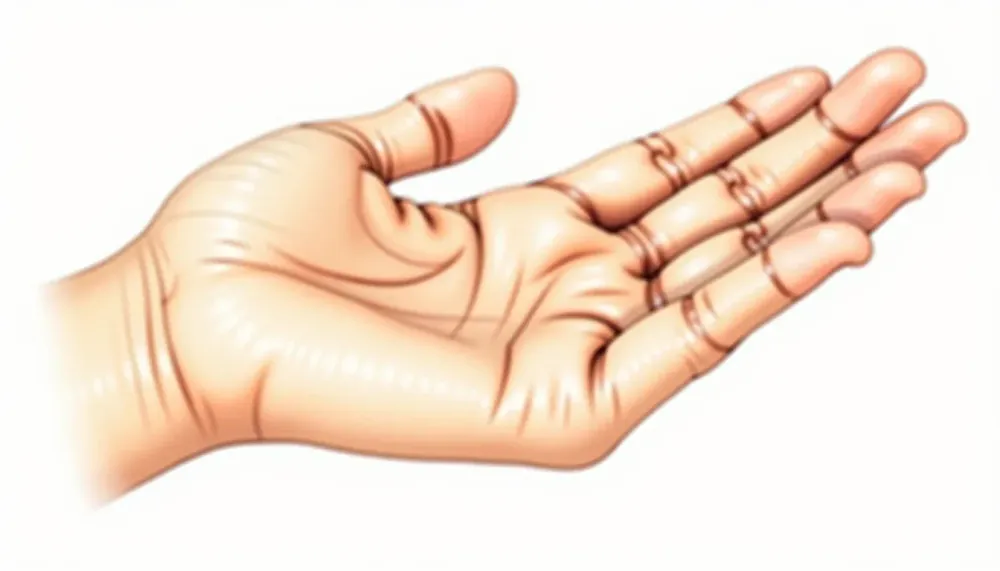
The palm contains dozens of lines, but classical palmistry — both Western and Indian — identifies four as primary. These are the lines that appear on virtually every hand and carry the most consistent interpretive meaning across traditions. The Heart Line (Mana Rekha) sits highest on the palm, just below the base of the fingers. The Head Line (Buddhi Rekha) runs below it in the middle of the palm. The Life Line (Jeevan Rekha) arcs from the edge of the palm near the index finger down toward the wrist. The Fate Line (Bhagya Rekha) runs vertically from the base of the palm upward toward the middle finger.
Beyond these four, a range of secondary lines — the Sun Line, Mercury Line, Marriage Lines, and others — provide additional detail. A complete palm reading integrates all visible lines, the shapes and fullness of the mounts beneath the fingers, and the overall texture and shape of the hand itself.
The classical Indian text Hasta Samudrika Shastra categorizes lines not merely as static marks but as living records of a person's karma, tendencies, and life trajectory. B.V. Raman, one of India's foremost astrologers of the modern era, also touched on palmistry's connection to the planetary system, noting that each major line corresponds to a planet and reflects the quality of that planetary influence in the native's life.
The Heart Line: Love, Emotions, and Relationships
> Quick Answer: The Heart Line runs horizontally across the upper palm beneath the fingers and governs emotional life, love, and relationships. A long, clear Heart Line indicates emotional stability and depth. Breaks, chains, or islands signal emotional turbulence, difficulties in love, or periods of heartbreak during the corresponding life phases.
The Heart Line is the uppermost of the major horizontal lines. It begins on the percussion edge of the palm — the outer side under the little finger — and travels across the palm toward the index or middle finger. Its endpoint, curvature, depth, and any markings on it all contribute to its reading.
What a strong, clear Heart Line means: A deep, unbroken Heart Line that ends beneath the index finger or between the index and middle finger indicates a balanced, idealistic approach to love. The person values emotional depth and long-term commitment. Hasta Samudrika Shastra associates this formation with a person who loves genuinely and extends warmth to family and close relationships.
What a chained or broken Heart Line means: Chains along the Heart Line indicate emotional sensitivity and a tendency toward emotional instability during the chained period. The person experiences feelings intensely and is affected deeply by relational disappointments. Breaks indicate periods of significant emotional upheaval — a difficult breakup, loss, or emotional shift.
Curvature and endpoint variations: A Heart Line that curves sharply upward toward the index finger belongs to someone idealistic and demonstrative in love — they express affection openly and hold high standards for partners. A straighter Heart Line indicates a more practical approach to relationships; this person tends to be logical about love and values stability over romance. When the Heart Line ends under the middle finger, the person leans toward self-focused emotional expression and keeps romantic feelings guarded.
Forks: A forked ending to the Heart Line — splitting toward both the index and middle fingers — is considered favorable in classical palmistry. It indicates balance between idealism and realism in relationships. The person understands both the emotional and practical dimensions of love.
In the Hasta Samudrika Shastra framework, the Heart Line is also associated with the condition of the heart organ and general circulatory health. A pale, thin Heart Line with many small breaks signals the need for attention to cardiac and circulatory wellbeing.
The Head Line: Intelligence, Logic, and Mental Patterns
> Quick Answer: The Head Line runs horizontally across the middle of the palm below the Heart Line. It governs intellect, thinking style, and mental constitution. A long Head Line indicates broad thinking and mental range. Its slope, depth, and markings reveal whether the mind tends toward logic and analysis or toward imagination and creative thought.
The Head Line begins at or near the same starting point as the Life Line — at the edge of the palm near the base of the index finger — and travels across the palm. Its starting connection to the Life Line, its length, its slope, and any markings are all read closely.
Joined or separate start: When the Head Line and Life Line share a starting point for a short distance before separating, it indicates someone who is careful, thoughtful, and influenced by family in their early decisions. The longer the joined section, the more the person carries family conditioning into adult life. When the Head Line starts clearly separate from the Life Line, the individual is independent-minded from an early age — confident, sometimes impulsive, and quick to act on their own judgment.
Slope and direction: A Head Line that runs relatively straight across the palm indicates logical, analytical thinking — this person deals in facts, systems, and practical reasoning. A Head Line that curves or slopes downward toward the Moon mount indicates strong imagination, creative thinking, and an interest in intuitive or artistic pursuits. The steeper the downward curve, the more the imagination dominates over practical logic. B.V. Raman noted in his writings on astro-palmistry that a strongly curved Head Line often accompanies a dominant Mercury or Moon in the birth chart.
Length: A long Head Line that reaches nearly to the outer edge of the palm indicates breadth of thought — the person considers many angles before reaching conclusions. A shorter Head Line indicates focused, concentrated thinking. Neither length is superior; they indicate different thinking styles.
Breaks and islands: A break in the Head Line at any point corresponds to a period of mental disruption — a change in thinking, a period of confusion, recovery from a head injury, or a significant mental challenge. Islands indicate prolonged periods of stress, indecision, or mental fog.
The Life Line: Vitality, Energy, and Life Path
> Quick Answer: The Life Line arcs from near the base of the index finger downward around the Venus mount toward the wrist. It governs physical vitality, life energy, and the quality of life experiences. The Life Line does not predict lifespan — this is the most widespread misconception in palmistry. Its depth, width, and any markings reveal the quality of energy available during different life phases.
The Life Line is the most misunderstood line in all of palmistry. People frequently believe it predicts how long they will live. This interpretation is incorrect, and both Hasta Samudrika Shastra and modern classical palmists are unambiguous on this point. The Life Line shows the quality, intensity, and nature of life experiences — not duration. A short Life Line does not indicate early death. A long Life Line does not guarantee longevity.
What the Life Line actually shows: A deep, clear, wide arc indicates strong physical vitality, good stamina, and an energetic engagement with life. The person recovers well from illness, takes on physical challenges, and maintains robust health during the periods covered by that strong section. A thin, faint, or chained Life Line indicates a more fragile constitution — not danger, but a need for care and energy management.
Breaks: A break in the Life Line indicates a major transition — a significant change in direction, environment, health, or lifestyle. In Hasta Samudrika Shastra, this is read as a major karmic shift rather than a catastrophe. The person moves from one phase of life to a distinctly different one. How the break is formed matters: a clean break that overlaps indicates a managed transition; a gap indicates a more abrupt change.
The wide arc: A Life Line that swings out in a generous arc across the palm — encircling a large Venus mount — indicates abundant physical energy, a love of adventure and physical activity, and strong vitality throughout life. A Life Line that hugs close to the thumb indicates more reserved energy, a cautious approach to life's adventures, and a quieter physical constitution.
For a complete reading of this line, see our dedicated guide at /palmistry/life-line-in-palmistry-length-breaks-what-they-mean.
The Fate Line: Career, Destiny, and Life Direction
> Quick Answer: The Fate Line runs vertically from the base of the palm upward toward the middle finger. It governs career, professional destiny, and the role that external circumstances play in the person's life. Not everyone has a Fate Line — its absence is normal and does not mean a person lacks direction or achievement.
The Fate Line is also called the Bhagya Rekha — the line of destiny. Its presence, strength, starting point, and any markings tell the story of a person's engagement with the outer world: their career, public roles, and the degree to which external forces shape their life path.
Starting points and their meaning: Where the Fate Line begins is one of its most important attributes. A Fate Line starting from the very base of the palm — near the wrist — indicates someone whose sense of destiny and direction forms early in life. These individuals often know their path from a young age. A Fate Line that begins connected to the Life Line indicates a self-made person who builds their career from their own effort, particularly in early adulthood. A Fate Line starting from the Moon mount (the opposite side of the palm from the thumb) indicates a person whose career is shaped by the public, by travel, or by the influence of others.
Career timing: The Fate Line is also used to time career events. When the line begins low on the palm, the career launches early. When it begins only in the mid-palm, the person finds their professional direction in their 30s or 40s. This later start is not a deficiency — in many cases, it indicates someone who tried multiple directions before finding the one that truly fits.
Breaks and changes: Breaks in the Fate Line indicate career changes or interruptions. These are not failures — Hasta Samudrika Shastra reads them as shifts in life direction. After a break, the line resumes, sometimes stronger than before, indicating a new chapter of professional engagement.
For deeper analysis, see the full article at /palmistry/fate-line-in-palmistry-career-destiny-reading.
Minor Lines in Palmistry
> Quick Answer: Minor palmistry lines include the Sun Line, Mercury Line, Marriage Lines, and Girdle of Venus. Each adds specific information: the Sun Line relates to fame and recognition, the Mercury Line to health and business ability, Marriage Lines to significant unions, and the Girdle of Venus to emotional sensitivity.
Beyond the four major lines, the palm carries a range of secondary lines that refine the reading:
Sun Line (Apollo Line): Runs toward the ring finger and indicates success, fame, and creative recognition. A clear Sun Line is a favorable sign for artistic, public, or creative careers.
Mercury Line (Health and Business Line): Runs toward the little finger. Its presence and clarity indicate strong business instinct and commercial acumen. Its condition also reflects digestive and nervous system health.
Marriage Lines: Short horizontal lines on the percussion edge of the palm beneath the little finger. Each line represents a significant union or deep relationship. Their length, depth, and any markings indicate the nature and durability of each relationship.
Girdle of Venus: A curved line running below the ring and little fingers. Its presence indicates heightened emotional sensitivity, artistic temperament, and a tendency toward intense emotional experience.
Intuition Line: A curved line on the outer edge of the palm associated with psychic sensitivity and strong gut instinct.
Hasta Samudrika Shastra: The Indian Palmistry Tradition
> Quick Answer: Hasta Samudrika Shastra is the classical Indian science of hand reading. It forms part of the broader Samudrika Shastra system of body reading and integrates palmistry with Vedic astrology. It reads the hand as a map of karma and planetary influence, treating each line as a living record of dharmic tendencies.
Hasta Samudrika Shastra — "hasta" meaning hand and "samudrika" meaning marks or signs — is one of the oldest and most detailed systems of palmistry in the world. Unlike Western palmistry, which developed largely as a separate discipline, the Indian tradition integrates hand reading with Jyotisha (Vedic astrology). Each mount corresponds to a planet. Each line reflects the quality of that planetary energy in the person's life.
B.V. Raman, the towering figure of 20th-century Vedic astrology, observed that the palm functions as a miniature sky map — the mounts representing planetary stations and the lines tracing the flow of planetary influence through a person's karma. In this framework, strong mounts beneath a well-formed line amplify its positive expression, while weak or crossed mounts diminish it.
In the Hasta Samudrika Shastra tradition, both hands are read — the dominant hand showing the current life trajectory and developed character, the non-dominant hand showing inherited nature and karmic starting point. The difference between the two hands reveals how much the person has grown beyond or diverged from their birth conditions.
How to Read Multiple Lines Together
> Quick Answer: Palmistry lines are read together, not in isolation. The Heart and Head Lines together reveal the balance between emotion and reason. The Life and Fate Lines together show how personal vitality aligns with career and destiny. A strong line in one area compensates for weakness elsewhere; contradiction between lines points to areas of inner tension.
No single line tells the complete story. The art of palmistry lies in integrating the information from all the lines, mounts, and hand features into a coherent picture.
Heart + Head Line relationship: When these two lines run close together and parallel, there is harmony between the emotional and intellectual selves — the person is consistent in their behavior and rarely torn between heart and mind. When they diverge widely, the emotional and rational selves operate more independently. The person experiences significant internal debate between what they feel and what they think.
Life + Fate Line relationship: When the Fate Line begins attached to the Life Line, the career is built on personal effort and willpower. When the Fate Line crosses the Life Line at a certain point, that crossing marks a significant turning point — a moment when career and personal life intersect in a major way.
Compensating lines: A weak Head Line does not condemn someone to poor thinking if they have a strong Mercury mount and a well-formed Mercury Line. A faint Fate Line does not mean a lack of career success if the Sun Line is strong — recognition and achievement through creative or artistic means compensates for the lack of conventional career structure.
Islands and crosses across multiple lines: When islands appear on the same time zone across multiple lines simultaneously — say on the Life Line, Head Line, and Fate Line in the region corresponding to the mid-30s — this convergence marks a significant and difficult period affecting health, thinking, and career simultaneously. Hasta Samudrika Shastra treats such convergences as major karmic events.
Reading palmistry well requires practice, a grounded knowledge of the classical system, and the intellectual humility to recognize that the palm provides tendencies and themes — not fixed, unalterable outcomes. Combined with a birth chart reading, palmistry offers a remarkably complete picture of a person's nature and life direction.
Your Birth Chart Reveals Far More Than Palm Lines
Vedic astrology provides depth that palmistry cannot reach. Get a complete career and life direction analysis based on your exact birth chart.
Get Your Career ReportPersonalized Report
Janampatri (Birth Chart Report)
Your palm lines and your birth chart are two maps of the same destiny — see both together
- Personalized analysis based on YOUR exact birth chart
- Expert-prepared by Dr. Meenakshi Sharma
- Delivered as PDF within 24-48 hours
- Unlimited follow-up clarifications
By Dr. Meenakshi Sharma · Delivered in 24-48 hours

Shri Ankit Bansal
Vedic Astrologer · Numerology and Vastu Expert, 15+ Years
Shri Ankit Bansal is a renowned numerology and Vastu expert with over 15 years of specialized experience in these ancient Indian sciences. His extensive practice encompasses thousands of consultations in numerological analysis, name corrections, business numerology, and comprehensive Vastu assessments for residential and commercial properties. As a contributing writer for AstroSight, Shri Bansal combines his deep understanding of numerical vibrations with practical Vastu principles to provide holistic solutions that harmonize living and working spaces with cosmic energies. His expertise spans personal numerology charts, business name analysis, property Vastu audits, and remedial measures that blend traditional wisdom with modern lifestyle requirements. Through his methodical approach and proven track record, Shri Bansal has established himself as a trusted authority in helping clients optimize their environment and numerical influences for enhanced prosperity, health, and overall well-being.