

Mahapadma Kaal Sarp Dosha: Effects on Power
As of 2026, Mahapadma Kaal Sarp Dosha is recognized by Vedic astrology scholars as the least destructive of all twelve Kaal Sarp types — and in several respects, one that can actively support the native's rise to power and spiritual liberation simultaneously. When Rahu occupies the 6th house and Ket
As of 2026, Mahapadma Kaal Sarp Dosha is recognized by Vedic astrology scholars as the least destructive of all twelve Kaal Sarp types — and in several respects, one that can actively support the native's rise to power and spiritual liberation simultaneously. When Rahu occupies the 6th house and Ketu occupies the 12th house, the serpent's axis aligns with two of Vedic astrology's most strategically significant houses, creating a pattern that rewards those who understand how to work with competitive environments while simultaneously being drawn toward the spiritual beyond. Use the birth chart calculator to see how this applies to your personal Vedic chart.
Reviewed by Shri Ankit Bansal, Vedic Astrologer & Founder of AstroSight, 2026
---
The Mahapadma Formation
> Mahapadma Kaal Sarp Dosha forms when Rahu occupies the 6th house, Ketu occupies the 12th house, and all seven classical planets are hemmed between them. "Maha Padma" means the great lotus and is the name of one of the nine supreme treasures (Navanidhis) of Kubera, the god of wealth — associated with abundance that emerges from disciplined effort in competitive environments. The configuration is sometimes called the least destructive Kaal Sarp type because Rahu in the 6th gains power over time and Ketu in the 12th aligns with liberation.
In Vedic astrology, the 6th house is an upachaya house — one of the growth houses (3rd, 6th, 10th, 11th) where malefic planets actually improve over time. Rahu in an upachaya house is not suppressed by the house but rather amplified in the house's competitive, obstacle-clearing direction. Over time, Rahu in the 6th does not weaken — it gets stronger.
Simultaneously, Ketu in the 12th house occupies the house of liberation (moksha), foreign lands, and spiritual retreat. The 12th house is one of the moksha houses (4th, 8th, 12th in some traditions; 4th, 8th, 12th are trikona from the 1st moksha house). Ketu in the 12th aligns with the liberation principle rather than creating obstruction.
The combination produces a native who rises through competitive environments (6th house Rahu) while being simultaneously called toward spiritual depth and release (12th house Ketu). This duality — power in the world and orientation toward the beyond — is Mahapadma's defining character.
Confirm your chart configuration using the birth chart calculator. For the full classification of all twelve Kaal Sarp types, see Kaal Sarp Dosh: 12 Types, Effects, and Remedies.
If marriage is being planned, it's worth reviewing this dosha alongside our kundli matching guide, since families comparing two charts usually want both the Ashtakoota score and dosha status assessed together.
The Sixth House and Twelfth House in Vedic Astrology
The 6th house governs:
Enemies and adversaries: Open opposition, competitors, and those who work against the native.
Debt and financial obligations: Money owed, financial liabilities, and the obligation to provide service in exchange for sustenance.
Disease and health challenges: Ailments, medical treatment, and the body's experience of disease and recovery.
Service and routine work: The daily work of service — labor, health professions, military service, and all work characterized by disciplined daily contribution.
Litigation and legal conflicts: Disputes that reach the courts, legal procedures, and all forms of formal adversarial process.
Competitive fields: Any domain where success comes through defeating or outperforming others.
Obstacles: The daily obstacles that must be cleared to progress.
The 6th house is a difficult house in classical Vedic astrology — its domain involves all the unpleasant adversarial dimensions of life. But it is an upachaya house, where planets placed here can eventually become beneficial through the accumulated experience of overcoming the house's challenges.
The 12th house governs:
Expenses and losses: The outflow of resources — both material and energetic.
Foreign lands and international connection: Travel to distant lands and establishment in countries far from the native's homeland.
Spirituality and liberation: Meditation, retreat, spiritual practice, and the ultimate liberation from the cycle of birth and rebirth (moksha).
Isolation and confinement: Voluntary (monasteries, retreats, meditation centers) or involuntary (hospitals, prisons) separation from ordinary social life.
Sleep and the subconscious: Dreams, the unconscious mind, and the states of awareness that exist beyond waking consciousness.
Charitable giving and sacrifice: Voluntary giving away of resources for the benefit of others.
The 12th house is a moksha house — its highest dimension is the spiritual liberation that comes from transcending attachment to the material world.
Effects on Power and Life
> Mahapadma Kaal Sarp Dosha's effects on power are fundamentally positive: Rahu in the 6th house gives enemy-defeating energy, competitive advantage, and rising strength in adversarial environments. Ketu in the 12th aligns with spiritual release rather than worldly obstruction. Together, these placements create a native who rises through competition while being spiritually drawn toward something beyond the competitive world.
Powerful Placement for Overcoming Enemies
Rahu in the 6th house is one of the more favorable nodal placements in Vedic astrology's assessment of competition and conflict. Rahu's amplifying, obsessive quality in the 6th house produces a native who pursues the defeat of obstacles, enemies, and competition with relentless intensity.
The 6th house's enemies are defeated by the 6th house's planets — when Rahu occupies this house, the native's enemy-defeating capacity is amplified well beyond the ordinary. Legal battles, competitive examinations, business competition, and literal adversarial confrontations tend to resolve in the native's favor when Rahu's 6th-house energy is fully activated.
This is why Mahapadma Kaal Sarp is found in charts of successful competitive professionals — lawyers, military officers, competitive athletes, surgeons, and those in other fields where defeating opposition is central to professional function.
Unexpected Expenses and Foreign Connections
Ketu in the 12th house creates two reliable patterns: unexpected expenses and foreign connection. The 12th house governs expenses and the outflow of resources, and Ketu's presence here means this outflow is erratic and sometimes surprising. The native's financial planning regularly encounters expenditures that were not anticipated.
Foreign connections — whether through residence, work, or significant relationships — are a recurring 12th-house Ketu theme. The native often finds that important aspects of their life unfold outside their native country, or that foreign individuals play significant roles in their personal and professional development.
Health Issues That Are Unusual or Hard to Diagnose
The 6th house governs health challenges, and Rahu in the 6th produces health situations that are atypical — conditions that present unusually, are difficult to diagnose through standard medical approaches, or require unconventional treatment protocols.
These health challenges are typically not life-threatening but are persistent and frustrating to conventional medical management. The Rahu quality — amplifying what it touches, creating illusion or confusion around it — produces health presentations that baffle initial diagnosis. Once identified and properly addressed, these conditions frequently resolve or become manageable.
Service-oriented health fields (the 6th house's service dimension) or integrative medicine approaches often provide the most effective support for Mahapadma Kaal Sarp natives' health challenges.
Spiritual Calling Through the 12th House
Ketu in the 12th house is one of the most direct placements for spiritual calling in Vedic astrology. The 12th house governs liberation, and Ketu — the planet of renunciation, past lives, and spiritual dissolution — occupies the house that already points toward transcendence.
The Mahapadma Kaal Sarp native, regardless of how engaged they are in worldly competition and power through the 6th house Rahu, simultaneously carries a spiritual orientation that eventually becomes central to their life. Meditation, retreat, contemplative practice, and the desire for connection with something beyond ordinary consciousness are persistent undercurrents.
Many Mahapadma Kaal Sarp natives report that their most significant life experiences occur in retreat or isolated environments — where the 12th house's separation from ordinary social life creates the conditions for Ketu's spiritual depth to surface.
Power Struggles in Competitive Environments
Despite the favorable competitive dimension, Mahapadma Kaal Sarp is not without its power challenges. The same Rahu energy that gives enemy-defeating strength in the 6th house also creates Rahu-related complications: the native may attract more enemies than usual (Rahu amplifies 6th house matters, including enemies), face legal disputes that arise from their competitive activities, or become entangled in organizational power struggles that consume significant energy.
The key distinction is that Mahapadma Kaal Sarp's competitive energy rises over time. Initial power struggles tend to resolve in the native's favor as Rahu's upachaya quality matures. The native who perseveres through competitive environments emerges more capable and more powerful, not less.
Foreign Residence as a Recurring Theme
The combination of Rahu in the 6th (which in many interpretations supports foreign work environments) and Ketu in the 12th (which directly governs foreign lands and residence) makes foreign residence and international work connections a recurring theme. Many Mahapadma Kaal Sarp natives settle outside their birth country, build careers with significant international dimensions, or find that their most important professional and personal developments occur in foreign environments.
Why Mahapadma Is Considered the Least Destructive Kaal Sarp Type
Classical astrology commentators and contemporary Vedic astrologers consistently identify Mahapadma as the least harmful Kaal Sarp configuration for several structural reasons:
Rahu in an upachaya house: The 6th house is one of the four upachaya houses where malefic planets' effects improve over time. A Kaal Sarp Dosha with Rahu in an upachaya position gains strength as the native ages, converting what would be obstruction in other house positions into competitive advantage.
Ketu in the moksha-aligned 12th house: Ketu's dissolving, renouncing quality in the 12th house creates alignment rather than friction. Ketu in the 12th supports the 12th house's highest expression (liberation and spiritual depth) rather than obstructing a productive worldly house.
Both houses are associated with karma resolution: The 6th house governs debts and obligations (rinanubandha — karmic debt), and the 12th governs final resolution (moksha). The Kaal Sarp Dosha running through these two houses specifically targets karmic resolution processes rather than disrupting the houses of relationship, identity, creativity, or material wellbeing.
Historical association with spiritual leaders and competitive professionals: Vedic astrology commentators including B.V. Raman have noted that competitive professionals and spiritually inclined individuals frequently show strong 6th-12th axis activations. The Mahapadma Kaal Sarp pattern, placing Rahu and Ketu on this axis, creates a configuration that supports both these paths.
Activation Periods
Rahu Mahadasha (18 years): Competitive activity peaks. Legal matters and conflicts with adversaries intensify. Career advancement through defeating competition is most pronounced. Foreign connections expand, and health-related work may become prominent.
Ketu Mahadasha (7 years): Spiritual calling intensifies dramatically. The native often voluntarily retreats from competitive activities during this period, spending time in isolated or foreign environments. Unexpected expenses may cluster during Ketu Mahadasha.
6th-house lord and 12th-house lord dashas: These activate the Mahapadma axis within other mahadasha periods, bringing competition themes and expenditure/foreign themes respectively.
Saturn transits over the 6th or 12th house: Saturn's transit through the 6th house brings sustained competitive pressure; its transit through the 12th brings karmic expense and potential isolation or retreat.
Remedies for Mahapadma Kaal Sarp Dosha
> Remedies for Mahapadma Kaal Sarp Dosha are comparatively mild compared to other Kaal Sarp types, given the favorable structural position of Rahu (upachaya) and Ketu (moksha house). The primary remedies focus on charitable giving (12th house Ketu resolution), Shiva worship (for spiritual integration), and maintaining physical cleanliness and orderly living spaces.
Regular Charitable Giving
The 12th house governs charity (daan) as a dimension of spiritual practice. Ketu in the 12th makes regular charitable giving a natural and powerful remedy. The practice does not need to be large in scale — regular, consistent giving to causes that genuinely serve marginalized populations embodies the 12th house's karmic resolution quality.
Saturday giving (following Saturn's association with both the 6th and 12th houses in certain traditions) and donations during eclipse periods (Rahu-Ketu's natural alignment) are particularly effective timing choices.
Shiva Worship
Shiva is associated with both the 6th-house capacity to destroy obstacles and the 12th-house orientation toward liberation. Mahamrityunjaya Mantra recitation addresses health protection (6th house), while the Panchakshari Mantra ("Om Namah Shivaya") orients the native toward liberation (12th house). Performing regular Shiva Abhishek — particularly on Mondays and Shivaratri — provides comprehensive ritual support for both axis points.
Rahu Puja for Competitive Protection
A specific Rahu puja conducted on Saturdays or during Rahu Kalam (the hour governed by Rahu) addresses the 6th-house Rahu's competitive dimension. Offering blue flowers, coconut, and Rahu-associated items to a Navagraha shrine, accompanied by the Rahu Beej Mantra recitation, maintains the constructive direction of Rahu's competitive energy.
Residing in Clean, Orderly Spaces
The behavioral remedy most directly relevant to Mahapadma Kaal Sarp is maintaining exceptionally clean and orderly living environments. The 12th house governs the spaces in which one retreats from the world — the home as a sanctuary. Ketu in the 12th is best served by environments free of clutter, visual noise, and accumulated physical matter that traps stagnant energy.
This practice also addresses the health dimension of the 6th house Rahu: clean environments reduce Rahu's tendency toward unusual health exposures (environmental toxins, allergens, or pathogens that Rahu in the 6th can attract).
Nagpanchami Worship
Regular serpent worship on Nagpanchami, with offerings of milk to Naga images and recitation of the Sarpa Sukta, provides ongoing maintenance of the Kaal Sarp axis. For Mahapadma specifically, requesting blessings for health protection and competitive success in the Nagpanchami puja aligns the ritual with the 6th-house Rahu's domain.
Understand How Doshas Shape Your Life Path
Doshas influence more than relationships — they affect career timing, health, and life direction. Get a personalized D1 and D10 chart analysis with remedies specific to your chart.
Get Your Marriage ReportPersonalized Report
Marriage Compatibility Report
Check if this dosha is present in your chart — and get the complete remedy report
- Personalized analysis based on YOUR exact birth chart
- Expert-prepared by Dr. Meenakshi Sharma
- Delivered as PDF within 24-48 hours
- Unlimited follow-up clarifications
By Dr. Meenakshi Sharma · Delivered in 24-48 hours
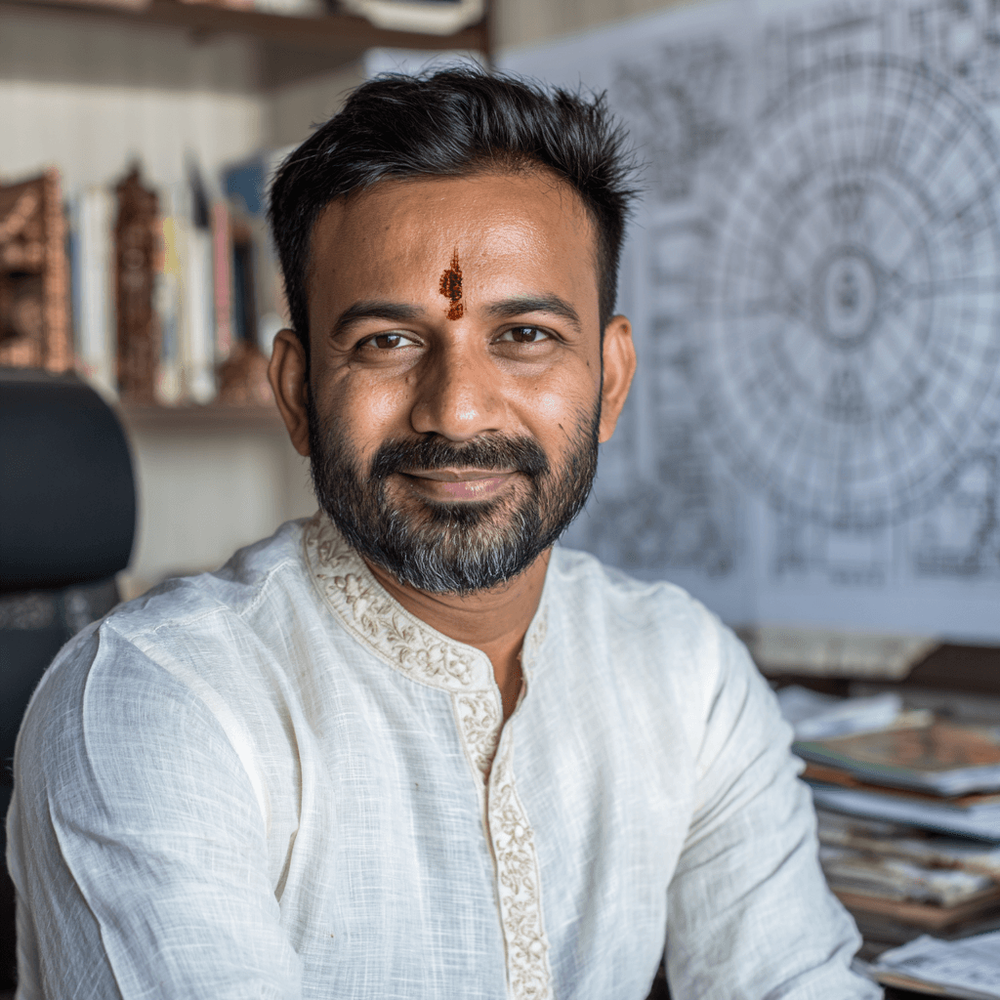
Shri Ankit Bansal
Vedic Astrologer · Numerology and Vastu Expert, 15+ Years
Shri Ankit Bansal is a renowned numerology and Vastu expert with over 15 years of specialized experience in these ancient Indian sciences. His extensive practice encompasses thousands of consultations in numerological analysis, name corrections, business numerology, and comprehensive Vastu assessments for residential and commercial properties. As a contributing writer for AstroSight, Shri Bansal combines his deep understanding of numerical vibrations with practical Vastu principles to provide holistic solutions that harmonize living and working spaces with cosmic energies. His expertise spans personal numerology charts, business name analysis, property Vastu audits, and remedial measures that blend traditional wisdom with modern lifestyle requirements. Through his methodical approach and proven track record, Shri Bansal has established himself as a trusted authority in helping clients optimize their environment and numerical influences for enhanced prosperity, health, and overall well-being.


