

Kaal Sarp Dosh: 12 Types, Effects & Remedies
_Reviewed by Shri Ankit Bansal, Vedic Astrology Consultant with 15+ years of experience. As of 2026._
_Reviewed by Shri Ankit Bansal, Vedic Astrology Consultant with 15+ years of experience. As of 2026._
---
Kaal Sarp Dosh (also spelled Kala Sarpa Dosha) is an astrological condition that forms in a birth chart when all 7 classical planets — Sun, Moon, Mars, Mercury, Jupiter, Venus, and Saturn — are positioned between Rahu (North Node) and Ketu (South Node), with no planet outside this hemming axis. As of 2026, Kaal Sarp Dosh remains one of the most searched and discussed astrological conditions in India, driving millions of pilgrims annually to Trimbakeshwar Jyotirlinga in Maharashtra for the specific Kaal Sarp Dosh Nivaran Puja.
The name "Kaal Sarp" carries powerful imagery: Kaal means time/death, and Sarp means serpent. The serpent of time swallows all planetary energies when they are contained within the Rahu-Ketu axis. The person with this configuration in their chart is said to experience the serpent's grip — periods of intense struggle, delay, and frustration that alternate with sudden release and rapid progress.
There is, however, a critical fact that every serious student of Vedic astrology must know: Kaal Sarp Dosh is NOT mentioned in the Brihat Parashara Hora Shastra, Brihat Jataka of Varahamihira, Phaladeepika, or any other foundational classical Vedic text. It is a medieval or post-medieval addition to the tradition — its earliest clear documentary evidence appears in texts from approximately the 16th-17th century. B.V. Raman, in his extensive writings, did not include Kaal Sarp Dosh in his analytical framework. K.N. Rao explicitly stated in seminars that he does not use it.
This does not mean it should be dismissed entirely — many practicing astrologers report consistent correlations between Kaal Sarp configurations and certain life patterns. But readers deserve to know its non-classical origins before making decisions based on it.
You can check whether all your planets fall between Rahu and Ketu in your chart at the birth chart calculator or explore your full kundli at the kundli page.
What exactly defines Kaal Sarp Dosh?
Kaal Sarp Dosh is defined by one strict condition: all 7 classical planets (Sun, Moon, Mars, Mercury, Jupiter, Venus, Saturn) must be situated between Rahu and Ketu, with none outside this axis.
There are two directional configurations: 1. Standard Kaal Sarp: All planets are between Rahu (in front) and Ketu (behind), meaning they fall within the arc from Rahu going clockwise to Ketu 2. Inverted/Partial Kaal Sarp: Some traditions recognize configurations where the arc is reversed, though this is disputed
The dosha breaks down into 12 types based on the zodiac sign in which Rahu is positioned. Each type has a traditional name (drawn from Hindu serpent mythology) and is said to produce different effects.
A critical technical note: if even one planet lies outside the Rahu-Ketu axis, the Kaal Sarp Dosh is not present. Many charts are incorrectly diagnosed with KSD by automated software that fails to check this strictly. Also, the Moon's position requires particular attention — if the Moon is within 3 degrees of Rahu or Ketu (conjunct the nodes), its placement inside or outside the axis is ambiguous and creates interpretive disagreement among astrologers.
What are all 12 types of Kaal Sarp Dosh?
The 12 types are named after serpents from the Naga tradition and correspond to the 12 positions of Rahu in the zodiac.
| Type | Rahu Position | Ketu Position | Primary Effects |
|---|---|---|---|
| 1. Anant | 1st house (Lagna) | 7th house | Marriage delays, frequent relocations, self-doubt |
| 2. Kulika | 2nd house | 8th house | Financial instability, family conflicts, speech problems |
| 3. Vasuki | 3rd house | 9th house | Sibling issues, short journeys bringing trouble, career disruptions |
| 4. Shankhapala | 4th house | 10th house | Domestic unhappiness, career changes, troubled relationship with mother |
| 5. Padma | 5th house | 11th house | Delays in children, obstacles in education, social misunderstandings |
| 6. Mahapadma | 6th house | 12th house | Enemies, litigation, hidden losses, foreign connections |
| 7. Takshaka | 7th house | 1st house | Marriage problems, partnership failures, frequent arguments with spouse |
| 8. Karkotak | 8th house | 2nd house | Chronic health issues, inheritance disputes, sudden transformations |
| 9. Shankhachuda | 9th house | 3rd house | Disrupted dharma path, troubled father relationship, belief crises |
| 10. Ghaatak | 10th house | 4th house | Career disruptions, public scandals, frequent job changes |
| 11. Vishdhar | 11th house | 5th house | Income fluctuations, social betrayals, issues with older siblings |
| 12. Sheshnaga | 12th house | 6th house | Foreign settlement, hidden enemies, expenses exceed income |
Anant Kaal Sarp Dosh (Rahu in the 1st house) is traditionally considered the most challenging because Rahu directly occupies the Lagna — the house of self, personality, and physical body. Takshaka (Rahu in the 7th) is second-most noted for marriage impact.
Which type of Kaal Sarp Dosh is most severe?
The severity of Kaal Sarp Dosh depends on three factors beyond just the type: the strength of Rahu and Ketu in their respective signs, the planets that are closest to the nodes (within 10 degrees of conjunction intensifies effects), and whether the Lagna lord is hemmed within or outside the Rahu-Ketu axis.
Among the 12 types, three are considered most severe by practitioners:
Takshaka Kaal Sarp Dosh (Rahu in 7th) is most severe for marriage because Rahu directly occupies the marriage house. The snake's grip is directly on partnership. People with this placement often experience a series of broken engagements or a marriage that breaks down dramatically in the first 7 years.
Kulika Kaal Sarp Dosh (Rahu in 2nd) is most severe for wealth because the 2nd house governs accumulated assets and family lineage. Financial reversals are sudden and complete — a person builds wealth over years and loses it within months during the activating Rahu Dasha or transit.
Karkotak Kaal Sarp Dosh (Rahu in 8th) is most severe for health and longevity. The 8th house is the house of chronic illness, accidents, and hidden enemies. Rahu here creates unpredictable health crises and transformation through loss.
I've seen clients with Ghaatak Kaal Sarp Dosh (Rahu in 10th) who experienced spectacular career falls — one was a mid-level government officer who lost his position completely during his Rahu Mahadasha (18 years) and rebuilt his career from scratch in a different field entirely. The pattern of descent followed by reinvention is a hallmark of this type.
Is Kaal Sarp Dosh mentioned in classical Vedic texts?
No. Kaal Sarp Dosh is not found in the Brihat Parashara Hora Shastra, the Brihat Jataka (Varahamihira), the Phaladeepika (Mantreshwara), the Jataka Parijata, or any other Vedic foundational text. This is documented fact, not opinion.
The condition does appear in some medieval astrological digests and regional texts, particularly those from the Maharashtra and Andhra Pradesh traditions. The Trimbakeshwar Kaal Sarp Dosh Puja is a genuine traditional practice, but its origin in verifiable classical literature predating the 16th century has not been established by scholars.
B.V. Raman, despite being India's most prolific 20th-century astrologer, did not write about Kaal Sarp Dosh as a diagnostic category in any of his books. K.N. Rao, in multiple recorded seminars, described it as one of several "popular but non-classical" concepts that modern practitioners should treat with caution.
The practical implication: if your chart has Kaal Sarp Dosh by the modern definition, do not treat it as a guaranteed life sentence of suffering. Many people with this configuration live normal, successful lives. The configuration represents a tendency toward certain life patterns — not a fixed fate.
What are the effects of Kaal Sarp Dosh on different life areas?
The general effects attributed to Kaal Sarp Dosh by modern practitioners (not classical texts) include:
Career and finance: Repeated starts and stops in professional life. Work proceeds well for periods of 2-3 years, then collapses and requires rebuilding. The collapse-and-rebuild cycle tends to align with Rahu and Ketu transits (each node moves approximately 1.5 degrees per month, completing the zodiac in about 18 years).
Marriage and relationships: Attraction to unusual or foreign partners. The partner often comes from a different social background, religion, or nationality. Relationship break-ups often have an element of suddenness or mystery — they end without clear explanation.
Health: Psychosomatic conditions, anxiety, sleep disturbances (especially dreams about serpents or water). Chronic rather than acute conditions. Conditions related to the nervous system.
Spiritual growth: Here Kaal Sarp Dosh paradoxically operates as an advantage. The serpent energy (Kundalini in yogic tradition is the coiled serpent) creates an intense inner pressure toward spiritual practice. Many notable saints and spiritual teachers in Indian history have been documented by traditional biographical accounts to have Rahu-Ketu axis configurations that modern practitioners identify as KSD types.
What are examples of Kaal Sarp Dosh in public figures?
Several public figures are identified by practicing astrologers as having Kaal Sarp configurations, though not all charts are publicly verified with exact birth times.
Dhirubhai Ambani (founder of Reliance Industries) had all planets on one side of the Rahu-Ketu axis in his verified birth chart — this is cited by astrologers including those at the Bharatiya Vidya Bhavan's astrology programs as a Kaal Sarp configuration. His life pattern of extreme poverty followed by extraordinary wealth is described as the classic KSD trajectory: total suppression followed by explosive release.
The general pattern seen in successful people with KSD is: early life struggle (until approximately age 30-35), a turning point, and then rapid progress once the node transit or Dasha releases the suppression. This matches the serpent mythology — the coiled energy releases powerfully when the conditions align.
What are the classical remedies for Kaal Sarp Dosh?
The primary remedies for Kaal Sarp Dosh are performed at Trimbakeshwar Jyotirlinga (in Nashik district, Maharashtra) — a temple specifically associated with Rahu-Ketu remedial rituals. The Kaal Sarp Dosh Nivaran Puja at Trimbakeshwar takes 3-4 hours, costs approximately Rs. 5,000-25,000 depending on the extent of the ritual, and requires booking a local purohit in advance.
Nag Panchami Puja: Performed on the 5th day of Shravana Shukla Paksha (typically August). On this day, offering milk to a live serpent (if accessible) or to a silver/gold serpent image, reciting the Nag Gayatri mantra, and fasting is prescribed. The Nag Panchami ritual directly addresses Rahu and Ketu's serpent nature.
Rahu and Ketu Mantras: Rahu's Beej Mantra is "Om Raam Rahave Namah" — recited 18,000 times over 40 days (the traditional Rahu purashcharan). Ketu's Beej Mantra is "Om Straam Strim Straum Sah Ketave Namah" — recited 7,000 times. Both are started on a Saturday during a Rahu Hora.
Mahamrityunjaya Mantra: Recited 108 times daily, particularly effective for the health-related effects of Karkotak and Kulika types. The Mahamrityunjaya Japa (108,000 recitations) is the full remedial measure prescribed for severe cases.
Shiva Abhishekam on Mondays: Since Rahu is considered under Shiva's domain (Shiva wears serpents), regular abhishekam (ritual bathing of the Shiva Lingam) with milk, honey, and water on Mondays directly addresses the node-related suffering.
What is the Trimbakeshwar ritual and how is it performed?
Trimbakeshwar, located 30 kilometers from Nashik in Maharashtra, is the only Jyotirlinga at which Kaal Sarp Dosh Puja is considered the most efficacious. The temple is dedicated to Trimbakeshwar (Shiva with three eyes) and its priests are trained in the specific Kaal Sarp Nivaran ritual.
The ritual begins with a Sankalpa (vow declaration) in which the native states their full name, birth details, and the intention of removing the dosha. This is followed by Ganesh Puja, Navagraha Puja (specifically extended for Rahu and Ketu), the Kaal Sarp Dosh Puja itself (which includes a symbolic re-enactment of the planets escaping the serpent's coil), and Havan (fire offering) with offerings dedicated to Rahu and Ketu.
The ritual uses specific materials: 9 types of grains, sesame seeds, blue flowers for Rahu, darbha grass for Ketu, a brass serpent image, and black til (sesame) oil. The purohit recites the Kaal Sarp Stotram (a regional text) and the Navagraha Mantra for all 9 grahas with extended repetitions for the nodes.
How is Kaal Sarp Dosh different from Shrapit Dosh?
Kaal Sarp Dosh and Shrapit Dosh are often confused because both involve Rahu/Ketu, but they are completely different conditions.
Shrapit Dosh forms specifically when Saturn and Rahu are conjunct in the same house. The word "Shrapit" means "cursed" in Sanskrit, and the traditional interpretation is that this conjunction indicates a curse from a previous life — typically from a Brahmin, a woman, or an ancestor who was wronged. Shrapit Dosh is more consistently described in regional classical texts than Kaal Sarp Dosh, though it also lacks mention in the foundational Parashari texts.
| Feature | Kaal Sarp Dosh | Shrapit Dosh |
|---|---|---|
| Formation | All 7 planets between Rahu and Ketu | Saturn conjunct Rahu in same house |
| Classical text basis | Not in foundational texts | Appears in some regional texts |
| Primary effects | Life obstacles, delay-release cycles | Ancestral curses, social setbacks |
| Main remedy | Trimbakeshwar Kaal Sarp Puja | Shrapit Dosh Puja, Pitru Tarpan |
| Dasha sensitivity | Rahu Mahadasha (18 yrs) | Saturn + Rahu joint Dasha periods |
Kaal Sarp Dosh requires the hemming of ALL planets between the nodes. A chart can have Shrapit Dosh (Saturn-Rahu conjunction) without having Kaal Sarp Dosh. The two conditions have different remedies.
Understand How Doshas Shape Your Life Path
Doshas influence more than relationships — they affect career timing, health, and life direction. Get a personalized D1 and D10 chart analysis with remedies specific to your chart.
Get Your Marriage ReportPersonalized Report
Marriage Compatibility Report
Check if this dosha is present in your chart — and get the complete remedy report
- Personalized analysis based on YOUR exact birth chart
- Expert-prepared by Dr. Meenakshi Sharma
- Delivered as PDF within 24-48 hours
- Unlimited follow-up clarifications
By Dr. Meenakshi Sharma · Delivered in 24-48 hours
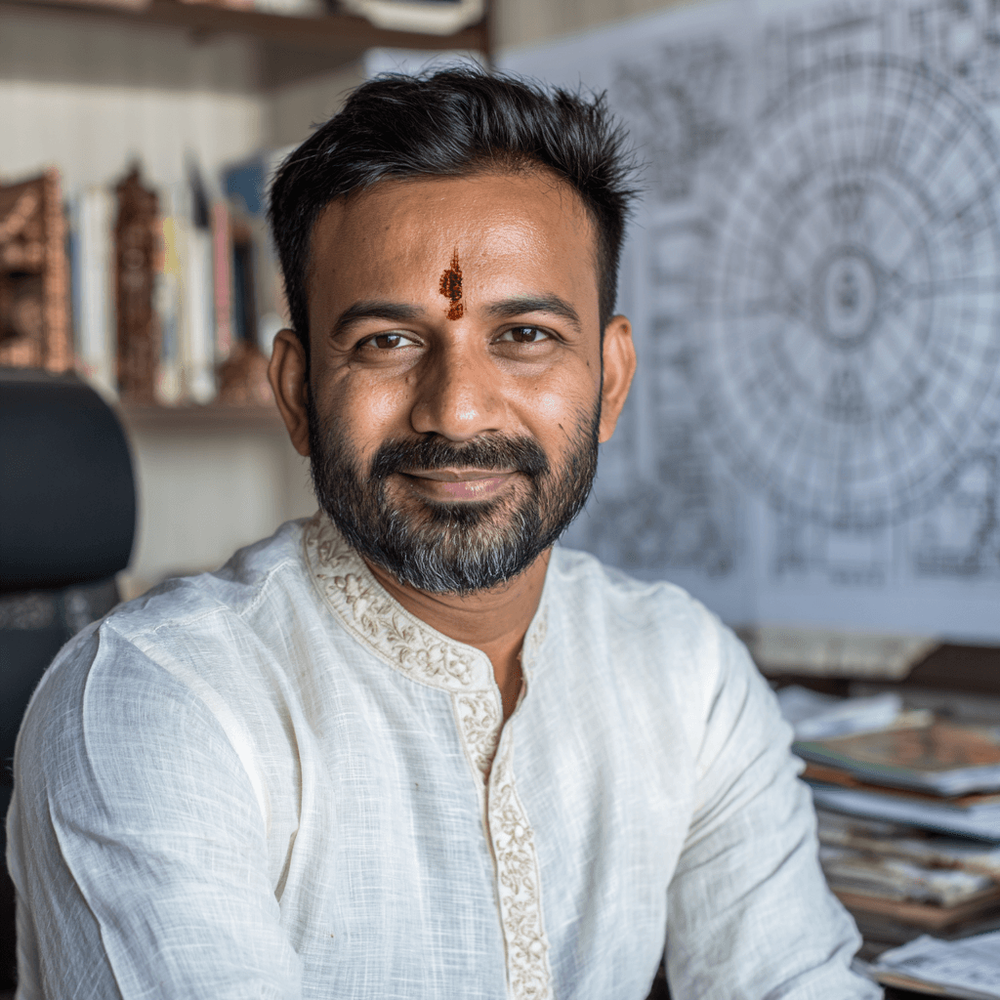
Shri Ankit Bansal
Vedic Astrologer · Numerology and Vastu Expert, 15+ Years
Shri Ankit Bansal is a renowned numerology and Vastu expert with over 15 years of specialized experience in these ancient Indian sciences. His extensive practice encompasses thousands of consultations in numerological analysis, name corrections, business numerology, and comprehensive Vastu assessments for residential and commercial properties. As a contributing writer for AstroSight, Shri Bansal combines his deep understanding of numerical vibrations with practical Vastu principles to provide holistic solutions that harmonize living and working spaces with cosmic energies. His expertise spans personal numerology charts, business name analysis, property Vastu audits, and remedial measures that blend traditional wisdom with modern lifestyle requirements. Through his methodical approach and proven track record, Shri Bansal has established himself as a trusted authority in helping clients optimize their environment and numerical influences for enhanced prosperity, health, and overall well-being.


