Vastu for MD Cabin: Best Direction & Layout Guide
Vastu for MD cabin refers to the application of Vastu Shastra principles to the workspace of a Managing Director (MD), CEO, or top executive — with the primary aim of optimizing decision-making authority, leadership clarity, business growth, and personal well-being through alignment of the cabin's d
Vastu for MD cabin refers to the application of Vastu Shastra principles to the workspace of a Managing Director (MD), CEO, or top executive — with the primary aim of optimizing decision-making authority, leadership clarity, business growth, and personal well-being through alignment of the cabin's direction, desk placement, seating orientation, lighting, decor, and surrounding elements with the 8 cardinal and intercardinal directions. "MD cabin" is a common Indian business term for the office room of the Managing Director or top executive — the equivalent of "CEO office" in Western business parlance. Vastu Shastra principles place specific emphasis on this room because the MD's decision-making energy, conducted through this space, influences the entire organization's prosperity.
The reason understanding MD-cabin-specific Vastu matters is that the top-executive office has distinctive Vastu requirements — a place of decision-making authority, regular client meetings, financial oversight, and strategic planning — that differ from general office Vastu and require specific direction-aware and element-aware design. Important framing: Vastu Shastra is a traditional Indian spatial-design system with documented historical and cultural value; its specific predictive claims about business success have not been validated by peer-reviewed empirical research — but the underlying principles of optimizing space-flow, light, ergonomics, and authority-presentation overlap substantially with modern executive-office design and environmental-psychology research. Apply Vastu principles where feasible; combine with sound business management fundamentals. This guide covers the best direction for director cabin, doctor's cabin direction, what an MD cabin is, doctor-facing house direction, boss cabin direction Vastu, office seating Vastu, master cabin Vastu, conference room Vastu, office cabin southeast direction, toilet in office Vastu, reception direction Vastu, and integration with modern executive-office design. Reviewed by Shri Ankit Bansal, Vedic astrologer with 12+ years of practice and Vastu consultation experience for residential and commercial properties. For your personal Vedic chart that shows your career-leadership indicators (10th house, Sun, Saturn, Mars), use the birth chart calculator.
Which Direction Is Best for Director's Cabin (MD Cabin)?
The best direction for the director's (MD's) cabin is the Southwest (Nairutya) corner of the office building or floor — with the MD seated facing East or North while working — per universal Vastu principles for top-executive workspaces.
Why Southwest is optimal for MD cabin (3 reasons):
1. Stability and authority — Southwest is the Vastu direction of Rahu and earth-element; it provides stability, grounded authority, and long-term decision-making capacity. 2. Distance from public/customer flow — Southwest is the most private corner of the building; MD's cabin in Southwest minimizes interruptions and creates privacy for confidential discussions. 3. Inverse-energy zone — Southwest is where Vastu places the "owner's energy" — the building's most stable and durable zone — making it the appropriate location for the head of the organization.
8-direction MD cabin ranking:
| MD cabin direction | Vastu rating | Notes |
|---|---|---|
| Southwest (Nairutya) | Excellent (best) | Optimal: Rahu/earth element; authority and stability |
| South | Very good | Yama direction; strong but slightly negative; remediable |
| West | Very good | Saturn direction; stable and authoritative |
| South of Southwest | Very good | Stable position; MD's authority well-preserved |
| North | Moderate | Less optimal for MD; better for accounts/finance department |
| East | Moderate | Better for HR or sales department |
| Southeast (Agneya) | Less favorable | Fire element; not ideal for stable decision-making |
| Northeast (Ishanya) | Avoid | Public-energy zone; reserve for reception/wealth/cash counter |
MD's seating direction within the cabin:
| Seating direction | Vastu rating |
|---|---|
| Facing East | Excellent (best) |
| Facing North | Excellent |
| Facing Northeast | Very good |
| Facing Northwest | Moderate |
| Facing Southeast | Moderate |
| Facing South | Avoid (Yama direction) |
| Facing Southwest | Avoid (own location) |
| Facing West | Less favorable |
Best combination: MD cabin in Southwest corner of building + MD seat facing East or North — maximizes Vastu authority while preserving forward-facing prana flow.
Which Side Should the Doctor's Cabin Be According to Vastu?
A doctor's cabin in a hospital, clinic, or medical practice should be located in the West, South, or Southwest direction of the building — with the doctor seated facing East or North while consulting patients — and the consultation chairs positioned so patients face the doctor (and thus face South or West).
Doctor's cabin direction rationale:
1. West/South direction stabilizes the doctor's authority and decisive treatment-recommending energy (Saturn discipline, Yama gravity). 2. Doctor facing East/North aligns with healing energy — East represents the rising sun (vitality), North represents Mercury (intelligence) and Kubera (sustenance/wealth). 3. Patient facing South/West is the receptive position — the patient receives the doctor's guidance rather than leading the consultation.
| Doctor's cabin direction | Vastu rating |
|---|---|
| Southwest | Very good (stability) |
| West | Excellent (Saturn authority) |
| South | Excellent (Yama gravity) |
| East-South-East | Moderate |
| East | Moderate (better for daily wear/clothing business; less for doctor) |
| North | Moderate |
| Northeast | Avoid (public zone) |
| Northwest | Moderate |
Doctor's seating position within the cabin:
| Doctor's seating | Vastu rating |
|---|---|
| Doctor faces East | Excellent |
| Doctor faces North | Excellent |
| Doctor faces Northeast | Very good |
| Doctor faces Northwest | Moderate |
| Doctor faces South | Avoid (Yama direction) |
| Doctor faces Southwest | Avoid |
| Doctor faces West | Less favorable |
Practical considerations beyond direction:
- Consultation desk solid (avoid glass-top; wood preferred).
- Diagnostic equipment placed thoughtfully (not directly in front of patient).
- Mirror in cabin only on east/north walls (never opposite patient).
- Window for natural light (preferably East or North-facing).
- Solid wall behind doctor (no door, large window directly behind seated doctor).
What Is a MD Cabin?
An MD cabin (Managing Director's cabin) is the dedicated workspace of the Managing Director or top executive of a company — typically a private office room within the company's main office or building — distinguished from open-plan workspaces by privacy and authority-signaling design elements. The "MD" is the chief executive officer (CEO equivalent in Indian business context) responsible for the company's daily operations.
Standard MD cabin features:
| MD cabin feature | Description |
|---|---|
| Dedicated private office room | Closed-door, soundproof for confidential discussions |
| Large executive desk | Substantial; signifies authority |
| Solid wall behind MD's seat | Provides "back support" — both Vastu and practical |
| Conference table | For small-group meetings within cabin |
| Visitor chairs | 2-4 chairs for visiting clients/colleagues |
| Lighting | Bright; multiple light sources |
| Decor | Professional; signaling authority and brand identity |
| Window | Natural light source; East or North-facing preferred |
| Air conditioning | Independent; comfortable temperature control |
| Privacy | Door opens away from main office flow |
Typical MD cabin dimensions:
| MD cabin parameter | Standard range |
|---|---|
| Total area | 200-500 sq ft |
| Desk size | 6-8 ft × 3-4 ft |
| Conference table | 5-7 ft × 3 ft |
| Number of chairs | 4-8 total |
| Window size | At least 3 ft × 5 ft natural light |
Distinguishing MD cabin from other cabin types:
| Cabin type | Distinguishing feature |
|---|---|
| MD cabin / CEO office | Authority + decision-making focus |
| HR cabin | Privacy for personnel discussions; counseling-friendly |
| Finance Director cabin | Secure document storage; confidentiality |
| Sales Director cabin | Client-meeting friendly; visible from main office |
| Doctor's cabin | Healing-environment focus; patient-receiving setup |
| Lawyer's cabin | Document-storage; confidentiality |
Which Facing House Is Good for Doctors?
For doctors, North-facing or East-facing houses are most auspicious — providing morning sunlight, Mercury (intelligence) energy, and Jupiter (wisdom) influence — both for residence and for the home-based clinic — with the doctor's specific birth chart determining final optimal direction.
| House facing direction for doctor | Vastu rating |
|---|---|
| North-facing | Excellent |
| East-facing | Excellent |
| Northeast-facing | Very good |
| North-North-East | Very good |
| Northwest-facing | Good (Mercury influence) |
| West-facing | Moderate |
| Southeast-facing | Moderate |
| South-facing | Less favorable (Yama) |
| Southwest-facing | Less favorable |
Vastu reasons for North/East houses for doctors:
1. Solar energy (East) — morning sunlight enters consulting space; vitality for healing work. 2. Mercury intelligence (North) — enhances diagnostic precision and consultation skills. 3. Kubera prosperity (North) — supports financial stability of medical practice. 4. Jupiter wisdom (Northeast) — supports learning and professional growth.
Specific recommendations for doctor's residence-cum-clinic:
| Specific consideration | Vastu recommendation |
|---|---|
| Main entrance | North, East, or Northeast |
| Doctor's consulting room | West, South, or Southwest of building |
| Waiting room | East or North of consulting room |
| Examination/treatment room | Northeast or East |
| Reception | Northeast or East corner |
| Pharmacy/medicines storage | South or Southwest (stable storage) |
| Diagnostic equipment | South or West |
| Bedrooms (if residence) | Southwest (master bedroom) |
| Kitchen | Southeast |
Practical caveat: direction-facing is one Vastu factor among many — a North-facing house with poor internal layout can be less favorable than a less-optimal-direction-facing house with good internal Vastu. Internal arrangement, specifically the location of the doctor's consulting room, matters significantly.
What Is Boss Cabin Direction as Per Vastu?
The boss cabin (whether MD, CEO, manager, or department head) should be located in the Southwest, West, or South of the office floor — with the boss seated facing East or North — per universal Vastu principles for management/authority workspaces.
| Boss cabin direction | Vastu rating | Notes |
|---|---|---|
| Southwest | Excellent (best) | Optimal for top executive |
| South | Very good | Authority direction |
| West | Very good | Saturn discipline; mature authority |
| South of Southwest | Very good | Stable |
| North-of-Northwest | Moderate | For certain industry types |
| East | Moderate | Better for HR/marketing |
| Northeast | Avoid | Public zone; reserve for cash/wealth/reception |
| Southeast | Less favorable | Fire energy; not ideal for stable management |
Boss seating direction:
| Seating direction | Vastu rating |
|---|---|
| Facing East | Excellent |
| Facing North | Excellent |
| Facing Northeast | Very good |
| Facing Northwest | Moderate |
| Facing South | Avoid |
| Facing Southwest | Avoid |
| Facing West | Less favorable |
Practical boss-cabin design:
| Design element | Vastu recommendation |
|---|---|
| Desk type | Solid wood; rectangular; substantial |
| Desk facing | Open side toward East or North |
| Boss's seat location | South side of desk; faces East/North |
| Solid wall behind boss | Yes — important for both Vastu and authority signaling |
| Window | East, North, or Northeast |
| Mirror placement | East or North wall; never behind boss; never opposite boss |
| Computer screen | Right side of desk; or front-center |
| Lighting | Bright overhead; warm color temperature (3000K) |
| Plants | Small green plants in Northeast or East corner |
| Pictures/decor | Inspirational, professional; nothing depicting violence/sadness |
Where Should the Staff Sit as Per Vastu?
Office staff should be seated based on hierarchical position: senior staff/managers in West/South-of-West areas (closer to MD); junior staff in North/East areas; sales/customer-facing staff in East/Northeast (closer to entrance); finance staff in Northeast; receptionist at Northeast entrance — with all staff facing East or North while working.
Staff seating hierarchy by department:
| Department | Vastu-recommended seating | Reason |
|---|---|---|
| MD/CEO | Southwest | Authority and stability |
| Senior managers/Directors | South or West | Authority but accessible |
| Finance/Accounts | Northeast | Kubera wealth zone |
| HR/Personnel | North | Mercury communication |
| Sales/Marketing | East | Solar energy; customer-facing |
| IT/Tech | Northwest | Air element; communication |
| Reception | Northeast (entrance) | Welcoming customers |
| Junior staff | North or East (open area) | Growth direction |
| Cleaning/Maintenance storage | Southwest | Stable storage |
Staff seating direction:
| Seating direction | Vastu rating |
|---|---|
| Facing East | Excellent |
| Facing North | Excellent |
| Facing Northeast | Very good |
| Facing Northwest | Moderate |
| Facing South | Avoid |
| Facing Southwest | Avoid |
| Facing West | Less favorable |
Practical staff-seating considerations:
- Avoid staff sitting with backs to the entrance (creates anxiety; Vastu mismatch).
- Avoid staff sitting under exposed beams (vastu shoola — energy spike; psychological discomfort).
- Avoid staff sitting facing sharp corners of furniture (vastu shoola).
- Provide solid wall or partition behind senior staff (authority signaling).
- Maintain clear circulation paths (no clutter between desks).
What Is Conference Room Vastu?
The conference room (meeting room) in an office should be located in the West, Northwest, or South of the office floor — with the head of the meeting seated facing East or North, and other participants facing the head — per Vastu principles for productive group meetings.
Conference room direction:
| Conference room location | Vastu rating |
|---|---|
| Northwest | Very good |
| West | Very good |
| South | Very good |
| South-of-Southwest | Good |
| East | Moderate (better for client-facing meetings) |
| North | Moderate |
| Northeast | Less favorable (public zone) |
| Southeast | Less favorable (fire energy intense for sustained meetings) |
Conference room design:
| Design element | Vastu recommendation |
|---|---|
| Table shape | Rectangular or oval; round acceptable for smaller meetings |
| Table direction | Long axis East-West preferred |
| Head-of-meeting seat | East side of table, facing West (or West side facing East — depends on door direction) |
| Door direction | Northeast, East, or North preferred |
| Window | East or North-facing preferred |
| Lighting | Bright; multiple sources; avoid dim corner lighting |
| Whiteboard/screen | North or East wall (head-direction-facing) |
| Mirror placement | Not recommended in conference rooms |
| Plants | Small green plants in Northeast or East corner |
| Wall color | Light pastels; avoid dark/heavy colors |
Common conference-room Vastu mistakes:
- Head-of-meeting facing south (Yama; suppresses productivity).
- Door opening into someone's back (creates anxiety).
- Mirror at conference table (reflects discussion energy out).
- Exposed beam over the table (vastu shoola; energy interruption).
- Sharp furniture corners pointing at participants (vastu shoola).
What Is the Office Cabin in Southeast Direction?
An office cabin in the Southeast (Agneya) direction is generally less favorable for top-executive (MD) workspaces — but is acceptable for fire-element-related departments (kitchen/cafeteria, tea-coffee station, server room for IT, electrical equipment storage) — with specific remediation needed if a top-executive cabin must be placed in Southeast.
Southeast direction characteristics:
| Southeast (Agneya) characteristic | Description |
|---|---|
| Element | Fire (Agni) |
| Ruling planet | Venus (and traditional sources cite Agni as deity) |
| Energy quality | Heated, transformative, action-oriented |
| Best use | Kitchen, cafeteria, electrical equipment, server room |
| Less suitable | Top-executive cabin, sleeping spaces, conference rooms for sustained discussion |
If MD cabin must be in Southeast direction (specific remediation):
1. Reduce direct exposure to Southeast — partition or sub-divide Southeast corner. 2. Use cool color palette — light blue, green, white to counterbalance fire energy. 3. Avoid excessive electrical equipment in Southeast corner of the cabin. 4. Ensure cross-ventilation — opens to North or East. 5. Place water feature in North or East — balance Southeast fire. 6. MD's seating still faces East or North — maintain optimal seating direction. 7. Avoid sharp furniture edges pointing toward MD's working area.
Practical recommendation: avoid placing top-executive cabin in Southeast if possible — but if unavoidable, apply remediation principles. For most office layouts, Southeast is better reserved for kitchen, cafeteria, or fire-element-equipment placement.
What Is Toilet in Office as Per Vastu?
Office toilets should be located in the Northwest, West, or Southeast portions of the office floor — never in the Northeast (Kubera/wealth zone) or directly above/below the MD's seat or main entrance — with proper Vastu remediation for unavoidable toilet placements.
Office toilet placement:
| Toilet location | Vastu rating |
|---|---|
| Northwest | Very good (best) |
| West | Good |
| Southeast | Good (with remediation) |
| South | Moderate (with remediation) |
| Northeast | Avoid (Kubera zone — wealth-loss concern) |
| East | Less favorable |
| North | Less favorable |
| Southwest | Less favorable (master zone — disturbs stability) |
Toilet Vastu remediation if placement is sub-optimal:
| Sub-optimal toilet placement | Remediation |
|---|---|
| Northeast toilet | Use light-color paint; install bright lighting; keep door closed; place salt-bowl inside; use water-saving fixtures |
| East toilet | Same as Northeast remediation; minimize use |
| North toilet | Light colors; bright lighting; mirror outside the toilet on east wall |
| South toilet | Light colors; good ventilation |
| Toilet directly above MD cabin | Major remediation — try to relocate MD cabin or toilet |
| Toilet directly opposite main entrance | Use door partition; keep toilet door closed |
Toilet design considerations:
- Door opens outward (or sliding door) — never opens directly into MD cabin or main hallway.
- Toilet seat faces south or west (when sitting on toilet, person faces south/west).
- Wash basin in northeast or east of toilet.
- Mirror in toilet only on east or north wall.
- Ventilation fan to prevent stale-air accumulation.
What Is Reception Direction as Per Vastu?
The office reception area should be located in the Northeast, North, or East direction of the office building — with the receptionist seated facing East or North, and the entrance opening from North/East/Northeast — maximizing the Kubera (wealth) and Mercury (commerce) energy at the first-impression point of the office.
Reception direction:
| Reception location | Vastu rating |
|---|---|
| Northeast | Excellent (best) |
| East | Excellent |
| North | Excellent |
| Northwest | Good |
| East-South-East | Moderate |
| South | Less favorable |
| Southwest | Avoid (master zone; not for public) |
| West | Less favorable |
Receptionist seating:
| Receptionist's facing direction | Vastu rating |
|---|---|
| Facing East | Excellent |
| Facing North | Excellent |
| Facing Northeast | Very good |
| Facing Northwest | Moderate |
| Facing South | Avoid |
| Facing Southwest | Avoid |
| Facing West | Less favorable |
Reception design:
| Design element | Vastu recommendation |
|---|---|
| Reception desk | Northeast or East-facing; rectangular |
| Reception logo/branding | North wall (visible upon entry) |
| Welcome decor | Plants, flowers, water feature on Northeast |
| Waiting chairs | East or North side; comfortable; clean view |
| Lighting | Bright; warm color temperature |
| Wall color | Light pastels; white; off-white; light green |
| Mirror placement | East or North wall; not opposite entrance |
| Water feature | Northeast — small fountain or fish tank |
| Small idol | Lakshmi, Kubera, or Ganesha at reception desk |
Common reception Vastu mistakes:
- Reception in southwest (wrong zone; public should not be in master zone).
- Receptionist facing south (suppresses welcoming energy).
- Reception with clutter (first impression matters).
- Mirror opposite entrance (reflects guests out).
- Dark/heavy color reception (poor first impression; energy heaviness).
How to Integrate Vastu with Modern Executive-Office Design?
Vastu Shastra principles for executive offices can be integrated with modern executive-office design research — many Vastu recommendations have strong overlap with modern best practices (privacy, authority signaling, ergonomics, lighting design) — with the integration approach being to apply Vastu as one input among several (alongside organizational psychology research, ergonomics standards, and corporate brand design).
| Vastu principle | Modern office design overlap |
|---|---|
| MD cabin in Southwest (private) | Modern: top executive in private corner office; same recommendation |
| MD seated facing East/North (natural light) | Modern: position desk to receive natural light; partial overlap |
| Solid wall behind MD's seat | Modern: "back support" for authority signaling and psychological comfort; same |
| No mirror behind MD | Modern: avoid mirror in workspace (reduces focus); same recommendation |
| Reception in Northeast entrance | Modern: clear, welcoming entry zone; same recommendation |
| Staff seating with backs to wall | Modern: "command position" for psychological comfort and authority |
| Bright lighting in workspaces | Modern: adequate lumens for productivity; same |
| Clean entrance, no clutter | Modern: decluttered workspace research; same |
| No exposed beams over seating | Modern: avoid acoustic and visual interruption; same in principle |
Practical integration recommendations:
1. Start with sound corporate-design fundamentals: employee productivity, communication flow, brand identity, ergonomics. 2. Apply Vastu where overlapping with modern design: executive privacy, lighting, authority signaling, customer-facing zones. 3. Customize Vastu to brand identity: brand colors take priority for branding; Vastu colors for wall accents. 4. Avoid Vastu superstition: don't reject genuinely good business decisions because of Vastu concerns. 5. Consult qualified Vastu expert for specific layouts: especially for new constructions or major renovations.
For your personal Vedic chart's career-leadership indicators — 10th house (career), Sun (authority/leadership), Saturn (discipline/responsibility), Mars (action/drive) — use the birth chart calculator and marriage compatibility calculator for partner career-compatibility analysis.
Align Your Space with Your Career Path
Vastu optimizes your environment. Your birth chart reveals your career potential. Get both aligned with a personalized analysis and actionable remedies.
Get Your Career ReportPersonalized Report
Wealth & Lifestyle Report
Vastu amplifies what your birth chart already shows — see your wealth yogas + home direction guide
- Personalized analysis based on YOUR exact birth chart
- Expert-prepared by Dr. Meenakshi Sharma
- Delivered as PDF within 24-48 hours
- Unlimited follow-up clarifications
By Dr. Meenakshi Sharma · Delivered in 24-48 hours
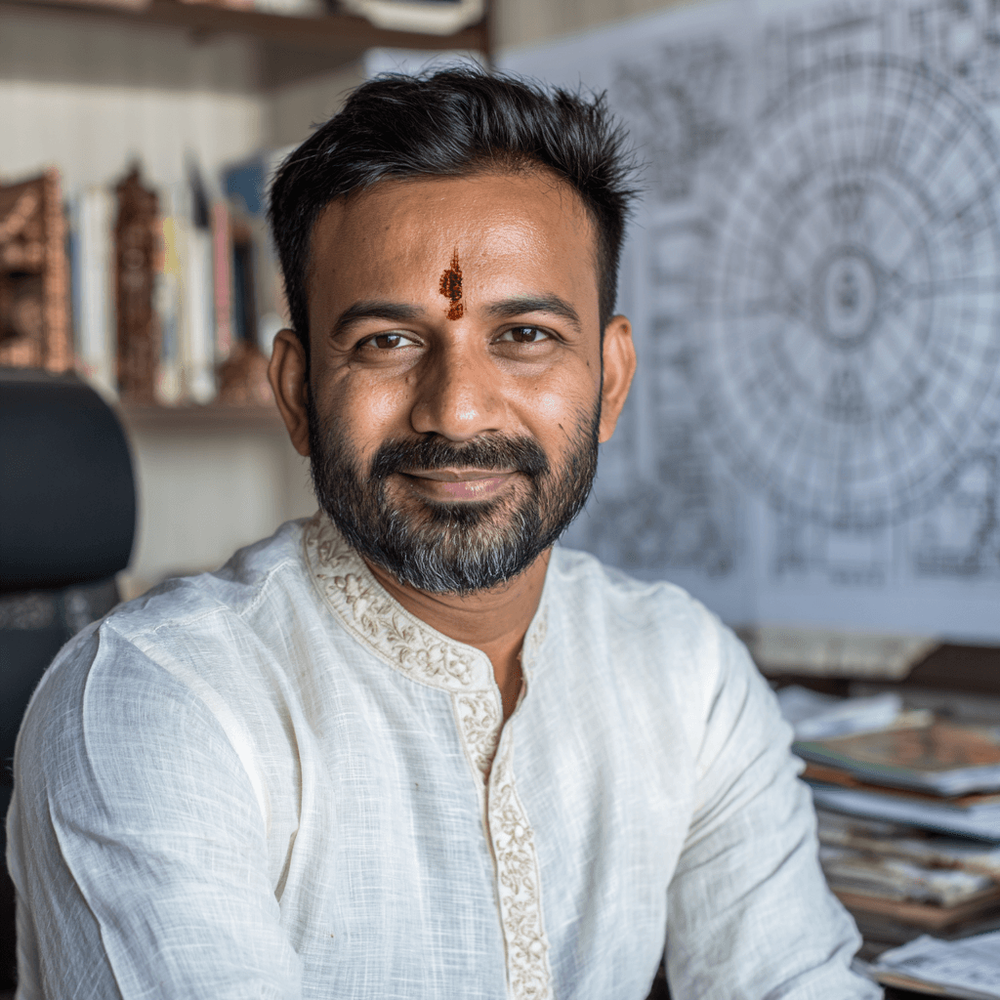
Shri Ankit Bansal
Vedic Astrologer · Numerology and Vastu Expert, 15+ Years
Shri Ankit Bansal is a renowned numerology and Vastu expert with over 15 years of specialized experience in these ancient Indian sciences. His extensive practice encompasses thousands of consultations in numerological analysis, name corrections, business numerology, and comprehensive Vastu assessments for residential and commercial properties. As a contributing writer for AstroSight, Shri Bansal combines his deep understanding of numerical vibrations with practical Vastu principles to provide holistic solutions that harmonize living and working spaces with cosmic energies. His expertise spans personal numerology charts, business name analysis, property Vastu audits, and remedial measures that blend traditional wisdom with modern lifestyle requirements. Through his methodical approach and proven track record, Shri Bansal has established himself as a trusted authority in helping clients optimize their environment and numerical influences for enhanced prosperity, health, and overall well-being.