Maha Shivratri 2026: Date, Vrat Method & Spiritual Power
Maha Shivratri 2026 falls on February 26, 2026 (Thursday) — the 14th night of the waning fortnight of Phalguna month (Phalguna Krishna Chaturdashi). It is the greatest Shivratri of the year — Maha = great — and the one night when Shiva is most directly accessible to human prayer and meditation. The
Maha Shivratri 2026 falls on February 26, 2026 (Thursday) — the 14th night of the waning fortnight of Phalguna month (Phalguna Krishna Chaturdashi). It is the greatest Shivratri of the year — Maha = great — and the one night when Shiva is most directly accessible to human prayer and meditation. The Shiva Purana makes its most absolute claim for this night: "A person who observes the Maha Shivratri fast and night vigil with devotion will attain liberation in this very birth." No other single night in the Hindu calendar receives this unequivocal liberation claim.
Reviewed by Dr. Meenakshi Sharma, M.A. Sanskrit & Vedic Studies, Varanasi — as of May 2026.
In Vedic astrology, Maha Shivratri falls when the Sun is in Aquarius (Saturn's sign — Shiva's planet) and the Moon is in a specific waning position. The Shiva Purana states that Shiva performs his cosmic Tandava dance on this night, and the entire universe trembles with his energy. For all Saturn, Ketu, and 12th house issues — which relate to karma, liberation, and spiritual completion — Maha Shivratri is the single most powerful night of the year. Check your Saturn and 12th house with the free birth chart calculator.
What Is the Maha Shivratri Story?
The Maha Shivratri mythology from the Shiva Purana (Kotyrudra Samhita): A hunter named Suswara had been hunting all day but caught nothing. As night fell, he climbed a Bilva (Bel) tree to sleep safely from wild animals. Unknown to him, this was a Shivratri night — the Chaturdashi of Phalguna month. Throughout the night, as he shifted position, Bilva leaves fell from the tree onto a Shivalinga at the base — and he had unknowingly been fasting all day (no food while hunting). By morning, having inadvertently observed the complete Maha Shivratri through the night vigil and Bilva leaf offering to the Shivalinga, Shiva granted him liberation. This story establishes the core principle: even unintentional Maha Shivratri observance carries transformative merit.
What Is the 4-Prahar Night Vigil?
The Maha Shivratri night is divided into 4 Prahars (watches) — each approximately 3 hours long, from sunset to sunrise. Each Prahar has its own Shivalinga Abhisheka and specific divine name of Shiva:
Prahar | Time (approx.) | Shiva Name | Offering
- First — 6 PM – 9 PM — Shiva — Milk Abhisheka
- Second — 9 PM – 12 AM — Tatpurusha — Yogurt Abhisheka
- Third — 12 AM – 3 AM — Aghora — Ghee Abhisheka
- Fourth — 3 AM – 6 AM — Vamadeva — Honey Abhisheka
The Abhisheka sequence for each Prahar: water first, then the specific offering (milk/yogurt/ghee/honey), then water again, then Bilva leaves, then fragrance and flowers.
The night vigil requirement: staying awake throughout all 4 Prahars is the complete Maha Shivratri observance. The Shiva Purana states that each Prahar's Abhisheka independently grants specific benefits — but the complete 4-Prahar vigil is what earns the liberation boon.
How to Observe Maha Shivratri 2026
February 25 (evening before): Eat before sunset, no food or water afterward.
February 26 (Maha Shivratri): 1. Wake before sunrise, bathe 2. Begin the waterless or partial fast 3. Visit a Shiva temple for Abhisheka (or perform at home) 4. Light a ghee lamp and incense before the Shivalinga throughout the day
Evening (Shivratri begins at sunset, February 26): 1. Perform the First Prahar Abhisheka at sunset 2. Chant Om Namah Shivaya and Mahamrityunjaya Mantra 3. Read the Maha Shivratri Katha 4. Stay awake through the night with prayer, Bhajans, or meditation
Each Prahar: A fresh Abhisheka with the designated offering (milk, yogurt, ghee, honey). Bilva leaves placed on the Shivalinga. Om Namah Shivaya chanted continuously.
February 27 morning (Parana): Break the fast after sunrise within the Panchang-specified Parana window.
What Offerings Are Made on Maha Shivratri?
The 5 most sacred Shiva offerings specifically for Maha Shivratri from the Shiva Purana:
1. Bilva leaves (Bel Patra) — one bunch = 1000 lotus flowers in merit. The three-leaf structure represents Sat-Chit-Ananda (existence-consciousness-bliss — Shiva's three qualities) 2. Milk — the First Prahar offering; represents purity and Sattva 3. Gangajal (Ganga water) — if available, the most sacred Abhisheka water 4. Dhatura flowers — the blue Dhatura is specifically Shiva's flower; found only on Shiva's altars 5. Vibhuti (sacred ash) — Shiva himself is covered in cremation ash; offering it back to him completes the symbolic circle
What Is the Spiritual Power of Maha Shivratri?
The Shiva Purana identifies Maha Shivratri as the night when Shiva's consciousness (Chit Shakti) is at maximum proximity to the human plane. The Lingam (the Shiva symbol of infinite consciousness) is said to have first manifested on this night — the Jyotirlinga (pillar of light) that appeared between Brahma and Vishnu, with no beginning and no end, when they challenged each other to find its limit. This first Jyotirlinga manifestation makes Maha Shivratri the night when the infinite nature of consciousness is most perceptible.
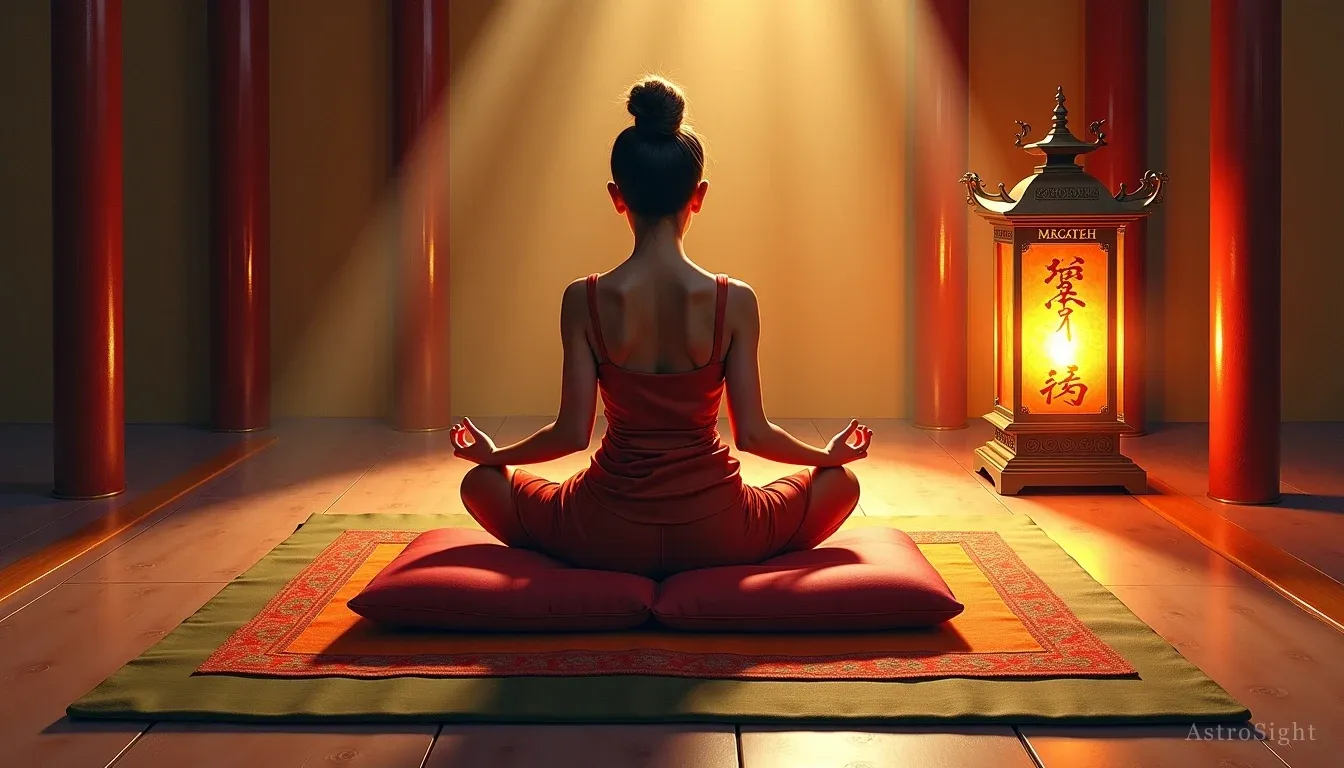
For meditation practitioners: the Shiva Sutras (the primary Kashmir Shaiva scripture) specifically identify Maha Shivratri night as when the Shiva-Shakti union is most naturally felt. Advanced practitioners report that their deepest meditation experiences often happen spontaneously on Maha Shivratri night.
Align Your Spiritual Path with Your Purpose
Your birth chart reveals your dharma — the path aligned with your soul purpose. Get expert analysis connecting spiritual direction with practical life choices.
Get Your Career Report
Dr. Meenakshi Sharma
PhD in Vedic Astrology, 20+ Years Experience
Dr. Meenakshi Sharma is a distinguished Vedic astrologer with a PhD in Vedic Astrology and over 20 years of professional experience in the ancient science of Jyotisha. Her extensive practice encompasses thousands of chart readings, predictive analyses, and remedial consultations, making her uniquely qualified to bridge traditional Vedic wisdom with contemporary applications. As a contributing writer for AstroSight, Dr. Sharma specializes in natal chart analysis, predictive astrology, and Vedic remedial measures, sharing her deep knowledge through insightful articles that make complex astrological concepts accessible to practitioners at all levels. Her approach combines rigorous academic training with ethical consultation standards, empowering clients through education and practical guidance while maintaining authentic adherence to classical Vedic principles.