Karva Chauth Vrat Katha: Story, Rituals & Modern Meaning
Reviewed by Dr. Meenakshi Sharma, M.A. Sanskrit & Vedic Studies, Varanasi — as of May 2026.
Reviewed by Dr. Meenakshi Sharma, M.A. Sanskrit & Vedic Studies, Varanasi — as of May 2026.
Karva Chauth is one of the most visually distinctive and emotionally powerful observances in the Hindu calendar — a day-long waterless fast observed by married women for the long life and well-being of their husbands, ending only when the moon rises and is seen through a sieve by lamplight. As of 2026, Karva Chauth falls on October 29, 2026, and continues to be observed by millions of women across North India and the Hindu diaspora worldwide. This article covers the complete Vrat Katha, the step-by-step ritual from Sargi to Moonrise, the meaning of the karva (clay pot), the spiritual symbolism, how it compares to Vat Savitri, and the contemporary understanding of what this day means.
2026 Date: October 29, Kartika Krishna Chaturthi
Karva Chauth falls on the Chaturthi (4th day) of the dark fortnight (Krishna Paksha) of the month of Kartika. In 2026, this falls on October 29. The fast begins before sunrise (after the pre-dawn Sargi meal) and ends when the moon is sighted, which occurs in the evening. The moonrise time varies by location and is typically between 7:00 PM and 9:30 PM depending on the city. Use /panchang for the exact moonrise time in your location on October 29, 2026 — this is the single most time-sensitive piece of information for the day's observance.
> Quick Answer: Karva Chauth 2026 falls on October 29 (Kartika Krishna Chaturthi). The fast runs from pre-dawn (after Sargi) until moonrise, which varies by location between approximately 7:00 PM and 9:30 PM. Use /panchang for the exact moonrise time in your city — this determines when the fast ends and the closing puja takes place.
The Vrat Katha: Queen Veervati's Story
The primary Karva Chauth Vrat Katha narrates the story of a young queen named Veervati, told in different versions across Punjabi and North Indian traditions. The story exists in two main versions:
Version 1 (Queen Veervati): A beautiful young queen named Veervati was the beloved sister of seven devoted brothers. On the first Karva Chauth after her marriage, she traveled to her parents' home to observe the fast. The fast was very difficult — she was weak with hunger and thirst by evening. Her seven brothers, unable to bear their sister's suffering, created an illusion: they placed a fire behind a tree and told her the moon had risen. Veervati, believing them, ended her fast prematurely. When she returned to her husband's kingdom, she found him gravely ill — near death. A divine messenger explained that the premature breaking of the fast had transferred bad fortune onto her husband. Veervati then observed the complete Karva Chauth on the following year with absolute sincerity — and her husband recovered fully. The story teaches that the fast's power lies in its completeness and sincerity — any shortcut nullifies its merit.
Version 2 (Satyavan-Savitri variation for Karva Chauth): In some communities, a condensed version of the Savitri story is told on Karva Chauth as well, connecting the themes of wifely devotion and prayer as karmic protection. This version is more common in some Rajasthani communities.
The katha is read aloud to a gathering of women during the puja, and each woman holds her karva (clay pot) during the recitation. The katha is not merely a story but a ritual act — it is the verbal invocation of the divine power that the fast accumulates and channels.
> Quick Answer: The primary Karva Chauth Vrat Katha is the story of Queen Veervati, whose seven brothers tricked her into breaking her fast early, causing her husband to fall gravely ill. When she corrected this by observing the complete fast the following year, her husband fully recovered. The katha teaches that the fast's power depends entirely on its completeness — there are no partial shortcuts.
The Sargi Meal: Before Dawn
The Sargi meal is the pre-dawn meal that begins Karva Chauth. It is traditionally prepared and provided by the mother-in-law for her daughter-in-law, symbolizing the mother-in-law's blessing and care. The Sargi is eaten before sunrise — typically between 4:00 AM and 5:30 AM. It includes:
1. Fenia (a dry, sweet vermicelli-like preparation) 2. Pheni and other dry sweets that are high in nutrition and slow to digest 3. Fruits and nuts — dried fruits, almonds, cashews 4. Coconut pieces 5. Sweet mathi or other savory snack
The Sargi must be completed before sunrise. After sunrise, the fast officially begins and absolutely no food or water is consumed until the moon is sighted. The Sargi is not optional — it is the ritual opening of the vrat and the vehicle of the mother-in-law's blessing. The gift exchange associated with Sargi in North Indian practice also includes clothing, jewelry items, and household items given from mother-in-law to daughter-in-law.
> Quick Answer: Sargi is the pre-dawn meal (before sunrise) that begins Karva Chauth, traditionally prepared and given by the mother-in-law to her daughter-in-law. It includes fenia (sweet dry vermicelli), dry fruits, coconut, and sweets — nutritious food designed to sustain through the long waterless fast. The Sargi is a ritual vehicle of the mother-in-law's blessing and must be completed before sunrise.
The Day-Long Waterless Fast
After the Sargi, married women observe a complete Nirjala fast — no food and no water from sunrise to moonrise. This makes Karva Chauth one of the few major observances that is Nirjala (waterless) by default, rather than Nirjala being just the strictest option. The waterless nature of the fast is central to its spiritual character. Water is life; withholding water for one's husband represents the deepest level of offering one can make from one's own body. The fast is not simply about discipline — in the ritual economy of Vedic tradition, sacrifice (of comfort, of nourishment, of ease) generates tapas (spiritual heat and power) that can be directed toward a specific intention. The intention of Karva Chauth is the husband's long life and protection.
During the day, women dress in bridal attire — typically in red or pink, with sindoor, bangles, and jewelry. The day has a festive quality despite the fast. Women gather in groups for the puja and katha in the afternoon or evening.
> Quick Answer: Karva Chauth is observed as a full Nirjala fast — no food and no water from sunrise to moonrise. This is the standard method, not just the strictest option. The waterless fast generates tapas (spiritual power through sacrifice) directed toward the husband's protection and longevity. During the day, women dress in bridal attire and gather for the collective puja and katha.
The Puja: Thali, Diya, Karva, Mithai
The Karva Chauth puja takes place in the evening, typically about an hour before moonrise, performed collectively by a group of women facing the moon's direction (east or wherever it will rise). The puja thali (plate) contains:
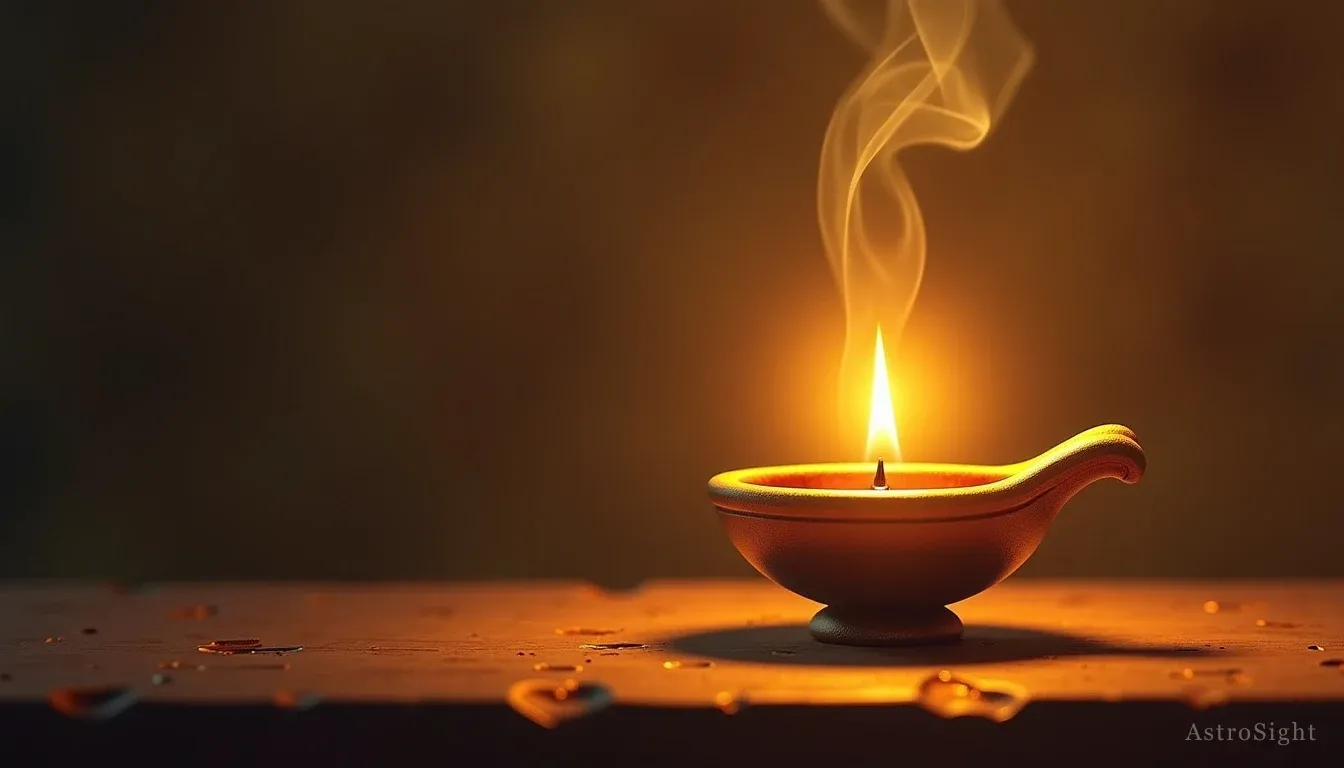
1. Diya (clay lamp): Lit throughout the puja — represents the divine light that protects the household. 2. Karva (clay pot): A small clay pot sealed with a piece of cloth or a small cup. The karva is the central ritual object of this vrat. It is filled with water. After the moon is sighted, the woman offers water from the karva to the moon and then to her husband, who drinks it from her hands to break her fast. 3. Mithai (sweets): Traditional sweets including mathri, gujia, and besan halwa are placed on the thali for offering. 4. Sindoor and chandan (vermilion and sandalwood paste): Used for applying tilak. 5. Phool (flowers): Marigold and other seasonal flowers.
The women sit together, hold their karvas, and listen to the Vrat Katha recited by an elder woman of the community (pujarin). After the katha, they rise and watch for the moon.
> Quick Answer: The Karva Chauth puja thali contains: a lit diya (lamp), a karva (sealed clay pot filled with water — the central ritual object), mithai (sweets), sindoor, chandan, and flowers. Women sit together with their karvas, listen to the Vrat Katha recited by an elder, then rise to watch for the moon. After moonrise, the karva's water is offered to the moon and then given to the husband to break the fast.
Seeing the Moon Through a Sieve: The Closing Ritual
The moonrise ritual is the most iconic moment of Karva Chauth. When the moon rises, the woman first sees it through a chalni (sieve or perforated vessel), then sees her husband's face through the same sieve. After seeing both, she faces her husband directly (not through the sieve) and performs aarti (circling a lamp before him). Then her husband gives her the first water and food to break her fast. This sequence of: moon through sieve → husband through sieve → husband directly → aarti → husband offers water is the complete closing ritual.
The sieve symbolism is significant. The sieve filters — it separates what is pure from what is impure. Seeing the moon through the sieve is understood as filtering the lunar blessing to receive only its auspicious aspect. In another interpretation, the small holes in the sieve are said to "multiply" the sight, as if the devotee is seeing through a thousand eyes of devotion.
> Quick Answer: The closing Karva Chauth ritual: when the moon rises, see it through a chalni (sieve), then see your husband's face through the same sieve, then look at him directly and perform aarti (circling a lamp before him). Your husband then gives you the first water and food to break the fast. The sieve symbolizes filtering the lunar blessing and is understood as multiplying the devotion of the sight.
The Meaning of the Karva (Clay Pot)
The karva is not just a prop — it is the central sacred object of the vrat. In ancient Indian ritual, clay vessels were the primary containers for offering water to deities, ancestors, and the cosmic elements. The karva is a small, round, earthen pot — it represents the earth element, fertility, and continuity of life. The water within it is the life force (prana) that sustains the household. On Karva Chauth, the karva is first consecrated through the katha and puja, then the water it holds is offered to the moon (the cosmic witness of the fast), and finally given to the husband as the first sustenance that breaks the fast. The woman's care, prayer, and sacrifice throughout the day are symbolically condensed in the single act of offering this water.
> Quick Answer: The karva (small earthen pot) is the central ritual object of the vrat, not merely a prop. It represents the earth element, fertility, and household continuity. Consecrated during the puja and katha, its water is offered to the moon as the cosmic witness of the fast, then given to the husband as the first food of the day — condensing the entire day's prayer and sacrifice into this single act.
Spiritual Symbolism: Devotion as Karmic Protection
The deeper spiritual logic of Karva Chauth draws on the Vedic understanding of karma and the power of intense intention (Sankalpa). The classical texts understand intense, sincere prayer — especially when reinforced by physical sacrifice (fasting) — as generating a force that can alter the course of events. A wife's focused, loving prayer for her husband's life is not understood as mere petition; it is understood as the active deployment of the spiritual merit accumulated through the day's sacrifice. The Vedic tradition holds that relationships generate karmic bonds, and a wife's prayer has special power in the karmic field of the marital bond. This is also why the vrat is specifically for married women — it activates the karmic connection of the marriage bond and directs its accumulated power toward the husband's protection.
> Quick Answer: The spiritual logic of Karva Chauth rests on the Vedic principle that sincere fasting generates tapas (spiritual power) that can be directed toward a specific intention. A wife's prayer for her husband's life, reinforced by the day's sacrifice, is understood as the active use of karma accumulated within the marital bond. The fast is not mere petition — it is the deployment of that accumulated karmic power.
How It Differs from Vat Savitri
Karva Chauth and Vat Savitri are the two most prominent fasts by married women for their husband's welfare, but they are distinct in character. Vat Savitri is observed in Jyeshtha month (May-June) and is rooted in the Mahabharata story of Savitri winning back Satyavan's life from Yama (the god of death) through her wisdom and devotion. Vat Savitri centers on the banyan tree and involves circumambulation with thread. Karva Chauth is in Kartika month (October) and centers on the moon as the cosmic witness. Vat Savitri is about confronting death and winning; Karva Chauth is about prayer as prevention — the day-long sacrifice that strengthens the protective field around the husband's life. Karva Chauth is specifically North Indian (Punjab, Haryana, Rajasthan, UP, Delhi); Vat Savitri has both Maharashtra/South India versions (Amavasya) and North Indian versions (Purnima).
> Quick Answer: Karva Chauth (Kartika month, moon-centered, North Indian) and Vat Savitri (Jyeshtha month, banyan tree-centered, wider regional spread) are distinct. Vat Savitri is about confronting death and winning (Savitri vs. Yama); Karva Chauth is about preventive sacrifice — prayer as protection. Both are for the husband's welfare but through different narrative frameworks, seasons, and ritual objects.
Regional Variations and the Modern Debate
Punjabi tradition: The most elaborate Karva Chauth observance — the Sargi gift exchange, the collective puja with all the women of the mohalla (neighborhood), the festive dressing, the sieve ritual. This is the dominant form seen in popular culture.
Rajasthani and UP variations: Some communities in Rajasthan observe a simpler form without the sieve ritual; in UP, the puja is sometimes held at home individually rather than in a community gathering.
Modern discussion: Karva Chauth has been the subject of genuine contemporary discussion about the nature of this practice. Several points from a balanced perspective:
1. The fast is voluntary; no classical text prescribes any negative consequence for women who do not observe it. 2. Many modern couples observe the fast mutually — both husband and wife fasting for each other. 3. The fast's spiritual power rests on sincere intent, not gender role enforcement. 4. For working women, the practical adaptation of eating a substantial Sargi and resting during the day is widely accepted without diminishing the vrat's sincerity. 5. The tradition's core element — a day of focused prayer and sacrifice for the well-being of one's life partner — is universally applicable.
> Quick Answer: Karva Chauth is primarily observed in Punjab, Haryana, Rajasthan, UP, and Delhi, with Punjabi tradition being the most elaborate. Regional variations exist in community vs. home puja formats. Modern adaptations include mutual fasting by both partners and practical accommodations for working women. The tradition's core — focused prayer and sacrifice for a partner's well-being — transcends any single observance format.
---
Align Your Spiritual Path with Your Purpose
Your birth chart reveals your dharma — the path aligned with your soul purpose. Get expert analysis connecting spiritual direction with practical life choices.
Explore Our Reports
Dr. Meenakshi Sharma
PhD in Vedic Astrology, 20+ Years Experience
Dr. Meenakshi Sharma is a distinguished Vedic astrologer with a PhD in Vedic Astrology and over 20 years of professional experience in the ancient science of Jyotisha. Her extensive practice encompasses thousands of chart readings, predictive analyses, and remedial consultations, making her uniquely qualified to bridge traditional Vedic wisdom with contemporary applications. As a contributing writer for AstroSight, Dr. Sharma specializes in natal chart analysis, predictive astrology, and Vedic remedial measures, sharing her deep knowledge through insightful articles that make complex astrological concepts accessible to practitioners at all levels. Her approach combines rigorous academic training with ethical consultation standards, empowering clients through education and practical guidance while maintaining authentic adherence to classical Vedic principles.