

Annapurna Vrat: 21-Day Vrat for Abundance in Home
The Annapurna Vrat is a 21-Tuesday (or 16-Tuesday) fast dedicated to Goddess Annapurna — whose name in Sanskrit literally means "full of food" (anna = food, purna = complete/full) — observed by women to bring abundance of nourishment, financial stability, and household prosperity into their homes. G
The Annapurna Vrat is a 21-Tuesday (or 16-Tuesday) fast dedicated to Goddess Annapurna — whose name in Sanskrit literally means "full of food" (anna = food, purna = complete/full) — observed by women to bring abundance of nourishment, financial stability, and household prosperity into their homes. Goddess Annapurna is a form of Parvati, the consort of Shiva, who specifically governs the domain of food, sustenance, and the earth's capacity to nourish all living beings. Her most celebrated temple stands within the Kashi Vishwanath temple complex in Varanasi — one of the 51 Shakti Peethas — where she is worshipped daily as the provider of the sacred city's food. As of 2026, the Annapurna Vrat remains one of the most widely observed women's vratas in North and Central India, particularly in Uttar Pradesh, Madhya Pradesh, and Bihar, where the fear of food scarcity and financial instability makes Annapurna's blessings especially sought. The vrat runs for 21 consecutive Tuesdays without a break — if a Tuesday is missed for any reason, the count must restart from the beginning. Some regional traditions prescribe 16 Tuesdays instead of 21, but the 21-Tuesday form is the more widely observed. The fast itself runs from sunrise to the completion of the evening puja, after which the devotee eats a sattvic (pure) meal. On every Tuesday throughout the vrat, the devotee donates food — cooked or raw — to the poor, to Brahmins, or to a temple. The central teaching of this vrat comes from the Annapurna Upanishad and the Shiva Purana's account of the Annapurna legend: that food is not mere matter or illusion, but a form of divine grace that sustains all consciousness and must be honoured with gratitude and shared generously. Use the birth chart calculator to see how this plays out in your personal Vedic chart.
Reviewed by Shri Ankit Bansal, Vedic Astrologer with 20+ years of experience in Shakti traditions and women's vrat protocols.
---
Who is Goddess Annapurna and what is her significance?
Goddess Annapurna is the goddess of food, nourishment, and abundance — a form of Parvati/Shakti who specifically embodies the divine principle that material sustenance is sacred and inseparable from spiritual well-being. She holds a jewelled vessel of rice porridge in one hand and a golden ladle in the other, symbolising her readiness to feed all who come to her.
In Hindu cosmology, Annapurna holds a position of supreme importance because she represents the principle that without food, no spiritual practice, no life, and no dharma is possible. The Annapurna Upanishad opens with the statement: "She who is the form of knowledge, the form of bliss, the foundation of liberation — she is Annapurna, the supreme goddess." In the Skanda Purana's account of the Annapurna Vrat, Parvati appears as Annapurna specifically in response to Shiva's philosophical dismissal of the material world — her manifestation is a direct correction of any view that separates spiritual reality from the physical nourishment of life.
The Annapurna Devi temple in Varanasi is the city's most beloved temple after the Kashi Vishwanath Shivalinga temple, just 30 metres away. The belief in Varanasi is that every resident of the sacred city is fed by Annapurna directly — that no one truly starves in Kashi because the goddess herself ensures the city's food supply. This is why feeding people (Anna Daan) in Varanasi carries the highest merit in the Hindu tradition.
What is the story behind the Annapurna Vrat?
The Annapurna legend begins when Shiva, in a moment of philosophical detachment, declared to Parvati that all of existence — including food and the material world — is maya (illusion) and therefore unworthy of attachment. Parvati, disagreeing fundamentally, disappeared from the cosmos to prove that without her sustaining energy, all of creation would starve and collapse.
Immediately after Parvati's departure, the earth's fertility dried up. Crops failed across all 3 worlds (Triloka). The gods could no longer perform their functions. Even Shiva himself began to experience hunger — something he, as the ascetic lord of detachment, had never felt. Forced by the undeniable reality of starvation, Shiva went to Varanasi (the city he protects) and stood at Parvati's door with a begging bowl in his hands. Parvati — now revealed in her form as Annapurna, the goddess of food — smiled and served Shiva a meal of simple rice porridge. In accepting food from her hands, Shiva acknowledged that the material world and its sustenance are not illusions to be dismissed but divine gifts to be received with humility and gratitude.
This legend is recited as the Annapurna Katha on every Tuesday of the vrat. The Shiva Purana (Kashi Khanda, Chapter 47) records this story in full. B.V. Raman references this narrative in his work on Shakti worship, noting that the Annapurna tradition represents a profound correction to any form of spiritual bypassing that dismisses the importance of physical well-being.
How to observe the Annapurna Vrat: the complete daily method?
The Annapurna Vrat is observed for 21 consecutive Tuesdays, and each Tuesday follows the same 5-part daily structure. Missing even 1 Tuesday restarts the count from zero, making consistency the most important element of this vrat.
Time of Day | Activity | Details
- Before sunrise — Wake, bathe — Full bath required before puja. Wear yellow or red clothing.
- Sunrise – morning — Begin fast — No food from sunrise. Water and milk allowed (phalahar fast).
- Morning (9–11 am) — Morning puja — Light lamp, offer fresh yellow flowers, incense, and turmeric.
- Evening (6–8 pm) — Main evening puja — Full puja sequence (described below). Recite Annapurna Katha.
- After puja — Break fast — Eat the prasad first, then a full sattvic meal.
- Any time Tuesday — Food donation — Donate cooked food, raw rice, or money for food to the poor.
The vrat is not a medical nirjala (waterless) fast — most women observe phalahar, meaning they can eat fruits and drink milk and water during the day. The spiritual power of the vrat comes not from extreme physical austerity but from the combination of daily puja, weekly donation, and the recitation of the Annapurna Katha.
What is the step-by-step puja method for the Annapurna Vrat?
The evening puja on each Tuesday takes approximately 30–45 minutes and follows a 9-step sequence. All 21 Tuesdays use the same method, with the final Tuesday's puja being extended into the Udyapan (conclusion ceremony).
1. Clean the puja space and place a clean yellow or red cloth on the puja table or floor. 2. Place the image or idol of Goddess Annapurna at the centre. If an Annapurna idol is not available, a Durga or Parvati image may be used. Some families place a small vessel of rice or kheer to represent Annapurna. 3. Light a pure ghee lamp (keep it burning throughout the puja). Light sandalwood or rose incense. 4. Offer yellow or marigold flowers — 21 flowers per puja is traditional. 5. Apply turmeric (haldi) and kumkum to the goddess's image. 6. Offer Naivedya (food offering): yellow rice or kheer (rice cooked in milk with sugar). Place the offering bowl in front of the image. Do not eat from it until after the puja is complete. 7. Recite the Annapurna Stotra (Adi Shankaracharya's 8-verse hymn to Annapurna) or the Annapurna Katha (story of the vrat). 8. Perform aarti with the ghee lamp, circling it clockwise 7 times in front of the goddess. 9. Distribute the prasad (the offered kheer or rice) to all family members. The person observing the vrat eats the prasad as the first food after breaking the fast.
What should be offered to Goddess Annapurna and what must be avoided?
The offerings and prohibitions for the Annapurna Vrat follow the principle that Annapurna represents sattvic (pure) nourishment. All offerings must be freshly prepared and sattvic; all prohibited items are tamasic or rajasic foods and behaviours.
Offer to Goddess Annapurna | Avoid on Vrat Days
- Kheer (rice pudding with milk and sugar) — Non-vegetarian food (meat, fish, eggs)
- Yellow rice with turmeric and ghee — Onion, garlic, leek
- Marigold / yellow flowers — Stale or leftover food as offering
- Turmeric (haldi) — Salt (in the fast period before puja)
- Kumkum and sandalwood — Alcohol or tobacco
- Ghee lamp (sesame oil also accepted) — Harsh or unpleasant speech
- White sesame seeds — Turning away a hungry person who asks for food
- Banana, coconut, mango (seasonal) — Wasting food on any Tuesday of the vrat
- Fresh cow's milk — Sleeping during daytime on Tuesday
- Raw rice (as donation) — Breaking the donation rule (must donate every Tuesday)
The prohibition against "turning away a hungry person" is specific to this vrat and reflects its core teaching: Annapurna blesses those who feed others. Refusing food to someone in need on a Tuesday of the Annapurna Vrat is considered a direct contradiction of the vrat's purpose and can negate its merit.
What are the specific benefits of the Annapurna Vrat?
The Annapurna Vrat is observed with 5 specific intentions, each described in the Skanda Purana's Kashi Khanda account of the vrat's origin. The vrat addresses material scarcity at its root, which in Vedic tradition is understood to have both karmic and energetic causes.
1. Abundance of food in the home: The central and original purpose. Families who have experienced repeated shortage, crop failure (in rural contexts), or chronic financial inadequacy related to food observe this vrat to restore the household's food supply.
2. Removal of financial scarcity: Because food and money are linked as aspects of Lakshmi-Annapurna's blessings, the vrat is also effective for removing the specific type of financial scarcity that manifests as inability to provide adequately for the household.
3. Child welfare and fertility: Annapurna as a form of Parvati also governs motherhood and child nourishment. Women who have concerns about their children's health, growth, or nutrition observe this vrat as a direct prayer to the goddess who feeds all children.
4. Marital harmony: Because Annapurna and Shiva's relationship represents the resolution of a fundamental conflict (material vs. spiritual) through love and humility, the vrat is also effective for improving marital relationships strained by financial stress.
5. Liberation (Moksha): The Annapurna Upanishad specifically states that the true gift Annapurna gives is not only food but the wisdom that nourishes the soul. The 8-verse Annapurna Stotra of Adi Shankaracharya ends with the prayer: "O Mother Annapurna, give me alms — not merely food, but the knowledge that liberates."
For women who want to understand which house in their Vedic chart governs food abundance, financial security, and domestic prosperity — specifically the 2nd house (wealth and food), 4th house (home and comfort), and 11th house (gains) — the birth chart calculator provides a full house analysis.
How does the Annapurna Vrat connect to the Varanasi temple?
The Annapurna Devi temple in Varanasi (Kashi) is one of the 51 Shakti Peethas — the sacred sites that formed from the body of Sati (Parvati's previous birth) when Vishnu used his Sudarshana Chakra to cut her body as Shiva carried it in grief. The specific body part said to have fallen at Varanasi is Parvati's wrist — symbolising the hand that cooks and offers food, making Varanasi the perfect location for Annapurna's primary seat.
The temple's daily ritual includes offering food (prasad) to the goddess 3 times per day — morning, noon, and evening — and the prasad (typically rice or khichdi) is distributed to all devotees. Pilgrims who visit Varanasi traditionally visit the Annapurna temple first before the Kashi Vishwanath Shivalinga temple, symbolically seeking nourishment before seeking liberation. The belief is that without Annapurna's grace, even Shiva — who resides in Kashi — cannot give moksha, because a starving soul cannot receive spiritual wisdom.
Women who have completed 21 Tuesdays of the Annapurna Vrat sometimes undertake a pilgrimage to the Varanasi temple as part of their Udyapan (conclusion), offering the final meal and doing Darshan of the goddess who is the source of the vrat's power.
What is the Udyapan (conclusion ceremony) on the 21st Tuesday?
The Udyapan is the formal conclusion of the Annapurna Vrat, performed on the 21st (or 16th) Tuesday, that completes the vow and releases the devotee from the daily obligations of the vrat. The Udyapan is more elaborate than a regular Tuesday puja and involves inviting 5–7 women to a communal meal.
The complete Udyapan sequence has 7 steps:
1. Cook a full vegetarian meal on the morning of the 21st Tuesday — the meal should include rice, dal, 3–4 vegetable dishes, kheer, puri or chapati, and a sweet dish. The meal represents Annapurna's fullness and abundance. 2. Set up the puja space with a new cloth and fresh flowers. Place the Annapurna idol or image. 3. Perform the complete puja sequence with doubled offerings — 42 flowers (double the usual 21), double the ghee, double the incense. 4. Invite 5 or 7 married women (Suhagins, symbolising good fortune) to your home. Seat them with respect and serve them the full meal you have cooked. 5. Give each woman a gift of food items: a packet of rice, a small bottle of ghee, sweets, and optionally a piece of yellow or red cloth. 6. Touch the feet of the elder women present and receive their blessings. 7. After the women have eaten and left, the family eats together. This communal meal marks the official end of the 21-Tuesday vrat.
If inviting 5–7 women in person is not possible, the merit of Udyapan can be obtained by donating a full meal to a temple's langar (community kitchen) or by sponsoring a meal for 5–7 children in a school or orphanage on the 21st Tuesday.
What are the astrological connections of the Annapurna Vrat?
Tuesday (Mangalvar) is governed by Mars (Mangal) in Vedic astrology, making the Annapurna Vrat a Venus-Mars integration — the Tuesday frame (Mars) hosts the Venus-ruled themes of food, abundance, domestic comfort, and feminine grace. This combination is specifically effective for individuals who have a weak or afflicted Venus in their birth chart, which in Vedic astrology manifests as issues with food, domestic happiness, artistic expression, or financial comfort.
The 2nd house (house of food, family wealth, and speech) is the primary house ruled by Venus in natural zodiac terms (as Taurus, the 2nd sign, is Venus's own sign). An afflicted 2nd house — particularly one with Mars, Rahu, or Saturn placed there or aspecting it — creates conditions of food scarcity, family conflict around resources, and financial instability. The Annapurna Vrat on Tuesdays (Mars's day) effectively addresses a 2nd-house Mars affliction by channelling Mars's energy toward nourishment and generosity rather than conflict.
K.N. Rao in his works on planetary remedies notes that food-related vratas performed with regularity and genuine intent are among the most effective remedial measures for 2nd-house afflictions, because they directly address the life domain that the afflicted house governs. Use the numerology calculator to check if your personal year number in 2026 is governed by Venus (number 6) or Mars (number 9), as these years are particularly responsive to the Annapurna Vrat's energy.
What rules must be followed throughout the 21 Tuesdays?
The Annapurna Vrat has 10 essential rules that apply to every single Tuesday of the 21-week period. Breaking any of the first 5 rules is considered a serious disruption to the vrat; the remaining 5 are strongly recommended.
1. The vrat must be observed every Tuesday without exception for the full count of 21 Tuesdays. Missing 1 Tuesday restarts the count. 2. No non-vegetarian food on any Tuesday of the vrat — not just on fast days but throughout the entire 21-week period for the household. 3. Food must be donated on every Tuesday — a small or large donation is equally valid in terms of merit, but the act cannot be skipped. 4. The Annapurna Katha (story) must be recited — read or heard — on every Tuesday, even if the full puja cannot be done due to travel or other circumstances. 5. No food should be wasted in the household on Tuesdays. Leftover food must be given to animals or the poor, not discarded. 6. No onion or garlic on Tuesdays throughout the vrat period. 7. No harsh words or quarrelling on Tuesdays — the day must be observed with particular domestic harmony. 8. The person observing the vrat should not eat at someone else's home or in a restaurant on Tuesdays (the meal must be home-cooked and sattvic). 9. Begin the vrat on a Tuesday in a Shukla Paksha (waxing moon period) for maximum auspiciousness — the 1st Tuesday after a Purnima or near Pratipada is ideal. 10. Maintain the same time for the evening puja across all 21 Tuesdays — consistency of timing reinforces the ritual's effectiveness.
---
Align Your Spiritual Path with Your Purpose
Your birth chart reveals your dharma — the path aligned with your soul purpose. Get expert analysis connecting spiritual direction with practical life choices.
Explore Our Reports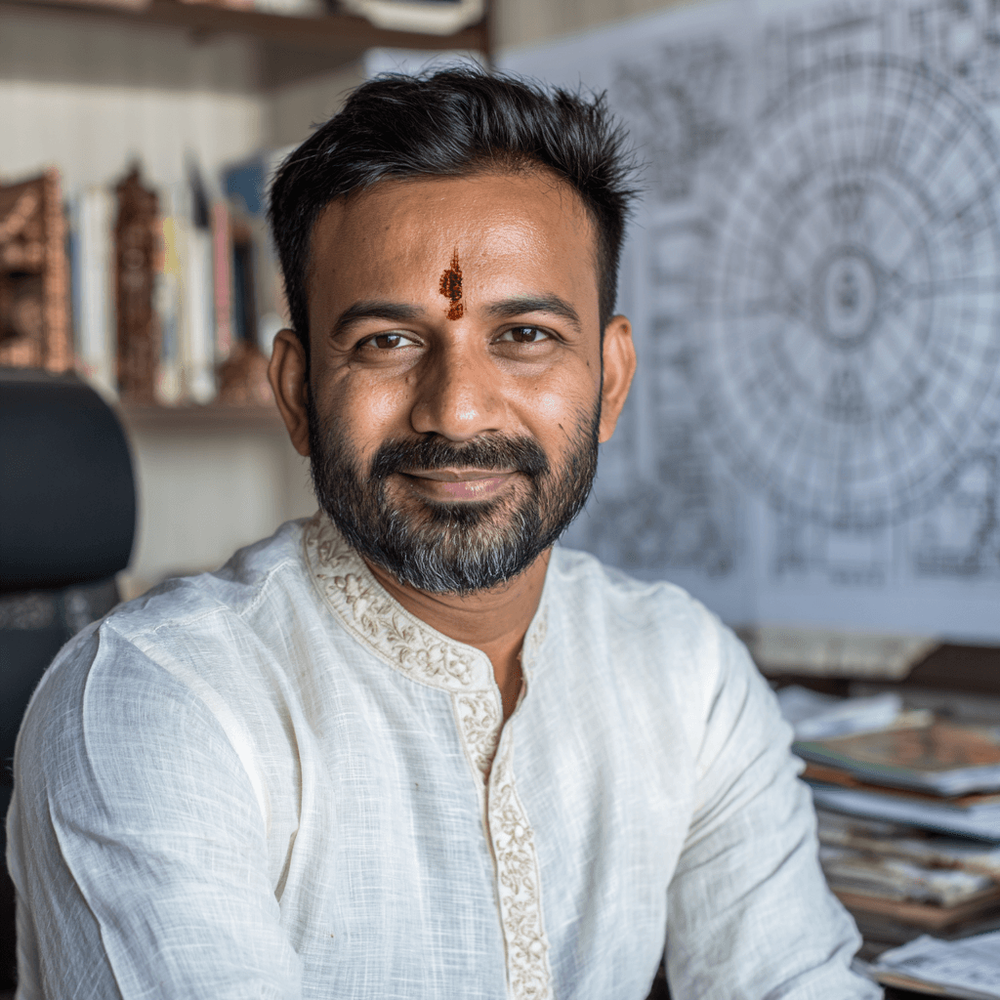
Shri Ankit Bansal
Vedic Astrologer · Numerology and Vastu Expert, 15+ Years
Shri Ankit Bansal is a renowned numerology and Vastu expert with over 15 years of specialized experience in these ancient Indian sciences. His extensive practice encompasses thousands of consultations in numerological analysis, name corrections, business numerology, and comprehensive Vastu assessments for residential and commercial properties. As a contributing writer for AstroSight, Shri Bansal combines his deep understanding of numerical vibrations with practical Vastu principles to provide holistic solutions that harmonize living and working spaces with cosmic energies. His expertise spans personal numerology charts, business name analysis, property Vastu audits, and remedial measures that blend traditional wisdom with modern lifestyle requirements. Through his methodical approach and proven track record, Shri Bansal has established himself as a trusted authority in helping clients optimize their environment and numerical influences for enhanced prosperity, health, and overall well-being.


