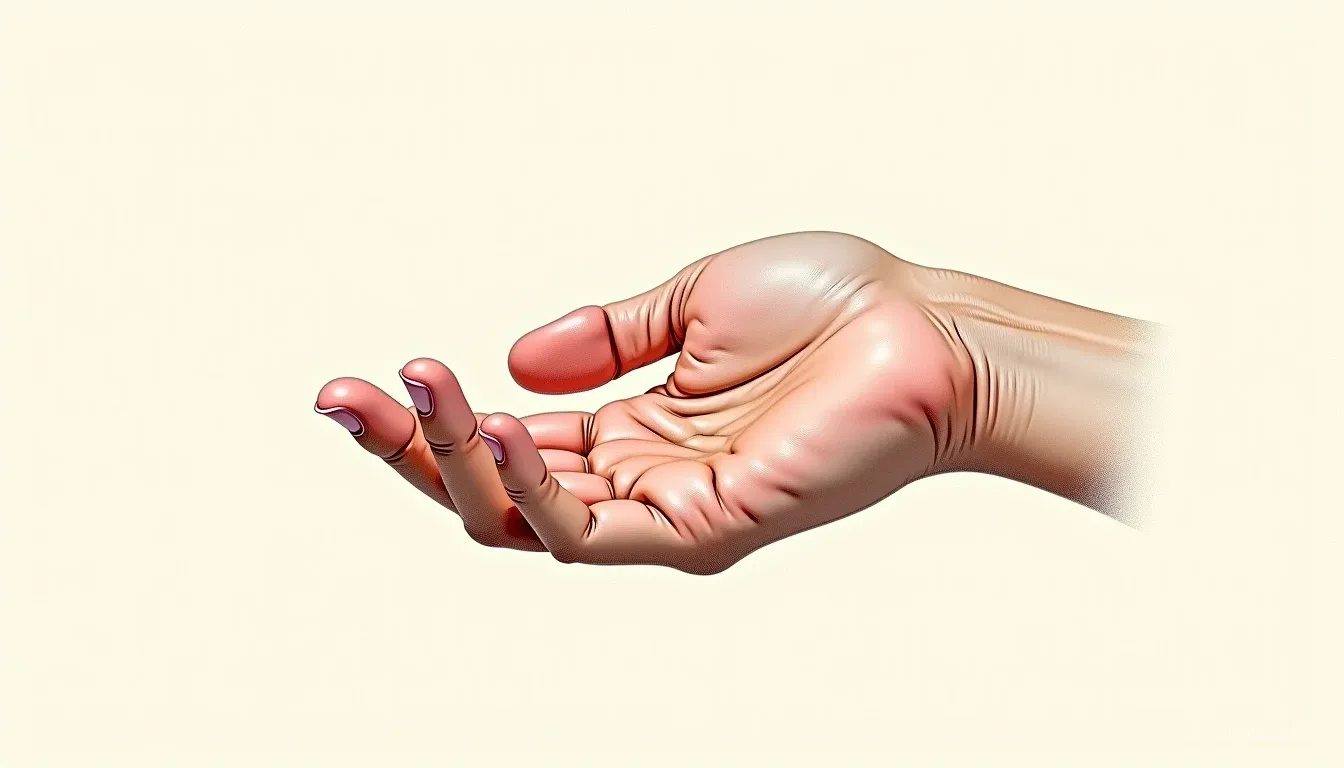
Palmistry by Left or Right Hand: Which to Read?
As of 2026, the question of which hand to read in palmistry is one of the most searched topics in the field — and one of the most consistently misanswered by popular sources. The answer depends on the tradition you follow, whether you are reading for yourself or someone else, and what dimension of t
As of 2026, the question of which hand to read in palmistry is one of the most searched topics in the field — and one of the most consistently misanswered by popular sources. The answer depends on the tradition you follow, whether you are reading for yourself or someone else, and what dimension of the person's life you are trying to understand. This guide addresses the question fully, drawing on Hasta Samudrika Shastra and the classical Indian palmistry tradition. Use the birth chart calculator to see how this applies to your personal Vedic chart.
Reviewed by Shri Ankit Bansal, Vedic Astrologer & Founder of AstroSight, 2026
Which Hand to Read in Palmistry: Left or Right?
> Quick Answer: Both hands are read in classical palmistry. The dominant hand (usually right) shows the active, current life path — the person you have become. The non-dominant hand (usually left) shows inherited nature, birth karma, and natural potential. Reading both and comparing them reveals how far a person has developed from their starting conditions. Neither hand alone tells the complete story.
The instinct to ask "which hand?" is understandable — most people want a single definitive answer. The classical tradition's answer is that both hands are read, and the comparison between them is often the most revealing part of the reading.
That said, when a person can only examine one hand — or when a beginner is learning and wants to start with one — there is a clear classical guidance on priority.
In most traditions: 1. Dominant hand (the hand you write with): Shows current life path, developed character, manifested events, and the person you have made yourself into. 2. Non-dominant hand: Shows inherited nature, birth potential, karmic starting point, and what you were given to work with.
For most right-handed people, the right hand is dominant. For left-handed people, the left hand is dominant. The assignment of dominant/non-dominant is based on actual handedness, not on tradition's default assumption.
Hasta Samudrika Shastra traditionally assigns specific roles to right and left based on gender as well, which we address in detail below. But the core principle — both hands are read, and the comparison between them is informative — is consistent across the tradition.
The Dominant Hand vs. the Passive Hand
> Quick Answer: The dominant hand records what has happened and is happening — the current trajectory of life. The passive hand records the starting conditions — the natural potential and inherited tendencies. When both hands are similar, the person lives close to their natural inclinations. When the dominant hand shows significantly more developed lines, the person has grown substantially from their birth conditions.
The distinction between dominant and passive (non-dominant) hands is the foundational principle underlying all classical hand-choice decisions in palmistry. Understanding it clearly makes every subsequent reading more accurate.
The dominant hand: 1. Shows the current, manifested life 2. Records actual events that have occurred or are occurring 3. Reflects the person's choices, efforts, and the character they have developed through living 4. Shows how the person has responded to their birth conditions — what they have built from, modified, developed, or suppressed 5. The lines on the dominant hand tend to be more deeply incised on most people because the hand is used more and the karma of the active life is more strongly impressed
The passive (non-dominant) hand: 1. Shows inherited nature and the karmic starting point 2. Reflects the potential the person was born with — developed and undeveloped 3. Shows family karma and inherited constitutional qualities 4. Lines on the passive hand are sometimes less deep because the inherited potential has not been fully activated 5. Represents what the person brought into this life from their lineage and birth conditions
Reading the comparison: When a person's dominant hand shows significantly more positive developments than their passive hand — stronger lines, more developed mounts, greater clarity — it indicates substantial personal growth. The person has actively developed capacities that were not strongly present in their birth conditions. This is a mark of genuine effort and evolution.
When the dominant hand shows weaker or more troubled formations than the passive hand, the person has, to some extent, moved away from or suppressed their natural gifts. This does not mean failure — sometimes birth conditions are not supportive of what was inherited, and the person has had to adapt — but it indicates areas where reconnecting with the natural potential is valuable.
When both hands are very similar, the person lives in close alignment with their birth nature. Their choices and their natural inclinations run along the same track.
The Classical Indian Tradition on Hand Reading
> Quick Answer: Hasta Samudrika Shastra traditionally assigns the right hand to the material life for men and the left hand to inherited nature. For women, some classical texts reverse this assignment. The tradition emphasizes reading both hands and notes that the difference between the hands contains as much information as each hand individually.
Classical Hasta Samudrika Shastra texts provide specific guidance on which hand carries which information:
For men: The right hand governs the material, active, outer life — career, worldly achievements, and the practical unfolding of fate. The left hand governs inherited nature, spiritual tendencies, and what has been received rather than earned.
For women: Classical texts in some lineages assign the primary reading to the left hand for women, treating the left hand as the one that shows the active life. This is a traditional gender-based assignment rooted in the cultural context of the texts' composition. Many contemporary Indian palmists trained in the classical tradition read both hands for both genders and do not apply the gender distinction.
The contemporary Indian practice: The majority of contemporary Indian palmists — including those trained in classical Hasta Samudrika Shastra lineages — read both hands for both men and women. They begin with the dominant hand as the primary reading and use the non-dominant hand as a reference for comparison, regardless of gender.
B.V. Raman, in addressing palmistry alongside astrology, noted that the classical gender-based hand assignment reflected historical cultural conditions more than a universal principle. His practical guidance was to read the dominant hand as primary and the non-dominant as secondary context, comparing the two for every client.
This contemporary approach — dominant hand primary, non-dominant hand as reference — is the framework used throughout this guide.
What the Right Hand Reveals
> Quick Answer: For right-handed people, the right hand shows the active, manifested life — the career that has developed, the relationships that have formed, the health challenges that have occurred, and the character that has been shaped by choices and experience. It shows who the person has become, not just who they were born to be.
The right hand for right-handed people (or the dominant hand for left-handed people) is the hand of actualization — it shows the karma that has been activated and is unfolding in this life.
Lines on the dominant hand tend to reflect: 1. Career developments that have occurred or are actively developing (Fate Line) 2. The emotional life as it has actually been lived — relationships formed, heartbreaks experienced (Heart Line) 3. The intellectual style as it has developed through education, practice, and experience (Head Line) 4. The actual vitality and health events experienced (Life Line)
Why the dominant hand's lines are often more developed: The dominant hand is used more — it is the hand that writes, gestures, creates, and works. The physical engagement with the world through the dominant hand means that its lines are more deeply impressed. Additionally, the karma of the active life is more powerfully recorded because it is being actively lived.
Unique markings on the dominant hand: When a marking appears on the dominant hand but not on the passive hand, it indicates something that has developed or occurred through life experience rather than being an inherited tendency. A Sun Line appearing only on the dominant hand indicates that the person has built their recognition through effort and achievement — it was not simply their birth gift.
Weakening of dominant hand lines relative to passive hand: When a line that is clear on the passive hand appears weak or absent on the dominant hand, it indicates that a natural talent or tendency has not been expressed or developed. The inherited gift is there but has not been activated.
What the Left Hand Reveals
> Quick Answer: For right-handed people, the left hand reveals the inherited nature — the natural talents, tendencies, and karmic starting conditions the person was born with. It shows the potential that was given, regardless of whether it has been developed. Features present on the left hand but not the right indicate gifts or tendencies that have not been activated in the current life.
The left hand (or non-dominant hand) is the hand of potential — the karmic library of what was given at birth.
What the passive hand shows: 1. Family karma and inherited constitutional qualities 2. Natural talents and tendencies that were present from birth 3. The emotional and mental temperament of the birth nature 4. The starting point of the life's karmic journey
Strong lines on the passive hand, absent or weak on dominant: When the passive hand shows features that are absent or weaker on the dominant hand, these indicate unrealized potential. A long, clear Sun Line on the passive hand with no Sun Line on the dominant hand indicates that the person has a natural gift for creative recognition that has not been activated through the choices made in this life.
Weak or troubled lines on passive hand, strong on dominant: When the passive hand shows more troubled or weaker formations, but the dominant hand shows strength and clarity, the person has built genuinely better conditions than they started with. This is one of the most affirming things a palmist can note in a reading — the person has genuinely risen above their birth karma through effort and choice.
The passive hand as diagnostic: In health readings, the passive hand is particularly useful. A Life Line that shows a chain or weakness in a specific section on both hands is more significant than the same feature on only the dominant hand — it suggests a constitutional tendency rather than just an acquired condition.
When Both Hands Tell Different Stories
> Quick Answer: When both hands show notably different formations, the difference itself carries the most important information. A person with a clear Fate Line on the passive hand but no Fate Line on the dominant has departed significantly from their karmic career path. A person with more developed mounts on the dominant hand has actively built the qualities those mounts represent. The comparison reveals the person's relationship with their own nature and potential.
The most interesting readings are those where the two hands diverge significantly. Several patterns are particularly meaningful:
Passive hand shows deep Heart Line; dominant hand shows troubled or chained Heart Line: The person was born with a warm, emotionally generous nature (passive hand) but has experienced significant emotional challenges and developed some protective guarding of the heart (dominant hand). The natural warmth remains underneath; the troubled dominant Hand Line reflects the wounds of lived experience.
Passive hand shows clear Fate Line starting from wrist; dominant hand shows no Fate Line: The person was karmically set up for a defined career path but has taken a very self-directed, unconventional professional route that diverges from the original karmic track. This is not negative — it indicates a deliberate choice to forge an independent path.
Dominant hand shows Sun Line absent on passive hand: The person has built recognition and public achievement through their own effort in a way that their birth nature did not particularly indicate. This is a strong indicator of genuine self-made achievement.
Both hands show the same challenging markings: When both hands show the same difficult markings — a heavy island, a significant break, a troubled zone — the challenge is both constitutionally deep and actively manifesting. It requires more serious attention than a marking present on only one hand.
Hasta Samudrika Shastra on Which Hand to Read
> Quick Answer: Hasta Samudrika Shastra's classical position is that both hands must be read together for a complete and accurate reading. The comparison between hands — not simply the reading of one — is what gives the most accurate picture of a person's karma, evolution, and current trajectory. Neither hand alone tells the full story.
The emphasis on reading both hands in Hasta Samudrika Shastra reflects the tradition's understanding of karma as both inherited (what we receive) and enacted (what we do with what we receive). The passive hand shows the inherited karma; the dominant hand shows the enacted karma. Both dimensions of karma matter. A reading of only one hand is therefore only half a reading.
Classical palmists in the Hasta Samudrika Shastra tradition developed the comparison of both hands as a standard part of their methodology precisely because they recognized that the distance between what was received and what was enacted is itself informative. It shows: 1. The degree of personal agency the person has exercised 2. Whether they have developed their gifts or suppressed them 3. Whether life circumstances have supported or undermined their natural tendencies 4. The fundamental direction of their karmic evolution in this life
B.V. Raman affirmed this in his writings: the comparison of both hands is among the most diagnostic tools available to a palmist, and a reading that neglects one hand is necessarily incomplete.
In practical terms, Hasta Samudrika Shastra recommends: 1. Begin with the dominant hand for the primary reading 2. Cross-reference with the passive hand to identify what was inherited 3. Note differences between the two hands and analyze what they reveal about the person's evolution 4. Draw conclusions that integrate both hands' information
Practical Guide: Starting Your Palm Reading
> Quick Answer: Start with your dominant hand as the primary reading. Identify the major lines and their quality. Then examine the same features on your non-dominant hand. Note the similarities and differences. The similarities show persistent themes; the differences show where life has diverged from starting conditions. This comparison forms the foundation of an integrated palm reading.
For someone beginning to read their own palm or someone else's, follow this practical sequence:
Step 1: Identify the dominant hand. Ask which hand the person writes with. That is their dominant hand — the primary hand for the reading.
Step 2: Read the dominant hand first. Identify and read the four major lines — Heart, Head, Life, Fate — along with the major mounts and the thumb. Build the reading from the dominant hand as if it were your only source.
Step 3: Examine the same features on the passive hand. Note which features are the same, which are more prominent, and which are less prominent than on the dominant hand.
Step 4: Analyze the differences. Where the dominant hand shows more development, personal growth has occurred. Where the passive hand shows more development, inherited potential is present but not fully activated. Where both hands show the same marking, the feature is both karmic and active.
Step 5: Integrate the reading. Draw conclusions that incorporate both hands. A complete statement reflects not just what the dominant hand shows, but what the comparison between the two hands reveals about the person's relationship with their own nature and karma.
For the foundational beginner's framework on reading a palm from scratch, the companion article at /palmistry/how-to-read-your-palm-beginner-step-by-step-guide covers the complete step-by-step process. And for the deepest possible personal reading — integrating palmistry's physical record with the planetary architecture of your birth — explore your birth chart alongside your palm.
Your Birth Chart Reveals Far More Than Palm Lines
Vedic astrology provides depth that palmistry cannot reach. Get a complete career and life direction analysis based on your exact birth chart.
Get Your Career ReportPersonalized Report
Janampatri (Birth Chart Report)
Your palm lines and your birth chart are two maps of the same destiny — see both together
- Personalized analysis based on YOUR exact birth chart
- Expert-prepared by Dr. Meenakshi Sharma
- Delivered as PDF within 24-48 hours
- Unlimited follow-up clarifications
By Dr. Meenakshi Sharma · Delivered in 24-48 hours

Shri Ankit Bansal
Vedic Astrologer · Numerology and Vastu Expert, 15+ Years
Shri Ankit Bansal is a renowned numerology and Vastu expert with over 15 years of specialized experience in these ancient Indian sciences. His extensive practice encompasses thousands of consultations in numerological analysis, name corrections, business numerology, and comprehensive Vastu assessments for residential and commercial properties. As a contributing writer for AstroSight, Shri Bansal combines his deep understanding of numerical vibrations with practical Vastu principles to provide holistic solutions that harmonize living and working spaces with cosmic energies. His expertise spans personal numerology charts, business name analysis, property Vastu audits, and remedial measures that blend traditional wisdom with modern lifestyle requirements. Through his methodical approach and proven track record, Shri Bansal has established himself as a trusted authority in helping clients optimize their environment and numerical influences for enhanced prosperity, health, and overall well-being.