
Panchang Elements: Tithi, Vaar, Nakshatra, Yoga, Karana
The Panchang (Sanskrit for "five limbs") is the traditional Vedic calendar system, composed of five essential elements that together describe the karmic-energetic quality of any specific time. The five Panchang elements — Tithi (lunar day), Vaar (weekday), Nakshatra (lunar mansion), Yoga (sun-moon c
The Panchang (Sanskrit for "five limbs") is the traditional Vedic calendar system, composed of five essential elements that together describe the karmic-energetic quality of any specific time. The five Panchang elements — Tithi (lunar day), Vaar (weekday), Nakshatra (lunar mansion), Yoga (sun-moon combination), and Karana (half-tithi) — provide the foundation for muhurta (auspicious time selection), daily life timing, festival calendar, and the synchronization of human activity with cosmic rhythms.
Understanding Panchang transforms how you engage with time. Modern life treats time as uniform — every hour equivalent to every other hour. Vedic time-consciousness recognizes that different time-quality affects different activities differently. The right time for travel differs from the right time for marriage, which differs from the right time for medical procedures or starting a business. Panchang provides the framework for these distinctions.
This guide covers the five Panchang elements comprehensively — what each represents, how each is calculated, the practical applications for daily life and important decisions, and how they integrate to produce muhurta selection.
What Is the Panchang and Why Are There Five Elements?
Definition
Panchang literally means "five limbs" or "five parts" — the traditional Vedic almanac structure organizing time according to five elements that together describe time-quality completely.
Why Five Elements
Each element captures different aspects of cosmic timing:
- Tithi: lunar phase (Moon's relationship to Sun).
- Vaar: planetary day (which planet rules).
- Nakshatra: lunar mansion (Moon's position).
- Yoga: sun-moon combination (energetic quality).
- Karana: half-tithi (refined timing within tithi).
Together they describe time multidimensionally — energetic quality, planetary influence, lunar position, and energetic refinement.
The Panchang's Function
- Festival calendar determination: religious dates calculated from Panchang.
- Muhurta selection: choosing auspicious moments for important activities.
- Daily life timing: aligning daily activities with cosmic rhythms.
- Astrology foundation: many predictive techniques use Panchang data.
For your personalised Panchang and chart timing analysis, generate your free birth chart report.
What Is Tithi (Lunar Day)?
Definition
Tithi is the lunar day, calculated from the angular distance between Sun and Moon. There are 30 tithis in each lunar month — 15 in waxing phase (Shukla Paksha) and 15 in waning phase (Krishna Paksha).
Calculation
Each tithi spans 12° of angular distance between Sun and Moon. Tithis don't correspond exactly to solar days — some last shorter, some longer, depending on Moon's speed.
The 30 Tithis
Shukla Paksha (waxing): Pratipada (1st), Dwitiya (2nd), Tritiya (3rd) ... Purnima (15th — full moon). Krishna Paksha (waning): Pratipada (1st), Dwitiya (2nd) ... Amavasya (30th — new moon).
Tithi Categories
- Nanda tithis (joy): 1, 6, 11 — favorable for celebrations.
- Bhadra tithis (good): 2, 7, 12 — favorable for travel and learning.
- Jaya tithis (victorious): 3, 8, 13 — favorable for competitive activities.
- Rikta tithis (empty): 4, 9, 14 — generally avoided for important activities.
- Purna tithis (full): 5, 10, 15 (Purnima/Amavasya) — favorable for completion activities.
Practical Applications
Marriage muhurta typically uses Nanda or Purna tithis. Business launches favor Bhadra tithis. Avoid Rikta tithis for new beginnings.
What Is Vaar (Weekday)?
Definition
Vaar is the weekday — each of the seven days of the week is ruled by a specific planet whose energy influences activities undertaken that day.
The Seven Vaars
- Ravivar (Sunday): ruled by Sun (Surya). Authority, government, recognition.
- Somvar (Monday): ruled by Moon (Chandra). Mind, mother, public matters.
- Mangalvar (Tuesday): ruled by Mars (Mangal). Action, conflict, surgery.
- Budhvar (Wednesday): ruled by Mercury (Budha). Communication, commerce, education.
- Guruvar (Thursday): ruled by Jupiter (Guru). Wisdom, dharma, religious matters.
- Shukravar (Friday): ruled by Venus (Shukra). Love, marriage, arts, beauty.
- Shanivar (Saturday): ruled by Saturn (Shani). Discipline, traditional work, completion.
Practical Applications
- Marriage muhurta: Monday, Wednesday, Thursday, Friday generally favorable.
- Business start: Wednesday or Thursday.
- Buying property: Thursday or Friday.
- Medical procedures: Tuesday (warrior's day) often chosen.
- Spiritual practices: any day, but specific deity worship aligns with planet's day.
Avoiding Specific Days
- Tuesday and Saturday traditionally avoided for some auspicious activities (Mars/Saturn malefic energy).
- Each day has specific contraindications for specific activities.
What Is Nakshatra (Lunar Mansion)?
Definition
Nakshatra is the Moon's lunar mansion — the specific 13°20' division of the zodiac (out of 27 nakshatras) that the Moon occupies on a given day.
The 27 Nakshatras
From Ashwini (Aries 0°) to Revati (Pisces 30°), each spanning 13°20'. The Moon transits one nakshatra per day approximately.
Nakshatra Categories for Muhurta
- Auspicious nakshatras for general activities: Rohini, Pushya, Hasta, Anuradha, Shravana, Revati.
- Most auspicious for marriage: Rohini, Mrigashira, Magha, Hasta, Anuradha, Mula, Uttara Phalguni, Uttara Ashadha, Uttara Bhadrapada, Revati, Swati.
- Avoid for important activities: Bharani, Krittika first half, Ashlesha, Jyeshtha, Mula, Vishakha, certain padas of various nakshatras.
Tara Bala (Nakshatra Strength from Birth Nakshatra)
Each nakshatra has a specific relationship to your birth nakshatra (Janma Nakshatra). Some are auspicious for important activities; others should be avoided. Tara Bala calculation: count from birth nakshatra to current nakshatra; specific count results indicate auspiciousness.
Practical Applications
Muhurta selection always considers nakshatra. Even on a generally favorable day, an unfavorable nakshatra can compromise the timing.
What Is Yoga (Sun-Moon Combination)?
Definition
Yoga in Panchang context refers to specific sun-moon angular combinations producing distinct energetic qualities. There are 27 yogas, each spanning 13°20' of combined sun-moon arc.
The 27 Yogas
Examples: Vishkambha, Priti, Ayushman, Saubhagya, Shobhana, Atiganda, Sukarma, Dhriti, Shoola, Ganda, Vridhi, Dhruva, Vyaghatha, Harshana, Vajra, Siddhi, Vyatipata, Variyana, Parigha, Shiva, Siddha, Sadhya, Shubha, Shukla, Brahma, Indra, Vaidhriti.
Auspicious Yogas
Particularly favorable: Siddhi, Shubha, Shukla, Brahma, Indra, Saubhagya, Shobhana, Sukarma, Dhriti, Harshana.
Inauspicious Yogas
Generally avoided for important activities: Vyaghatha, Vajra, Vyatipata, Parigha, Vaidhriti, Atiganda, Shoola, Ganda.
Practical Applications
Muhurta selection examines yoga as one criterion. Combinations of favorable tithi + nakshatra + yoga produce optimal timing.
What Is Karana (Half-Tithi)?
Definition
Karana is half of a tithi — each tithi divides into two karanas, producing 11 different karana types repeating across the lunar month.
The 11 Karanas
4 Sthira (Fixed) Karanas: Shakuni, Chatushpada, Naga, Kimstughna — occur once per month each. 7 Chara (Movable) Karanas: Bava, Balava, Kaulava, Taitila, Garaja, Vanija, Vishti — repeat 8 times each per month.
Auspicious Karanas
Generally favorable: Bava, Balava, Kaulava, Taitila, Garaja, Vanija — supportive for various activities.
Inauspicious Karana
Vishti (Bhadra): most avoided karana for important activities. Specific times when Vishti operates are considered inauspicious for new ventures, travel, or important work.
Practical Applications
Karana refinement adds precision to muhurta selection. Even with favorable tithi/nakshatra/yoga, an inauspicious karana (especially Vishti/Bhadra) can compromise timing.
For complete timing analysis combining Panchang with personal numerology, generate a numerology calculator reading alongside Panchang consultation.
How Do the Five Panchang Elements Work Together?
Synergy Principle
Each Panchang element provides specific information; together they describe time-quality completely. Optimal muhurta requires alignment of multiple favorable Panchang elements simultaneously.
Practical Synthesis
For an important activity, check: 1. Tithi: is it favorable for this activity type? 2. Vaar: does the planetary day support this activity? 3. Nakshatra: is the lunar mansion auspicious? 4. Yoga: is the sun-moon combination supportive? 5. Karana: avoid Vishti (Bhadra) specifically.
When Elements Conflict
Real-world Panchang often shows mixed signals — favorable tithi but unfavorable nakshatra, or strong vaar with weak yoga. Practical muhurta selection involves prioritizing the most important elements for the specific activity:
- Marriage: nakshatra and tithi most critical.
- Business launch: vaar and tithi most critical.
- Travel: nakshatra and karana most critical.
- Spiritual practice: any time generally works; specific deity-day alignment helps.
Software Calculation
Modern Vedic astrology software calculates all five Panchang elements automatically for any date and location. Reliable sources: traditional pundit-published panchangs (most authoritative), reputable astrology websites (convenient), Vedic astrology software (Jagannatha Hora, Parashara's Light).
What Are Best Vedic Practices Aligned with Panchang?
Daily Practice
- Check daily panchang and align activities with auspicious elements.
- Use favorable nakshatras for new beginnings.
- Avoid Vishti (Bhadra) karana for important activities.
- Honor each day's planetary deity through appropriate worship.
Important Decision Timing
- Marriage: full muhurta selection using all five elements.
- Business launches: combine favorable tithi, vaar, and nakshatra.
- Property purchase: Thursday or Friday with auspicious tithi/nakshatra.
- Travel begin: avoid Vishti karana, prefer Bhadra tithis.
Spiritual Practice Timing
- Specific deity worship aligns with planet's day (Sun on Sunday, Moon on Monday, etc.).
- Mantras particularly powerful during own-deity day.
- Major spiritual practices (initiations, important pujas) use full muhurta selection.
Festival and Ritual Timing
Religious festivals are calculated from Panchang. Following traditional timing aligns personal practice with cosmic-collective timing for amplified effect.
For complete Panchang-based timing analysis combining all factors, consult a detailed birth chart reading.
Your Nakshatra Shapes More Than You Think
Your birth nakshatra reveals natural talents and ideal career directions. Get a detailed D10 chart analysis with personalized nakshatra-based guidance.
Get Your JanampatriPersonalized Report
Janampatri (Birth Chart Report)
See how your Nakshatra interacts with all 9 planets in your personal Janampatri
- Personalized analysis based on YOUR exact birth chart
- Expert-prepared by Dr. Meenakshi Sharma
- Delivered as PDF within 24-48 hours
- Unlimited follow-up clarifications
By Dr. Meenakshi Sharma · Delivered in 24-48 hours
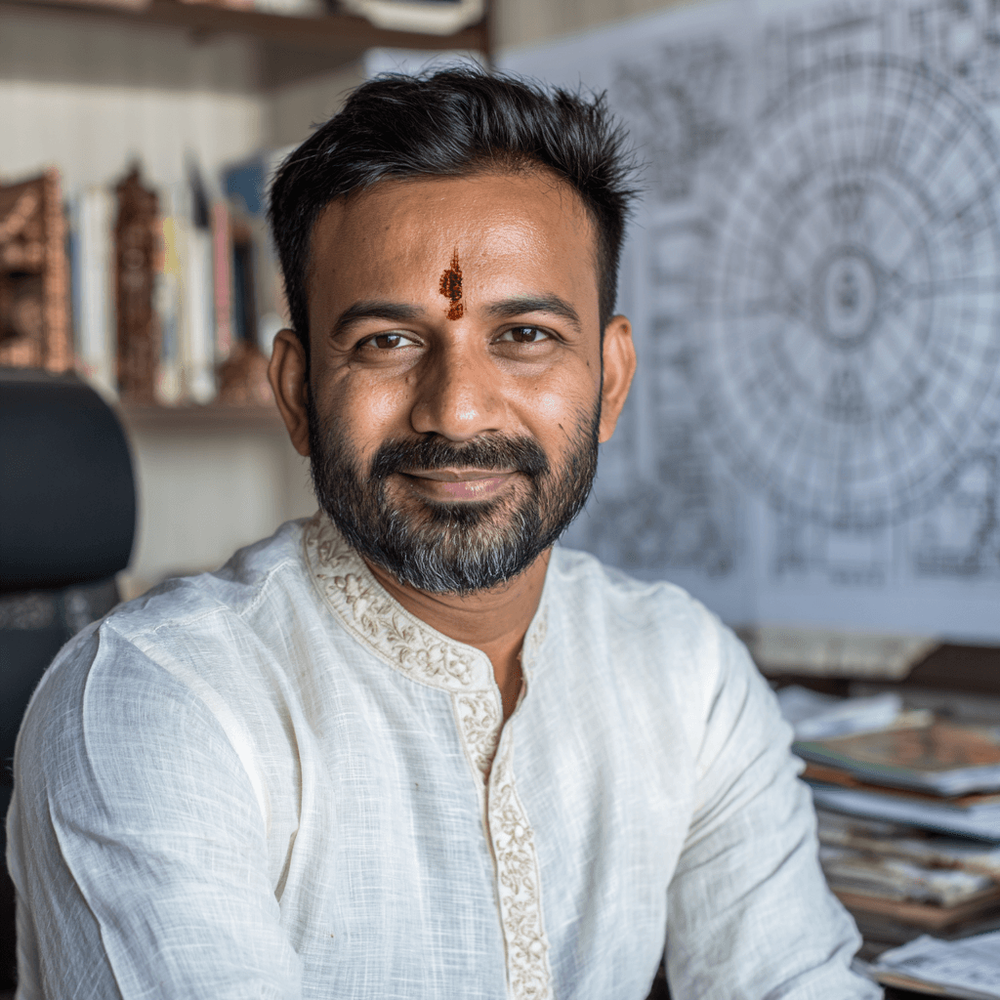
Shri Ankit Bansal
Vedic Astrologer · Numerology and Vastu Expert, 15+ Years
Shri Ankit Bansal is a renowned numerology and Vastu expert with over 15 years of specialized experience in these ancient Indian sciences. His extensive practice encompasses thousands of consultations in numerological analysis, name corrections, business numerology, and comprehensive Vastu assessments for residential and commercial properties. As a contributing writer for AstroSight, Shri Bansal combines his deep understanding of numerical vibrations with practical Vastu principles to provide holistic solutions that harmonize living and working spaces with cosmic energies. His expertise spans personal numerology charts, business name analysis, property Vastu audits, and remedial measures that blend traditional wisdom with modern lifestyle requirements. Through his methodical approach and proven track record, Shri Bansal has established himself as a trusted authority in helping clients optimize their environment and numerical influences for enhanced prosperity, health, and overall well-being.