
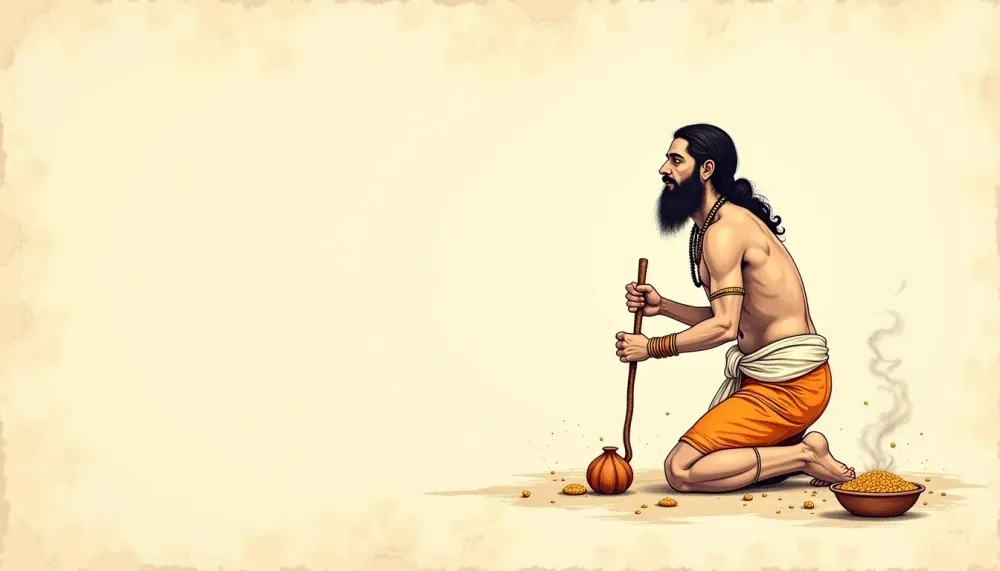
Hanuman Janmotsav 2026: Date, Rituals & Special Mantras
Reviewed by Acharya Ravi Teja, Jyotish Acharya & Vedic Priest, Tirupati — as of May 2026. Use the birth chart calculator to see how this plays out in your personal Vedic chart.
Reviewed by Acharya Ravi Teja, Jyotish Acharya & Vedic Priest, Tirupati — as of May 2026. Use the birth chart calculator to see how this plays out in your personal Vedic chart.
Hanuman Janmotsav — the birth anniversary celebration of Lord Hanuman — is one of the most widely observed festivals in the Vaishnava and Shaiva traditions of India. Unlike the commercially prominent Ganesh Chaturthi or Diwali, Janmotsav retains its character as a practitioner's festival: the celebrations begin before sunrise and extend through a full day of recitation, abhishek, procession, and community gathering at Hanuman temples. In 2026, the North Indian observance of Hanuman Janmotsav falls on Chaitra Shukla Purnima — the full moon night of the month of Chaitra in the Vikram Samvat calendar — which in the Gregorian calendar corresponds to April 13, 2026. The full moon tithi (lunar day) typically begins in the evening of April 12 and extends through the sunrise and morning of April 13, making the pre-dawn hours of April 13 the primary period for Janmotsav rituals.
> Quick Answer: Hanuman Janmotsav 2026 in North India falls on April 13, 2026 — Chaitra Shukla Purnima. Rituals begin before sunrise on April 13. The day's observances include Sindoor Sewa, Akhand Ramayana, Panchamukha abhishek, and special recitation of the Panchamukha mantra and Hanuman Gayatri. The South Indian observance (Margazhi Pournami) falls on a different date in December–January.
The Exact Date and Tithi
Chaitra Shukla Purnima in 2026 is the full moon occurring in the lunar month of Chaitra, which is the first month of the Hindu lunar calendar. In the Vikram Samvat system used in North India, the year 2082 corresponds to the 2025–2026 Gregorian period. The Purnima tithi of Chaitra Shukla 2082 falls with the full moon reaching its peak on the evening of April 12, 2026, and the tithi continuing through the morning and most of April 13, 2026.
Classical Jyotish and panchanga (almanac) tradition holds that a festival day is determined by which tithi is present at the time of sunrise. Since Chaitra Purnima encompasses the sunrise of April 13, 2026, the festival is observed on April 13. This is the standard applied by the primary panchangas of Varanasi, Tirupati, and Mathura, and also by the Vaishnava Sampradayas of Vrindavan, Ayodhya, and the Ramanandi tradition.
The specific timing within April 13: 1. Purnima Tithi Begins: Evening of April 12, 2026 (approximately 6:40 PM IST in most North Indian locations, with minor variation by longitude) 2. Purnima Tithi Active at Sunrise: Yes — April 13 sunrise (approximately 5:55 AM IST at Varanasi) falls within the Purnima tithi 3. Hanuman's Designated Birth Nakshatra: Chitra nakshatra (16th lunar mansion) is traditionally associated with Hanuman's birth in the North Indian tradition; in 2026 Purnima, the moon is in the Chitra-to-Swati transition 4. Ideal Puja Timing: Brahma muhurta on April 13, 2026 — approximately 4:15 AM to 5:45 AM IST
The Difference from "April 14" in Some References:
Some sources and some regional panchangas list Hanuman Janmotsav 2026 as April 14. This typically arises when either (a) the panchanga uses a different calculation basis for the Purnima tithi extension, or (b) the calendar is produced for a geographic location where the Purnima tithi extends into the sunrise of April 14. The Tamil Nadu, Kerala, Karnataka, and Andhra Pradesh panchangas, which observe Hanuman Jayanti on a different date entirely (Margazhi Pournami, see below), sometimes also produce a separate North Indian calendar reference that places the Purnima observance on April 14 due to longitude-based tithi calculations. The Tirupati Tirumala Devasthanam panchanga for 2026 confirms April 13 as the primary observance date for North Indian tradition.
> Quick Answer: Hanuman Janmotsav 2026 is April 13, 2026 (Chaitra Shukla Purnima, Vikram Samvat 2082). The Purnima tithi begins April 12 evening and covers April 13 sunrise. Brahma muhurta on April 13 (approximately 4:15–5:45 AM IST) is the optimal ritual period. Some sources list April 14 due to regional panchanga variations.
Special Mantras for Hanuman Janmotsav
Janmotsav day carries special vibrational intensity for Hanuman-related practice. The three mantras considered most potent for recitation on this specific day — more so than on ordinary Tuesdays — are the Panchamukha mantra, the Hanuman Gayatri, and a selection from the 108 Names.
1. The Panchamukha Mantra
The Panchamukha (five-faced) form of Hanuman — with the five faces of Hanuman, Narasimha, Garuda, Varaha, and Hayagriva — is described in the Mahiravana-Vadha episode, where Hanuman must extinguish five lamps simultaneously in five different directions to save Ram and Lakshman from the sorcerer Mahiravana. The Panchamukha Hanuman mantra invokes this all-directional form:
Om Haum Hanumate Panchamukha Paramatmane
Paksha Vikramaaya Namah
Or in its extended form:
Om Namo Bhagavate Panchamukha Hanumate
Poorva Mukhena Sarvabhuta Vaasam Kuru Kuru
Dakshina Mukhena Sarva Shatroon Maaraya Maaraya
Pashchima Mukhena Sarva Vighna Nivaara Nivaara
Uttara Mukhena Sarva Sampat Dehi Dehi
Oordhwa Mukhena Sarva Mangala Bhava Bhava
Swaha
This mantra addresses all five directions and the five aspects of life governed by each of Hanuman's five faces. On Janmotsav, this mantra is recited 108 times as a full japa cycle.
2. Hanuman Gayatri
The Hanuman Gayatri follows the classical Gayatri format: an address to the deity in their solar/luminous aspect, a statement of their essential quality, and a request for illumination of the intellect:
Om Anjaneyaya Vidmahe
Vayuputraya Dheemahi
Tanno Hanumat Prachodayat
Translation: "We know Anjani's son; we meditate on the son of Vayu. May that Hanuman illuminate our intellect]."
The Hanuman Gayatri is recited 108 times on Janmotsav day, ideally during the period of sunrise when the sun's light first appears — in the Gayatri tradition, all Gayatri mantras are oriented toward the rising sun.
3. From the 108 Names — The Three Most Potent for Janmotsav
The Ashtottara Shatanamavali (108 names) of Hanuman contains names specific to his birth narrative. Three names are highlighted for Janmotsav recitation:
1. Anjaniputra (son of Anjani) — invokes the specific relationship of divine birth 2. Vayu-putra (son of Wind) — invokes the elemental divine parentage 3. Chiranjeevi (the immortal, the eternally living one) — invokes Hanuman's unique status among all beings: he is one of the seven Chiranjivis (immortals) in Hindu tradition, granted immortality by Ram at the end of the Ramayana so that he remains present on earth as long as Ram's name is recited
These three names are recited 108 times each as a continuous sequence on Janmotsav morning, making a total japa of 324 repetitions.
> Quick Answer: The three primary mantras for Hanuman Janmotsav are: (1) Panchamukha Mantra (108 repetitions, all-directional protection), (2) Hanuman Gayatri — "Om Anjaneyaya Vidmahe, Vayuputraya Dheemahi, Tanno Hanumat Prachodayat" (108 repetitions at sunrise), and (3) three names from the 108 Names — Anjaniputra, Vayu-putra, Chiranjeevi — (108 repetitions each). All three are performed before or at sunrise.
Rituals Observed
The Hanuman Janmotsav observance follows a structured sequence from pre-dawn through midnight, when Hanuman's exact birth hour is traditionally celebrated.
Pre-Dawn: Ritual Bath and Purification
Practitioners rise before brahma muhurta and take a ritual bath (snanam) with water in which turmeric, sesame, and sacred tulsi leaves have been soaked overnight. This is not merely symbolic cleanliness — in Ayurveda and the Vaishnava ritual tradition, the pre-dawn bath with specific additives prepares the subtle body for intensive spiritual practice by opening the energy channels associated with the third eye and heart. After the bath, fresh white or saffron-colored clothes are worn.
Sunrise: Sindoor Sewa
Sindoor Sewa — the elaborate application of vermilion to the Hanuman murti — is the most visually characteristic ritual of Janmotsav. The story behind sindoor sewa comes from the Ramcharitmanas: Sita was applying sindoor to her forehead when Hanuman asked why. She explained it was for Ram's longevity and her good fortune as his wife. Hanuman immediately smeared his entire body with sindoor, declaring that if a small mark on one person's forehead protects Ram, coating his entire body should protect Ram infinitely. Ram, moved by this devotion, accepted the gesture and declared that Sindoor Sewa on Hanuman's murti would be permanently pleasing to him.
On Janmotsav, sindoor sewa is performed with fresh vermilion mixed with pure oil (traditionally sesame or jasmine oil). A large Hanuman murti in a temple is covered from head to foot. At home, a small tilak application to the murti suffices.
Morning: Bhog Offering
The traditional Bhog (food offering) for Hanuman Janmotsav includes: 1. Boondi prasad — small fried gram-flour balls in sugar syrup, associated with Hanuman in North India 2. Paan (betel leaf) with lime, cardamom, and clove — offered to Hanuman as a mark of honor 3. Banana bunches — 11 or 21 bananas, recalling Hanuman's strength and the fruit offerings of Lanka 4. Tulsi leaves — essential in all Vaishnava puja
The bhog is placed before the murti, the Hanuman Chalisa is recited, and the bhog is then distributed as prasad.
All-Day: Akhand Ramayana
Many temples and devotee groups begin an Akhand Ramayana — a non-stop, continuous reading of the entire Ramcharitmanas by Tulsidas — on the Ekadashi (11th tithi) preceding Purnima and conclude it on Janmotsav day. The Ramcharitmanas contains approximately 10,902 verses in seven kandas; a continuous reading by a relay of readers takes approximately 24 hours. The Sundara Kanda — the fifth section featuring Hanuman's journey to Lanka — is the centerpiece of this reading and is often performed with particular care and amplified recitation.
Midnight: Birth Celebration
Hanuman's birth is traditionally placed at a moment close to midnight in some traditions and at sunrise in others — both are observed. The midnight celebration includes: 1. The Panchamukha mantra recited 108 times 2. Conch (shankha) blown 5 times for the five faces 3. Distribution of sindoor to all present as a blessing 4. Collective recitation of "Jai Shri Ram, Jai Bajrangbali" for 108 repetitions
> Quick Answer: Janmotsav rituals: pre-dawn bath with turmeric-sesame water; sunrise Sindoor Sewa (vermilion application to murti); morning bhog of boondi, bananas, and tulsi; all-day Akhand Ramayana at temples; midnight birth celebration with Panchamukha mantra and shankha. Sindoor Sewa is the defining ritual, rooted in the Ramcharitmanas story of Hanuman covering his body in sindoor for Ram's protection.
Hanuman's Birth Narrative from the Valmiki Ramayana and Shiva Purana
The primary source for Hanuman's birth narrative is the Valmiki Ramayana's Kishkindha Kanda and Uttara Kanda. The Shiva Purana and the Ananda Ramayana provide supplementary accounts that are reconciled in later tradition.
The Valmiki Ramayana Account (Kishkindha Kanda, Chapter 66):
Hanuman himself narrates the essence of his origin when speaking to Ram: he was born to Anjana, a Vanara woman who was the daughter of Kunjara (a Vanara chieftain). Anjana was actually an apsara (celestial dancer) named Punjikasthala who had been cursed to take birth as a Vanara woman. She was told the curse would end when she gave birth to a son who embodied Rudra's (Shiva's) power in the form of the wind-god.
King Dasharatha of Ayodhya was simultaneously performing the Putrakameshti yagna (the fire ritual for sons). From that yagna emerged the Payasa (sacred pudding) that would give Dasharatha's wives their divine sons. A portion of this payasa was seized by a hawk and dropped. The wind-god Vayu caught the payasa in mid-air and gently deposited it into Anjana's hands as she sat meditating on a mountaintop with hands cupped. Anjana consumed the payasa and, through Vayu's divine agency carrying Shiva's essence, conceived Hanuman.
This account makes Hanuman a partial sibling of Ram: both are born from the Putrakameshti yagna's spiritual power, one through the direct route to Dasharatha's wives and one through the indirect route via the hawk, the wind, and Anjana.
The Shiva Purana Account:
The Shiva Purana provides an extended account in which Shiva himself resolved to take birth in the form of a Vanara to serve Ram in his mission against Ravana. Shiva asked Vayu to carry his divine seed (tejas) to Anjana. When Anjana gave birth on the mountainside of Anjaneri (identified with Anjanadri near Hampi in Karnataka, or alternatively with a mountain in Andhra Pradesh, or with Anjaneri in Nashik — three sites claim this distinction), the child Hanuman emerged with the radiance of the sun.
The Shiva Purana birth account places the exact birth time as the moment when the sun first appeared above the horizon — which is why the sunrise timing is considered Hanuman's birth moment in the South Indian tradition, while the Uttara Kanda places the birth during a moment associated with Mars-rising, supporting the midnight-to-early-morning birth timing of the North Indian tradition.
The Childhood Narrative:
Immediately after birth, the child Hanuman saw the rising sun and leapt toward it, thinking it was a ripe fruit. He covered a vast distance in one leap. Indra, alarmed at this unprecedented display of power, hurled his thunderbolt (vajra) at the child. The thunderbolt struck Hanuman's jaw (hanu), giving him both the name Hanuman and a slight scar on the jaw. Vayu, furious at the harm to his son, withdrew all air from the universe. All beings began to die from suffocation. The Devas (gods) were forced to collectively beg Vayu's forgiveness, and each deity granted the child specific boons: Brahma gave him immunity from Brahma's own weapon; Indra gave him immunity from the thunderbolt; Yama gave him immunity from his own rod; Varuna gave him immunity from water; Agni gave him immunity from fire; Vishwakarma gave him immunity from his own weapons; Surya gave him a portion of his own radiance. These boons collectively make Hanuman effectively indestructible — which is why the Chalisa's Chaupai describing him as Bajarangi (thunderbolt-bodied) is not hyperbole but a reference to this specific narrative.
> Quick Answer: Hanuman's birth is narrated in the Valmiki Ramayana's Kishkindha Kanda: Anjana (a cursed apsara) received sacred payasa via the wind-god Vayu (who carried Shiva's divine energy), conceived Hanuman, and gave birth on a mountaintop. The child immediately leapt toward the sun; Indra's thunderbolt struck his jaw; Vayu's anger forced all gods to grant the child special boons of invulnerability, making him effectively indestructible.
Hanuman Jayanti vs. Hanuman Janmotsav — The Regional Difference Explained
The terms Hanuman Jayanti and Hanuman Janmotsav are often used interchangeably, but they refer to different observances in different regional traditions, and in 2026 they fall on different calendar dates.
North India — Chaitra Purnima (April 13, 2026): The dominant tradition in Uttar Pradesh, Bihar, Madhya Pradesh, Rajasthan, Gujarat, Maharashtra (partially), Punjab, and Delhi observes Hanuman's birth anniversary on Chaitra Shukla Purnima — the full moon of the month of Chaitra. This is the date codified in the Vaishnava calendar and followed by the Ramanandi sampradaya, the primary Hanuman bhakti tradition of North India. This observance is what most North Indians call "Hanuman Jayanti" or "Hanuman Janmotsav" — the two terms are used synonymously in North Indian practice.
South India — Margazhi Pournami (December–January): The dominant tradition in Tamil Nadu, Kerala, Karnataka (partially), and Andhra Pradesh (coastal regions) observes Hanuman Jayanti on Margazhi Pournami — the full moon of the Tamil month Margazhi, which falls in December–January of the Gregorian calendar. In 2025–2026, this date falls in early January 2026. The scriptural basis for this date is the Valmiki Ramayana's narrative placing Hanuman's birth in the Tamil month of Margazhi — the ninth month of the Tamil calendar and the month that Lord Krishna identifies as himself in the Bhagavad Gita (the most divine of months).
The Karnataka and Andhra Pradeshian Mixed Practice: In Karnataka and interior Andhra Pradesh (including Telangana), both dates are observed with different levels of emphasis depending on the tradition of the specific temple or community. Hanuman temples in Tirupati follow the North Indian Chaitra Purnima date for the main Janmotsav celebration while acknowledging the Margazhi tradition.
Why the Difference Exists: The difference arises from two distinct regional textual canons: the Valmiki Ramayana as interpreted through the North Indian Brahmin-Vaishnava commentarial tradition (which places Hanuman's birth in the spring full moon) versus the South Indian interpretation that works from astronomical data within the Valmiki Ramayana's narrative placing the Kishkindha episodes in specific seasons. Neither tradition is "correct" and the other "wrong" — they represent different emphases within a vast scriptural corpus.
The Semantic Distinction Some Scholars Make: Some contemporary scholars and temple priests use "Hanuman Jayanti" specifically for the birth anniversary date and "Hanuman Janmotsav" for the ongoing 5-day or 11-day celebration that some temples observe. In this usage, Jayanti = the specific tithi; Janmotsav = the festival period. This distinction is gaining traction in institutional contexts (temple administration boards) but is not universally adopted in common devotional usage.
> Quick Answer: North India observes Hanuman's birth anniversary on Chaitra Shukla Purnima (April 13, 2026). South India (Tamil Nadu, Kerala, parts of Karnataka and Andhra Pradesh) observes it on Margazhi Pournami (December–January). The difference stems from different regional interpretations of the Valmiki Ramayana's chronological placement of Hanuman's birth season. Both are valid; the North Indian date is the one observed at Tirupati and most of interior Andhra Pradesh.
Personalized Report
Janampatri (Birth Chart Report)
Get your complete personalised Vedic birth chart analysis
- Personalized analysis based on YOUR exact birth chart
- Expert-prepared by Dr. Meenakshi Sharma
- Delivered as PDF within 24-48 hours
- Unlimited follow-up clarifications
By Dr. Meenakshi Sharma · Delivered in 24-48 hours

Acharya Ravi Teja
Expert in Vedic Astrology Remedies, 18+ Years
Acharya Ravi Teja is a distinguished remedial astrology expert with over 18 years of specialized experience in the therapeutic and corrective aspects of Vedic astrology. His extensive practice focuses on prescribing and implementing powerful astrological remedies including gemstone recommendations, yantra installations, mantra practices, and comprehensive dosha mitigation strategies. As a contributing writer for AstroSight, Acharya Ravi Teja shares his profound knowledge of remedial measures that address planetary afflictions, karmic imbalances, and doshas such as Manglik, Kaal Sarp, and Pitra Dosha. His expertise encompasses the precise selection of authentic gemstones based on individual birth charts, the consecration and placement of sacred yantras for specific purposes, and the guidance of targeted mantra practices for spiritual and material well-being. Through his methodical approach and deep understanding of remedial astrology, Acharya Ravi Teja has successfully helped thousands of clients neutralize negative planetary influences and enhance positive cosmic energies, establishing himself as a trusted authority in the field of astrological remedies and spiritual healing.


