

What Is Panchang? The Hindu Almanac Explained
Panchang (also spelled Panchangam or Panchanga) is the traditional Hindu almanac that maps each day's astrological quality through five precisely calculated elements — giving the practitioner a complete picture of the cosmic atmosphere for any given moment. The word comes from Sanskrit: Pancha means
Panchang (also spelled Panchangam or Panchanga) is the traditional Hindu almanac that maps each day's astrological quality through five precisely calculated elements — giving the practitioner a complete picture of the cosmic atmosphere for any given moment. The word comes from Sanskrit: Pancha means five and Anga means limb or element. Together, these five "limbs" of time create a framework used for thousands of years to select auspicious moments (muhurta) for weddings, business launches, travel, religious ceremonies, and all significant undertakings. Understanding Panchang is understanding how Vedic astrology applies to lived daily life.
Written by Shri Ankit Bansal, Vedic Astrologer with 15+ years of practice in Jyotish and Panchang analysis.
Get your precise planetary positions for today's Panchang with the free birth chart calculator.
The Five Elements of Panchang
Each of Panchang's five limbs measures a different dimension of time's quality:
Element | What It Measures | Count | Ruler
- Tithi | Lunar day (relationship between Sun and Moon) | 30 per lunar month | Moon
- Vara | Day of the week | 7 | The 7 planets
- Nakshatra | Lunar mansion (Moon's daily position) | 27 | The 27 Nakshatra deities
- Yoga | Luni-solar combination (Sun + Moon longitude sum) | 27 | Combined solar-lunar energy
- Karana | Half of a Tithi (two per Tithi) | 11 types | Various
Each element carries its own auspicious and inauspicious qualities. A particular day may have an excellent Tithi but a challenging Karana — the Panchang reader synthesises all five to assess the overall quality of a moment.
The Five Limbs in Detail
1. Tithi (Lunar Day)
Tithi is the most fundamental element of Panchang — calculated as the angular difference between the Sun and Moon, with each 12° difference constituting one Tithi. There are 30 Tithis in a lunar month (15 in Shukla Paksha/waxing and 15 in Krishna Paksha/waning):
Shukla Paksha (Waxing Moon) Tithis: Prathama (1st), Dvitiya (2nd), Tritiya (3rd), Chaturthi (4th), Panchami (5th), Shashthi (6th), Saptami (7th), Ashtami (8th), Navami (9th), Dashami (10th), Ekadashi (11th), Dvadashi (12th), Trayodashi (13th), Chaturdashi (14th), Purnima/Full Moon (15th)
Krishna Paksha (Waning Moon) Tithis: The same sequence from Prathama through Chaturdashi, ending in Amavasya/New Moon (30th)
Key Tithis and their significance:
- Ekadashi (11th): Most sacred for fasting and devotion (Vishnu worship)
- Purnima (Full Moon): Auspicious for spiritual practice, festivals, full-energy celebrations
- Amavasya (New Moon): Ancestor worship, spiritual practices, avoid new beginnings
- Chaturdashi (14th): Associated with Shiva, often intense energy
- Pratipada (1st): Good for new beginnings, especially Shukla Pratipada
2. Vara (Weekday)
Each day of the week is governed by a planet, colouring the day's energy:
Vara | Planet | Best Activities
- Ravivara (Sunday) | Sun | Leadership decisions, government work, health, authority
- Somvara (Monday) | Moon | Emotional matters, travel, water-related activities, relationships
- Mangalavara (Tuesday) | Mars | Courage, surgery, competitive activities, sports
- Budhavara (Wednesday) | Mercury | Business, education, writing, communication, commerce
- Guruvara (Thursday) | Jupiter | Spiritual initiation, teaching, wedding ceremonies, expansion
- Shukravara (Friday) | Venus | Arts, beauty, luxury, romance, creative endeavours
- Shanivara (Saturday) | Saturn | Service, disciplinary work, agriculture, labour, charity
3. Nakshatra (Lunar Mansion)
The Moon's daily position is tracked through one of 27 Nakshatras — each a 13°20' arc of the zodiac with distinct qualities, ruling deity, and governing planet. The daily Nakshatra determines the quality of emotional and intuitive energy available:
- Auspicious Nakshatras for new beginnings: Rohini, Mrigashira, Hasta, Chitra, Swati, Anuradha, Mula, Uttara Phalguni, Uttara Ashadha, Uttara Bhadrapada, Revati
- Nakshatras requiring caution: Ardra, Ashlesha, Jyeshtha, Mula (for some activities), Bharani, Krittika (for travel)
4. Yoga (Luni-Solar Combination)
Yoga is calculated by adding the longitudes of the Sun and Moon and dividing by 13°20'. There are 27 Yogas, ranging from highly auspicious to inauspicious:
- Most auspicious Yogas: Siddha, Amrita, Shubha, Shukla, Brahma, Indra, Vaidhriti (for specific activities)
- Inauspicious Yogas: Vishkambha, Atiganda, Shoola, Ganda, Vyaghata, Vajra (avoid for new ventures)
5. Karana (Half-Tithi)
A Karana is half of a Tithi — there are two Karanas per Tithi and 11 types total (4 fixed, 7 repeating). Karanas are particularly relevant for muhurta selection for short-duration activities:
- Bava, Balava, Kaulava, Taitila, Garija, Vanija, Vishti (Bhadra): The 7 movable Karanas
- Shakuni, Chatushpada, Naga, Kimstughna: The 4 fixed Karanas
- Vishti/Bhadra Karana is considered particularly inauspicious for important undertakings
How Panchang Is Used
For Muhurta (Auspicious Timing)
The primary practical application of Panchang is Muhurta — the selection of auspicious timing for significant activities. A good Muhurta harmonises all five Panchang elements with the activity's purpose and the individual's birth chart.
Common Muhurta applications:
- Vivah Muhurta (wedding date selection) — harmonises Tithi, Vara, Nakshatra, and both partners' charts
- Griha Pravesh Muhurta (house entry) — emphasises auspicious Moon Nakshatra and Tithi
- Business launch — Mercury-ruled day (Wednesday) with strong Mercury Nakshatra
- Surgery — avoids Ashtami, Navami, Chaturdashi; favours Mars's day with Moon in appropriate Nakshatra
- Travel — avoids Bhadra Karana, inauspicious Nakshatras for the journey direction
For Daily Guidance
Many Hindu households consult Panchang daily to understand the day's quality:
- Which activities are auspicious to begin
- Which Tithis have festival significance
- When Rahu Kaal and Yamaghanta (inauspicious daily periods) fall
- Which days are propitious for specific deity worship
For Festivals and Fasts
All Hindu festivals are Panchang-based: Ekadashi fasts follow the Tithi; Navratri begins on Pratipada of specific months; Diwali falls on Amavasya of Kartik month; Holi coincides with Purnima of Phalguna. Without Panchang, the entire festival calendar loses its timing.
Reading a Daily Panchang
A daily Panchang entry typically includes: 1. Date (both Gregorian and Hindu calendar month/year) 2. Tithi — current lunar day and when it ends 3. Vara — weekday and its ruling planet 4. Nakshatra — Moon's current Nakshatra and when it transitions 5. Yoga — current luni-solar combination 6. Karana — current half-Tithi 7. Sunrise and Sunset times 8. Rahu Kaal — daily inauspicious period 9. Abhijit Muhurta — daily auspicious period (middle 48 minutes of the day) 10. Festivals and important observances for that day
Ready to See These Concepts in YOUR Chart?
Theory becomes clear when applied to your own chart. Get a professional career analysis that demonstrates these concepts in your specific configuration.
Explore Our Reports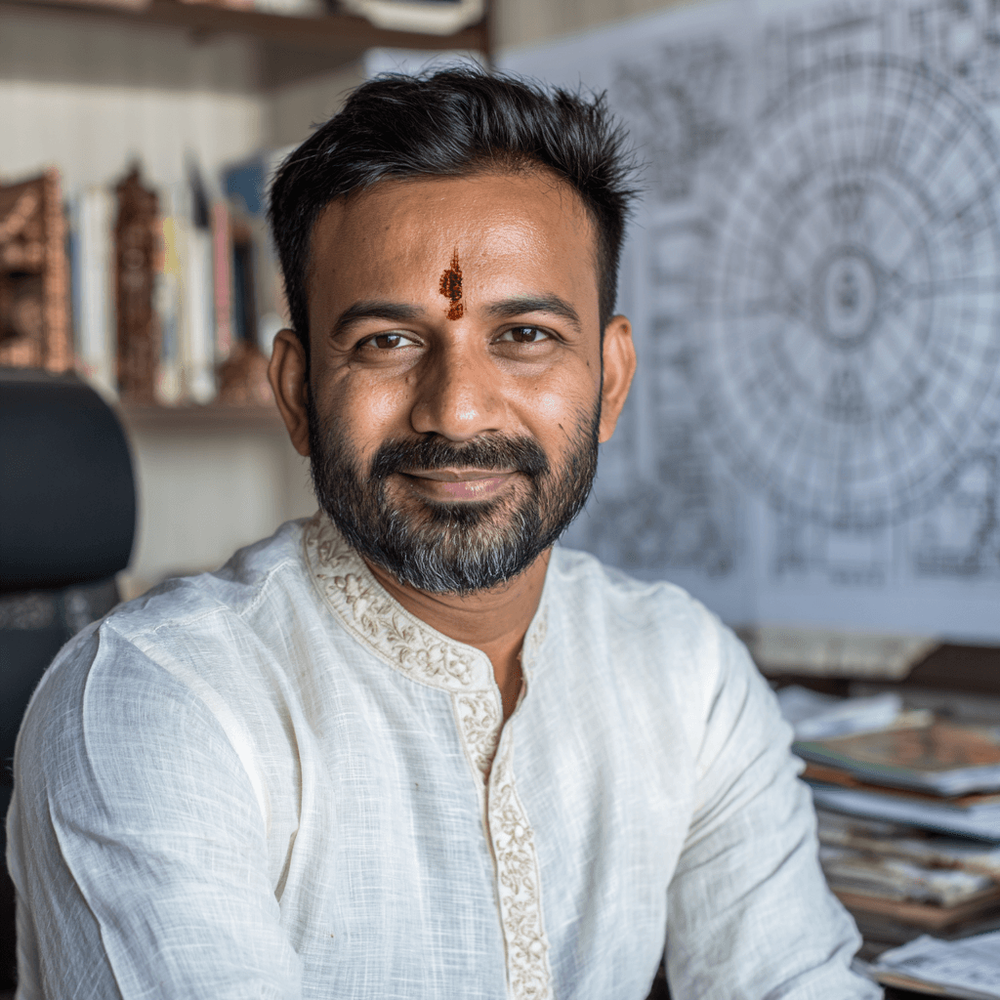
Shri Ankit Bansal
Vedic Astrologer · Numerology and Vastu Expert, 15+ Years
Shri Ankit Bansal is a renowned numerology and Vastu expert with over 15 years of specialized experience in these ancient Indian sciences. His extensive practice encompasses thousands of consultations in numerological analysis, name corrections, business numerology, and comprehensive Vastu assessments for residential and commercial properties. As a contributing writer for AstroSight, Shri Bansal combines his deep understanding of numerical vibrations with practical Vastu principles to provide holistic solutions that harmonize living and working spaces with cosmic energies. His expertise spans personal numerology charts, business name analysis, property Vastu audits, and remedial measures that blend traditional wisdom with modern lifestyle requirements. Through his methodical approach and proven track record, Shri Bansal has established himself as a trusted authority in helping clients optimize their environment and numerical influences for enhanced prosperity, health, and overall well-being.


