Ram Raksha Yantra: Divine Protection Guide

The Ram Raksha Yantra invokes Lord Rama's protective armor, providing comprehensive shielding from negativity, evil eye, and harm. A sattvic approach to protection rooted in devotion and divine grace.
What Is the Ram Raksha Yantra and Its Protective Power?
The Ram Raksha Yantra is a sacred geometric representation of the Ram Raksha Stotra, a protective hymn composed by the sage Budha Kaushika after receiving it in a divine vision. According to tradition documented in the Mantra Mahodadhi, this hymn systematically invokes Lord Rama's protection for every part of the body and aspect of life. The yantra form crystallizes these verbal protections into a permanent geometric reservoir that radiates protective energy continuously.
In my experience guiding families through challenging periods, I have found the Ram Raksha Yantra particularly valuable for those who resonate with devotional (bhakti) approaches rather than tantric practices. The protection it offers is comprehensive yet gentle, powerful yet peaceful—qualities that make it suitable for households with children or anyone seeking sattvic spiritual protection. Unlike fierce protective deities that may create intensity in the home, Lord Rama's protection brings peace alongside safety.
The Ram Raksha Stotra Foundation
The Ram Raksha Stotra forms the scriptural foundation of this yantra's power. Sage Budha Kaushika received this hymn through divine revelation and recorded it for the benefit of all seekers. The stotra systematically invokes Lord Rama's protection for every body part: "Shiro me Raghava patu" (May Raghava protect my head), "Mukham Dasharathatmajaha" (May Dasharatha's son protect my face), continuing through 38 verses covering the entire physical form from head to toe.
What makes the Ram Raksha unique among protective hymns is its comprehensive, systematic approach. Rather than general blessings, it specifically names each body part and assigns protection through different names of Lord Rama—Raghava, Dasharatha's son, Kakutstha, Sita's husband—each name carrying its own protective vibration. The yantra encodes these verbal protections into geometric form, creating a permanent repository of protective energy that does not require constant recitation to remain active.
The Yantra Chintamani explains that mantras spoken dissolve into the ether after utterance, but mantras inscribed in geometric form continue radiating their energy perpetually. This is why the yantra form of Ram Raksha provides continuous protection even when the devotee is not actively worshipping.
Sacred Geometry of the Ram Raksha Yantra
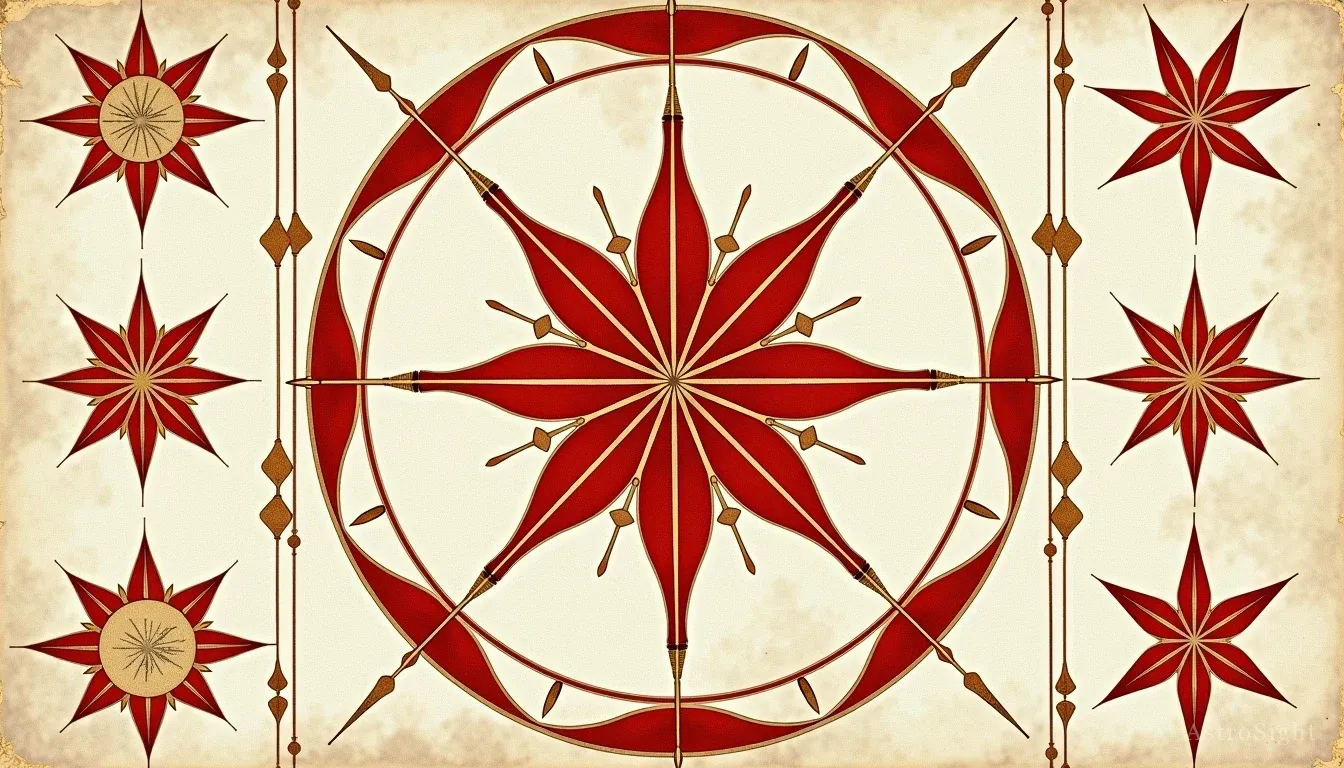
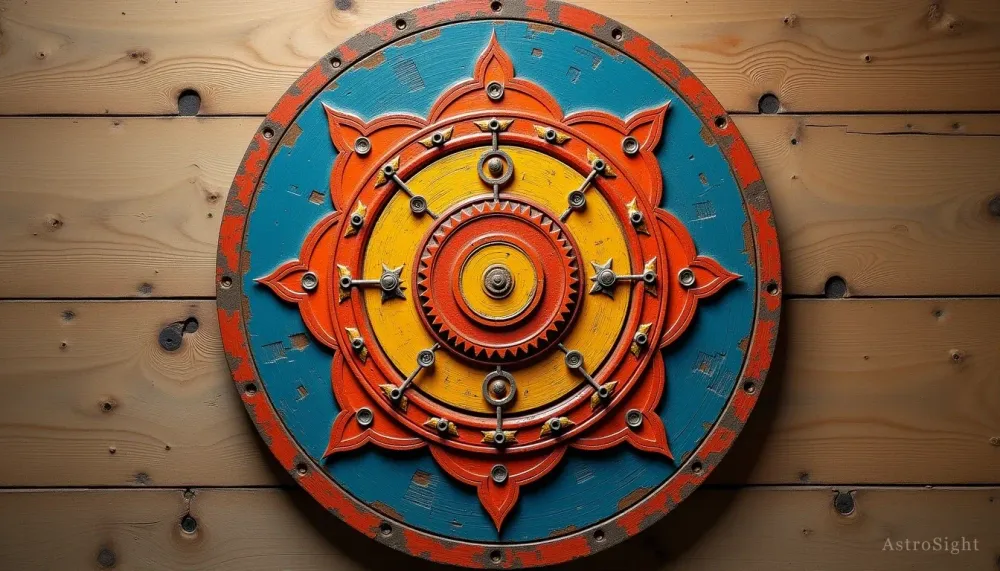
The Ram Raksha Yantra's design encodes multiple layers of protective symbolism. Understanding this geometry deepens both the devotee's connection and the yantra's effectiveness, as conscious recognition of symbolic elements activates their dormant power.
- Central Bindu with Rama beeja — The seed syllable 'Raam' sits at the yantra's heart, representing Lord Rama's essential nature as the source from which all protection emanates. This bindu point is the yantra's most sacred element, where divine consciousness concentrates.
- Concentric protective circles — Multiple rings radiating outward represent layers of protective armor, each circle adding another level of shielding. Classical texts describe these as "kavach" or armor plates that negative energies must penetrate—and cannot.
- Eight-directional segments — The yantra addresses all eight directions (Ashta Dikpalas), ensuring protection from every possible angle of attack. No direction is left unguarded.
- Mantra inscriptions in petals — Key verses from the Ram Raksha Stotra are embedded within lotus petal formations, each petal amplifying a specific protective verse.
- Hanuman symbolism — Elements representing Hanuman, Rama's greatest devotee and protector, add martial strength to the yantra's gentle grace. Hanuman's presence ensures that protection has both nurturing and warrior aspects.
- Outer square boundary (Bhupura) — The outermost square with four gates represents the material world and the yantra's ability to protect in earthly matters—home, family, wealth, health, and daily affairs.
What the Ram Raksha Yantra Protects Against
Classical texts including the Mantra Mahodadhi and regional practice traditions identify specific protections offered by this yantra:
- Evil eye (Drishti Dosha/Nazar) — Lord Rama's grace deflects envious and malicious glances before they can affect the protected person. This is particularly valuable for children, new brides, and those experiencing visible success.
- Enemy actions and hidden hostility — The divine shield blocks harmful intentions from reaching the devotee, causing enemies' plans to fail or redirect. Many devotees report former enemies becoming neutral or even friendly.
- Accidents and travel dangers — Traditional protection for journeys, creating heightened alertness and fortunate timing that avoids dangerous situations.
- Nightmares and sleep disturbances — Particularly effective for children and adults troubled by bad dreams, the yantra in the bedroom creates peaceful rest under Rama's watchful presence.
- Negative energy and psychic disturbance — General negativity, whether from people, places, or subtle sources, is neutralized and replaced with sattvic atmosphere.
- Black magic and intentional harm — While sattvic in nature, Lord Rama as the supreme warrior deity provides effective shielding against even deliberate magical attacks.
Why Choose Sattvic Protection
The Vedic tradition offers multiple approaches to protection, ranging from fierce tantric deities to gentle devotional methods. The Ram Raksha Yantra represents the pinnacle of sattvic (pure, balanced) protection. This approach works through divine love and grace rather than fear or force, making it fundamentally different from tantric protective practices.
For families with children, the sattvic nature of Ram Raksha is particularly important. Fierce deity yantras, while powerful, can create intensity in the home environment that may disturb sensitive individuals. Ram Raksha, by contrast, generates an atmosphere of peace, love, and safety that nurtures all family members while providing equally effective protection. The Yantra Chintamani specifically recommends this yantra for family homes over more aggressive protective tools.
Additional advantages of the sattvic approach include: no complex tantric requirements or dietary restrictions, safety for beginners without risk of improper practice, creation of peaceful protective energy that uplifts rather than merely shields, compatibility with other spiritual practices of any tradition, and the gradual elevation of the entire household's spiritual atmosphere alongside protection.
Who Benefits Most from the Ram Raksha Yantra?
While anyone can benefit from this yantra's protective grace, certain individuals find it particularly aligned with their needs, spiritual temperament, and life circumstances. Understanding these alignments helps determine whether Ram Raksha is your optimal protective choice or whether another approach might serve better.
Ideal Recipients of Ram Raksha Protection
- Families with young children — The gentle, nurturing protection is perfect for households with children. Kids often naturally connect with Lord Rama through stories and find comfort in his protective presence.
- Those uncomfortable with tantric practices — For devotees who prefer pure Vedic worship without tantric elements, Ram Raksha offers powerful protection within a completely sattvic framework.
- Existing devotees of Lord Rama — Those already connected to Rama through devotion, Ramayana study, or family tradition find the yantra naturally enhances and formalizes their existing relationship.
- People struggling with fear and anxiety — The yantra replaces fear with faith, providing not just protection but a fundamental shift from anxiety to trust in divine care.
- Frequent travelers — Traditional protection during journeys is a primary Ram Raksha function, making it ideal for those who travel regularly for work or pilgrimage.
- Students facing competition — Protection during competitive examinations and from jealous rivals, combined with the clarity that comes from reduced anxiety.
- Those in public positions — Politicians, business leaders, performers, and others exposed to public attention and potential jealousy benefit from the evil eye protection.
- Anyone facing temporary difficulties — A gentle protective shield during challenging life phases without committing to intensive tantric practices.
Astrological Indicators for Ram Raksha Benefits
From a Jyotish perspective, certain birth chart configurations particularly benefit from Ram Raksha Yantra's protective qualities. While the yantra helps anyone, these placements indicate especially strong resonance:
- Sun in challenging positions — Lord Rama belongs to the Surya Vansha (Solar Dynasty), making him a powerful remedy for Sun-related weaknesses. Debilitated, combust, or heavily afflicted Sun particularly benefits.
- Afflicted ninth house — Rama as Maryada Purushottam represents dharma itself. Ninth house difficulties involving father, fortune, or righteousness find remedy through his grace.
- Malefics in angular houses — Saturn, Mars, Rahu, or Ketu in the 1st, 4th, 7th, or 10th houses create various life challenges that Ram Raksha's comprehensive protection addresses.
- Saturn or Rahu dasha periods — These planetary periods often bring challenges requiring protective support. Ram Raksha provides gentle shielding without the intensity of tantric alternatives.
- Weak lagna or lagna lord — General constitution and vitality issues benefit from Rama's protective armor, as the stotra systematically protects the entire physical body.
- Punarvasu nakshatra connection — Those born under Punarvasu (Rama's birth nakshatra) or with significant planets there have natural affinity with Ram Raksha.
To understand your chart's specific protective needs, consider generating your birth chart and analyzing planetary positions and periods. A qualified Jyotish practitioner can provide personalized assessment of which protective practices align best with your unique configuration.
When Ram Raksha May Not Be First Choice
While Ram Raksha is broadly beneficial, certain situations may call for different or additional protective measures:
- Active, aggressive enemy situations may benefit from adding Hanuman yantra for martial strength alongside Ram Raksha's gentle protection
- Severe tantric attacks typically require tantric counter-measures in addition to sattvic protection
- Those with strong existing connection to other protective deities (Durga, Hanuman, Narasimha) may find working with their established relationship more effective
In my consultation practice, I often recommend Ram Raksha as a foundation with other practices layered as needed. Its sattvic nature means it harmonizes well with virtually any other spiritual practice.
How Do You Install the Ram Raksha Yantra Properly?
Installation (Prana Pratishtha) transforms a geometric diagram into a living repository of divine energy. The Yantra Chintamani provides detailed guidance ensuring proper energization. While the Ram Raksha Yantra is more forgiving than tantric yantras, following proper procedure significantly enhances its protective potency.
Optimal Timing for Installation (Muhurta)
Timing significantly influences the yantra's initial activation strength. Consult a panchang or the nakshatra calculator to identify favorable windows.
Most auspicious days:
- Ram Navami — Lord Rama's birthday is the single most powerful day for Ram Raksha installation. The entire cosmic environment resonates with Rama's energy.
- Tuesday (Mangalvar) — Hanuman's day amplifies Rama protection since Hanuman serves as Rama's foremost protector and devotee.
- Thursday (Guruvar) — Jupiter's day activates the wisdom and grace aspects of protection, ideal for those seeking spiritual protection alongside physical.
- Sunday (Ravivar) — Sun's day connects with Rama's Solar Dynasty lineage, strengthening the royal protective authority.
- Hanuman Jayanti — Additional protective amplification through Hanuman's special blessing.
Favorable nakshatras: Punarvasu holds supreme importance as Rama's birth nakshatra—installation during Punarvasu connects directly to Rama's natal energy. Pushya provides nourishing, stable protection. Hasta offers skillful, precise protective energy. Shravana activates the listening aspect, helping the yantra receive prayers. Uttara Phalguni connects with the patronage and protection themes.
Lunar phase: Shukla Paksha (waxing moon) is preferred, with maximum benefit during Shukla Navami (ninth day of waxing moon) as it specifically relates to Rama. Avoid installation during eclipses, the three days before Amavasya, or during your own difficult planetary transits.
Selecting Yantra Material
Different metals carry different energetic qualities that influence the yantra's functioning:
- Copper (Tamra) — Most commonly recommended. Excellent energy conductor, accessible price, traditionally associated with divine energy transmission. Ideal for most households.
- Silver (Rajat) — Adds cooling, lunar qualities particularly beneficial for families. Enhances the gentle, nurturing aspects of protection. Excellent for children's rooms.
- Gold (Swarna) — Considered supreme but expensive. Connects with Rama's royal solar lineage. Reserved for those with means and deep devotion.
- Bhoj Patra (birch bark) — Traditional for portable yantras. Handwritten mantras on bhoj patra carry the energy of personal creation. Ideal for travel protection.
- Crystal (Sphatik) — Amplifies and purifies energy. Crystal Ram Raksha yantras are particularly beautiful and create clear, bright protective fields.
Placement Location
Strategic placement maximizes the yantra's protective coverage:
- Puja room (ideal) — Central sacred space allows protection to radiate throughout the home while receiving regular worship attention.
- Master bedroom — For sleep protection and dreams. Position so the yantra is visible but not directly at foot of bed.
- Children's room — Particularly beneficial for reducing nightmares and creating secure feeling for young ones.
- Main entrance (inside) — Guards the home against negative energies entering. Place facing the door.
- Living room — Where family gathers; protection extends to all regular inhabitants and visitors.
Directional preference: East wall facing west is ideal (connecting with sunrise and solar energy). North wall facing south is also excellent. Height should be 4-5 feet from floor—at or slightly above eye level for worship. Avoid placing in bathrooms, under staircases, or in cluttered areas.
Complete Installation Procedure (Prana Pratishtha Vidhi)
Phase 1: Preparation (Day Before)
Begin preparation the evening before installation. Observe vegetarian diet from the previous day's sunset. Clean and purify the installation space thoroughly. Gather all materials: the yantra, Gangajal, panchamrit (mixture of milk, curd, honey, ghee, and sugar), tulsi leaves (essential—this is Lord Rama's sacred plant), yellow and red flowers (marigold ideal), ghee lamp and cotton wicks, sandalwood paste and kumkum, sandalwood incense, fresh fruits (banana, coconut), sweets, red cloth for altar, small copper vessel for water.
Phase 2: Personal Purification (Installation Morning)
Wake before sunrise. Bathe with Gangajal added to water while mentally reciting "Om Shri Ramaya Namaha." Wear clean yellow or white clothes—freshly washed, ideally new. Maintain silence or limit speech to necessary words. Light fasting until after installation (water and fruits permitted).
Phase 3: Yantra Purification (Shuddhi)
Place the yantra on a clean plate. Sprinkle Gangajal while chanting "Om Gam Ganapataye Namaha" three times to remove obstacles. Apply panchamrit abhishekam (ritual bathing) while reciting "Om Shri Ramaya Namaha." Rinse with pure water. Dry gently with soft, clean cloth. Place on red cloth on the altar in the designated location.
Phase 4: Prana Pratishtha (Life Installation)
This is the core energization process. Sit comfortably facing the yantra. Light the ghee lamp and sandalwood incense. Offer tulsi leaves—at least 5-11 leaves, placed around the yantra. These are essential for Ram worship. Offer yellow and red flowers. Apply sandalwood paste to the central bindu point. Apply kumkum (vermillion) at the four directions of the yantra.
Begin chanting "Om Shri Ramaya Namaha" with full concentration. Complete 108 repetitions using a mala. During chanting, visualize Lord Rama's form emerging from the yantra—see his divine blue form, bow in hand, surrounded by golden protective light. With each mantra, see this light growing brighter and expanding to fill the room, then the entire home.
If you know the Ram Raksha Stotra, recite it completely at this point. If not, listen to a recording with full attention—the yantra receives the vibration regardless of whether you speak it. Feel yourself and your family completely enveloped in Rama's protective armor.
Phase 5: Completion
Offer fruits and sweets (naivedya). Perform aarti with camphor, moving the flame clockwise. Offer full pranams with sincere devotion. Tie red thread around wrist for personal protection connection. Distribute prasad to family members. The yantra is now installed and active.
Understand Your Protective Needs
Your birth chart reveals periods requiring extra protection and the spiritual practices most aligned with your nature. Get comprehensive analysis of your planetary configurations and personalized guidance.
Get Your Personalized ReportWhat Daily Worship Maintains Ram Raksha Protection?
Consistent worship keeps the protective shield active and responsive. The Mantra Mahodadhi emphasizes that regular brief practice generates stronger protection than occasional elaborate ceremonies. The yantra, once installed, maintains baseline protection automatically, but daily attention significantly amplifies its power and responsiveness.
Minimum Daily Practice (5 Minutes)
For those with limited time, even minimal daily attention maintains the yantra's protection:
- Light lamp or incense (even a simple diya with ghee)
- Offer fresh water in a small vessel
- Chant "Om Shri Ramaya Namaha" 11 times
- Brief pranams with protective intention
Recommended Morning Routine (10-15 Minutes)
- After bathing, approach the altar with clean body and calm mind
- Light ghee lamp and sandalwood incense
- Offer tulsi leaves—even 1-3 leaves maintain the essential Rama connection
- Offer fresh water, replacing previous day's water
- Offer any available fresh flower
- Chant "Om Shri Ramaya Namaha" 27 times (one mala round) or 108 times if time permits
- If time permits, recite or listen to Ram Raksha Stotra
- Visualize protective light extending around yourself and family members
- Pranams with gratitude for yesterday's protection and intention for today
Evening Routine (5-10 Minutes)
- Light evening lamp (traditionally at sunset)
- Brief mantra—minimum 11 times, ideally 27
- Express gratitude for the day's protection
- Request protection through the night
- Pranams
Tuesday Intensive Practice
Tuesday (Mangalvar) is particularly powerful for Ram Raksha as it is Hanuman's day, and Hanuman serves as Rama's foremost protector. Enhanced Tuesday practice includes:
- Extended mantra practice—324 repetitions (3 mala rounds)
- Hanuman Chalisa recitation after Ram Raksha mantra
- Offering sindoor (vermillion) near the yantra
- Offering jasmine oil lamp if available
- Charity to those in need—food, clothes, or money to the poor
- Fasting or eating only sattvic foods
Special Practice Before Travel
Travel protection is one of Ram Raksha's primary traditional functions. Before any journey, especially long trips or flights:
- Perform brief worship at the yantra with special travel intention
- Chant 21 mantras while visualizing safe journey
- Touch travel items (keys, bag, tickets) to the yantra or altar
- Take tulsi leaf or red thread from the altar to carry with you
- Carry small yantra photo or laminated image in wallet
- Recite Ram Raksha Stotra during travel (mentally if in public)
Intensified Practice During Challenging Periods
When facing specific threats, legal issues, health crises, or known enemy action, intensify the practice:
- Increase daily mantra to 324 (3 malas) or 540 (5 malas) repetitions
- Add a midnight worship session (between 12-1 AM) when protective energy peaks
- Recite Ram Raksha Stotra twice daily—morning and evening
- Maintain continuous lamp (Akhand Jyoti) if safely possible
- Observe strict vegetarian diet during the crisis period
- Consider a Tuesday or Navami fast dedicated to protection
Monthly and Annual Observances
Monthly: Perform special worship on Shukla Navami (ninth day of waxing moon) each month, as this connects with Ram Navami energy. Offer special fruits and sweets.
Annually: On Ram Navami, perform full reconsecration ceremony similar to original installation. This annual renewal maintains maximum protective potency. Many families also organize Ram Katha reading or Sundarkand path on this day.
What Mantras Activate Ram Raksha Yantra Protection?
Mantras are the sonic keys that unlock and activate yantra energy. The Ram Raksha Yantra responds to several mantras, each serving different purposes and levels of practice. Understanding these mantras allows you to choose appropriate practice based on time, situation, and capacity.
Primary Mantras for Daily Practice
Mool (Root) Mantra:
"Om Shri Ramaya Namaha" is the essential mantra connecting directly to Lord Rama's protective grace. Pronunciation: Om (cosmic sound) Shree (divine energy) Raa-maa-ya (to Rama) Na-ma-ha (I bow/salute). This mantra should be chanted with awareness of its meaning: "I bow to the divine Sri Rama." Minimum 11 repetitions; ideally 108 per session.
Taraka Mantra:
"Shri Ram Jai Ram Jai Jai Ram" is the taraka (crossing/liberating) mantra traditionally chanted for continuous protection. This mantra can be recited as a constant background practice throughout the day—while commuting, working, or before sleep. Its rhythmic quality makes it easy to repeat continuously.
Rama Beeja:
"Raam" alone, as a single-syllable beeja (seed) mantra, contains Rama's complete essence. Advanced practitioners may use this for meditation, feeling the sound vibrate within the heart center. This is powerful but requires proper instruction for best results.
The Ram Raksha Stotra
The complete Ram Raksha Stotra is the most powerful activation for this yantra, as the yantra is essentially its geometric form. The stotra has 38 verses systematically invoking protection for every body part and life area.
Opening invocation: "Charitam Raghunathasya shata koti pravistaram" — describing the vast, hundred-crore-fold significance of Rama's story.
Body protection verses systematically cover: head (Raghava), face (Dasharatha's son), eyes (Kakutstha), cheeks (Janaki-pati), mouth (Tatashayayi), tongue (Vidya-nidhana), throat (Dhanurveda), shoulders (Kharadushana-antaka), chest (Sita-pati), heart (Maheshvara), and continuing through every body part.
If learning the full stotra seems daunting, begin by listening to recordings during worship. Many devotees find they naturally memorize it through repeated listening over months. The yantra receives the vibration whether you speak it or play a recording with attention.
Supporting Mantras
Hanuman Chalisa: While not directly a Rama mantra, Hanuman Chalisa powerfully supports Ram Raksha since Hanuman is Rama's greatest devotee and protector. Reciting this after Rama mantras on Tuesdays and Saturdays adds martial protective strength.
Hanuman Beeja: "Om Hanumate Namaha" can be added for situations requiring more active, aggressive protection while maintaining sattvic foundation.
Rama Gayatri: "Om Dasharathaye Vidmahe, Sitavallabhaya Dheemahi, Tanno Ramah Prachodayat" — this Vedic-style mantra activates Rama's wisdom and protective intelligence alongside the kavach (armor) aspect.
Mantra Practice Guidelines
- Pronunciation should be clear but does not need to be perfect. Sincere devotion matters more than precise Sanskrit pronunciation. If uncertain, listen to reliable recordings.
- Speed should be moderate—neither rushed nor extremely slow. Allow each syllable to form fully while maintaining natural rhythm.
- Counting is traditionally done using a mala (prayer beads) with 108 beads. The thumb and middle finger move the beads; the index finger is not used as it represents ego.
- Direction — face east or north while chanting. Face the yantra directly during worship.
- Visualization enhances the practice. See Lord Rama's form, feel his protective light, visualize the armor covering your body as described in the stotra.
What Results Can You Expect from Ram Raksha Yantra?
Protection manifests progressively with consistent worship. In my observation of families who adopt this practice sincerely over months and years, certain patterns typically emerge, though individual experiences vary based on factors including starting conditions, consistency of practice, and individual karma.
Phase 1: Immediate Peace (Days 1-11)
The first experience most devotees report is internal rather than external—a shift in their own state:
- Emerging sense of calm and safety replacing previous anxiety
- Reduced fear and worry about potential threats
- Improved sleep quality, particularly if placing yantra in bedroom
- Subtle feeling of being watched over by a benevolent presence
- Household atmosphere feeling lighter, more peaceful
- Children naturally drawn to the yantra space
This initial phase establishes the devotional connection. The yantra is becoming attuned to the household and its members.
Phase 2: Active Shield (Days 11-40)
As regular worship establishes stronger connection, external signs of protection begin appearing:
- Near-miss incidents become noticeable—accidents avoided, dangers narrowly escaped
- Enemies' plans failing to materialize or redirecting away from you
- Nightmares stopping completely, especially for children
- Children calmer, less fearful, sleeping better
- Positive synchronicities increasing—right person at right time
- Negative people or situations naturally moving away
- Dreams of Lord Rama, Hanuman, or being protected
Phase 3: Established Protection (40+ Days)
After 40 days of consistent practice (the traditional "mandala" period), protection becomes established and comprehensive:
- Consistent safety record becoming evident when you review recent months
- Family members protected even when physically away from the yantra
- Others noticing and commenting on your "blessed" or "protected" quality
- Spiritual atmosphere in home palpable to visitors
- General obstacles reducing across life areas—not just safety but smoothness in affairs
- Intuitive alerts when danger approaches, allowing avoidance
- Sense of walking with divine protection throughout daily activities
Signs Protection Is Active
How do you know the yantra is working? Look for these indicators:
- Dreams featuring Lord Rama, Hanuman, or being guided/protected
- Persistent sense of divine presence watching over you
- Former enemies becoming neutral or even helpful without obvious cause
- Situations resolving favorably despite apparent obstacles
- People commenting on your "luck" or protection
- Children and animals naturally comfortable in yantra's presence
- Heightened intuition about avoiding dangerous situations
- The yantra space feeling noticeably more peaceful than other areas
Consider keeping a simple protection journal, noting any near-misses, resolved conflicts, or protective experiences. Over months, patterns become visible that might otherwise go unnoticed. This also strengthens gratitude, which further amplifies the protective connection.
Important Perspective on Results
Protection does not mean nothing bad ever happens. Life includes challenges as part of karmic unfoldment. What Ram Raksha provides is mitigation—reducing the severity of difficult experiences, providing warning to avoid preventable harm, and creating resilience when difficulties cannot be avoided. Think of it as wearing spiritual armor: you might still encounter battles, but you are far better equipped to come through them safely.
How Do You Maintain and Care for the Ram Raksha Yantra?
The Yantra Chintamani provides guidance on maintaining yantra sanctity for optimal functioning. Proper care ensures the protective energy remains strong and responsive over years of service.
Physical Care
- Regular cleaning — Wipe gently with soft cloth weekly. For metal yantras, occasional cleaning with lemon and salt (then thorough rinsing) removes tarnish without disrupting energy.
- Avoid touching casually — Touch only during worship with clean hands. Random touching by unclean hands can diminish energy.
- Protect from dust — If not in enclosed shrine, cover with clean cloth when not actively worshipping.
- Stable placement — Avoid moving the yantra unnecessarily. If it must be moved, perform brief purification and re-energization after repositioning.
Energetic Maintenance
- Consistent daily worship is the primary maintenance. Even brief daily attention keeps the connection strong.
- Fresh offerings — Replace water daily. Remove wilted flowers promptly. Stale offerings diminish energy.
- Continuous lamp — If possible, maintaining a small lamp (even electric) near the yantra adds constant energy. Traditional ghee lamp for at least some portion of each day.
- Sound environment — Playing Ram bhajans, Ram Katha, or simply "Ram Ram" recording near the yantra infuses continuous positive vibration.
When to Reconsecrate
Reconsecration (repeating the installation ceremony) is recommended:
- Annually on Ram Navami — Traditional annual renewal maintains full potency
- After neglect — If daily worship has lapsed for extended period (month or more)
- After moving the yantra — To a new home or different room
- After ritual impurity events — Death in family, major negative event in home
- If protection seems weakened — When previously effective protection appears diminished
When Yantra Is Damaged
If the yantra becomes physically damaged (cracked, severely scratched, broken):
- Do not discard carelessly—treat with respect as a sacred object that has served you
- Perform brief puja thanking it for its service
- Immerse in flowing water (river) or bury in clean earth in a sacred place
- Obtain and install new yantra following proper procedure
To monitor your astrological conditions and understand when extra protective attention may be needed, check your daily horoscope or explore your current dasha period for deeper insight into ongoing planetary influences.
Traditional Considerations and the Deeper Significance
The Yantra Chintamani and broader Vedic tradition offer guidance on understanding Ram Raksha protection in its fullest context.
Maintaining Practice Integrity
- Consistency matters most — Daily brief worship surpasses occasional elaborate ceremonies. The yantra responds to regular attention, building relationship over time.
- Approach with devotion — The bhakti (devotional) component is essential to Ram Raksha. This is not a mechanical tool but a living connection with divinity.
- Include family members — Collective worship strengthens the household shield. Children's innocent devotion is particularly powerful.
- Live dharmic life — Lord Rama as Maryada Purushottam represents righteous living. His protection flows most fully to those striving to live according to dharma.
The Deeper Significance of Ram Raksha
Lord Rama, as Maryada Purushottam (the ideal man who honored all boundaries and duties), represents dharma personified. His protection extends not just to physical safety but to living a life aligned with righteousness. Under his shield, devotees find both safety and inspiration to live their highest values.
This is why the Ram Raksha Stotra was revealed to sage Budha Kaushika—not merely to provide physical armor but to create comprehensive protection that encompasses body, mind, and soul. The stotra covers every body part because Lord Rama's protection is meant to pervade every aspect of the devotee's existence.
The yantra thus offers something beyond mere protection—it creates an environment where dharmic living becomes natural and supported. Negative influences are kept at bay not just through divine force but because the devotee's own nature elevates under Rama's influence. This is why classical texts consider it among the most complete protective tools available in the Vedic tradition.
Combining Ram Raksha with Other Practices
The sattvic nature of Ram Raksha allows it to harmonize with virtually any other spiritual practice:
- Hanuman worship naturally complements Ram Raksha as Hanuman is Rama's supreme devotee and protector
- Navagraha practices for planetary appeasement work alongside Ram Raksha's general protection
- Durga worship adds feminine protective power; some families have both Ram Raksha and Durga yantras
- Gayatri practice and Sandhyavandana integrate naturally with morning Ram Raksha worship
- Meditation practices of any tradition benefit from the protected, sattvic environment Ram Raksha creates
The key principle is maintaining separate but harmonious altar spaces rather than mixing different yantras together carelessly. Consult a qualified practitioner if combining multiple powerful yantras in the same space.
Final Guidance
The Ram Raksha Yantra represents one of Vedic tradition's most accessible yet powerful protective tools. Its sattvic nature makes it suitable for beginners and families, while its comprehensive design provides protection as complete as any tantric alternative. What is required is simple: sincere devotion, consistent practice, and trust in Lord Rama's grace.
As the Ram Raksha Stotra concludes: "Iti Shri Budha Kaushika virachitam Shri Ram Raksha Stotram sampurnam" — thus is complete the Ram Raksha Stotra composed by the blessed sage Budha Kaushika. May Lord Rama's protection shield you and your loved ones in all circumstances.
Explore Astrosight Services
Personalized Report
Career Report Bundle
Your Navamsa and Dashamsha are covered in your Career Report — see your exact vocational path
- Personalized analysis based on YOUR exact birth chart
- Expert-prepared by Dr. Meenakshi Sharma
- Delivered as PDF within 24-48 hours
- Unlimited follow-up clarifications
By Dr. Meenakshi Sharma · Delivered in 24-48 hours

Dr. Meenakshi Sharma
PhD in Vedic Astrology, 20+ Years Experience
18 + Years of Experience
100+ Readers
Dr. Meenakshi Sharma is a distinguished Vedic astrologer with a PhD in Vedic Astrology and over 20 years of professional experience in the ancient science of Jyotisha. Her extensive practice encompasses thousands of chart readings, predictive analyses, and remedial consultations, making her uniquely qualified to bridge traditional Vedic wisdom with contemporary applications. As a contributing writer for AstroSight, Dr. Sharma specializes in natal chart analysis, predictive astrology, and Vedic remedial measures, sharing her deep knowledge through insightful articles that make complex astrological concepts accessible to practitioners at all levels. Her approach combines rigorous academic training with ethical consultation standards, empowering clients through education and practical guidance while maintaining authentic adherence to classical Vedic principles.