Kamla Yantra for Wealth: Puja Vidhi & Benefits

The Kamla Yantra invokes the tenth Mahavidya—Goddess Kamla's Tantric form of abundance. Learn authentic puja vidhi, mantra practice, and Vastu placement from classical sources including the Yantra Chintamani and Tantraloka traditions.
What Is the Kamla Yantra and Why Is It Revered for Wealth?
The Kamla Yantra for wealth represents one of the most venerated instruments in the Tantric tradition for invoking material prosperity. Goddess Kamla—also known as Kamalatmika—is the tenth and final Mahavidya, the great wisdom goddesses described in texts such as the Shakta Pramoda and Tantraloka. Her position as the final Mahavidya holds deep significance—she represents the complete manifestation and fruition of divine energy in material form.
In classical iconography, Kamla appears seated upon a lotus throne, her golden complexion radiating abundance, while four elephants pour sacred waters over her from golden vessels. This imagery—drawn from texts like the Devi Bhagavata Purana—symbolizes the continuous flow of prosperity from cosmic sources. The elephants represent the four directions, indicating that abundance flows from all quarters when Kamla's grace is invoked.
The Tantric Distinction: Kamla Versus Lakshmi
While devotees often equate Kamla with Lakshmi, Tantric scholars maintain an important distinction. The Todala Tantra explains that Kamla represents the Tantric dimension of prosperity—more concentrated, more accessible through specific sadhana, and particularly responsive to sincere material needs. Where Lakshmi's Puranic worship emphasizes sattvic devotion and general auspiciousness, Kamla worship permits more direct engagement with wealth manifestation.
This distinction proves crucial for practitioners. In my experience guiding sadhaks through prosperity practices, those who approach Kamla with understanding of her Mahavidya nature—rather than treating her yantra as merely another Lakshmi tool—report deeper transformation in their relationship with abundance itself, not merely their bank accounts.
The Sacred Geometry of the Kamla Yantra
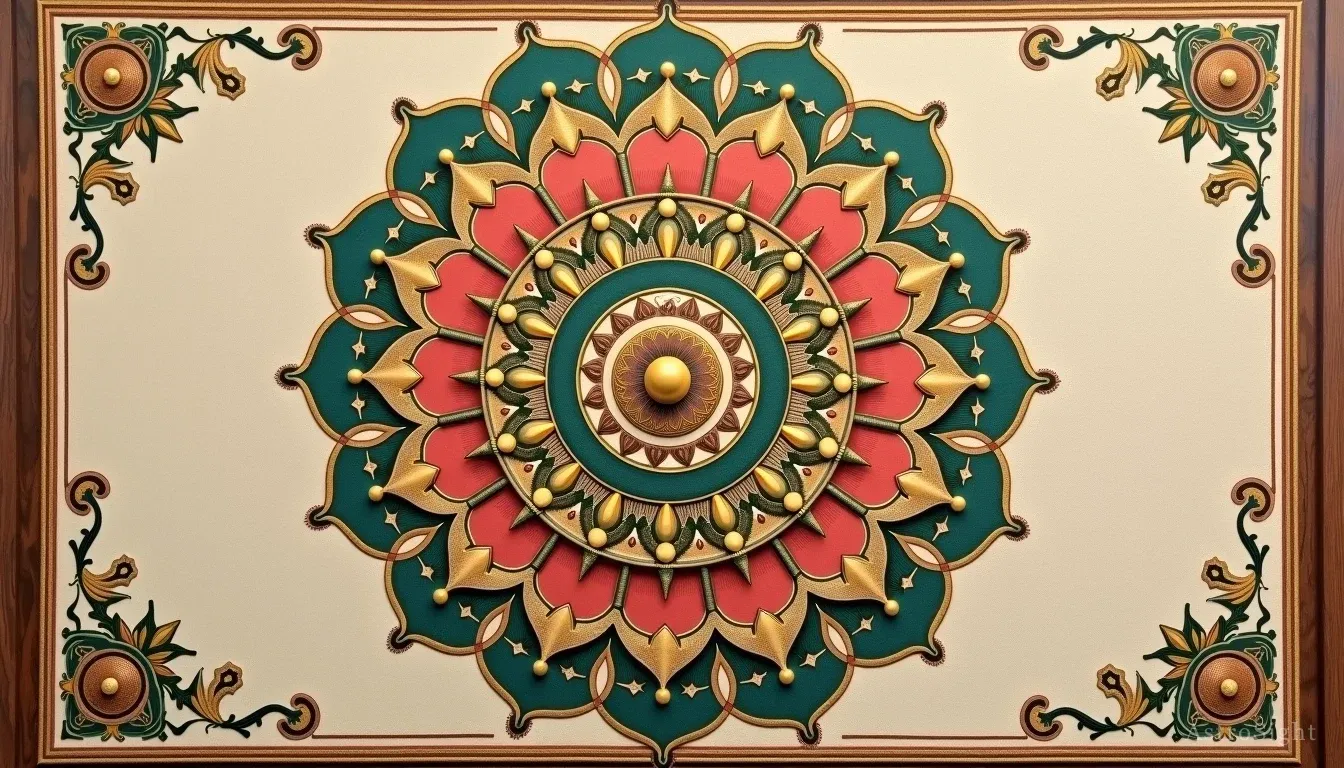
The Yantra Chintamani describes the Kamla Yantra's geometry as a visual representation of abundance's metaphysical structure. The central bindu (point) represents Kamla's concentrated presence—the seed from which all prosperity emerges. Interlocking triangles create the dynamic interplay between giving and receiving that characterizes healthy wealth flow.
Surrounding lotus petals—typically eight or sixteen—represent different aspects of material wellbeing: sustenance, growth, preservation, distribution, investment, inheritance, opportunity, and grace. The bhupura (outer square) grounds these subtle energies into material manifestation, creating what the texts describe as a "wealth field" radiating from the yantra's placement.
The yantra functions not as a magical wealth generator but as a focusing instrument—concentrating the practitioner's intention while creating resonance with Kamla's cosmic frequency. Classical texts are clear that the yantra's power activates through consistent practice, proper worship, and the devotee's own aligned action in the world.
How Do You Properly Install a Kamla Yantra?
Proper installation (sthapana) of the Kamla Yantra follows procedures established in classical Tantric literature. The Mantra Mahodadhi emphasizes that a yantra installed without proper vidhi remains inert—a mere copper plate rather than a living seat of the deity. The installation process transforms the geometric representation into an energized abode through prana pratishtha.
Selecting the Auspicious Muhurta
The Muhurta Chintamani provides detailed guidance on timing for yantra installation. Friday (Shukravar), governed by Venus, is considered ideal for Kamla Yantra sthapana due to Venus's natural lordship over material prosperity, beauty, and abundance. Thursday—Jupiter's day—serves as a worthy alternative given Jupiter's role as the guru of wealth and expansion.
The lunar phase matters significantly. Classical injunctions require Shukla Paksha (waxing moon) for all auspicious beginnings, as the growing moon energy supports growth and manifestation. Installation during Purnima (full moon) Friday creates an exceptionally favorable combination. Special occasions—Diwali night, Dhanteras, Akshaya Tritiya, or Navaratri's Lakshmi puja day—amplify the installation's potency.
Among nakshatras, traditional texts particularly recommend Rohini (Moon's exaltation, fertility and abundance), Pushya (nourishment, considered most auspicious for all material undertakings), Hasta (skill and acquisition), and Shravana (associated with Vishnu and prosperity). Avoid installation during Amavasya, eclipses, or when the Moon transits malefic nakshatras.
Required Materials for Installation
Gather these items before the installation day:
- Kamla Yantra — copper is traditionally preferred for wealth yantras; ensure proper geometric accuracy
- Red or yellow cloth — for the altar base; silk preferred, clean cotton acceptable
- Ghee lamps — minimum two, ideally five (pancha deepa)
- Panchamrit — milk, yogurt, honey, ghee, and sugar for abhisheka
- Lotus flowers — if available; red roses serve as traditional substitute
- Saffron and sandalwood paste — mix together for application to the central bindu
- Incense — lotus, rose, or sandalwood fragrance
- Fruits and sweets — pomegranate is particularly favored; include kheer or ladoo
- Gangajal or pure water — for purification
- Sphatik or lotus seed mala — for mantra counting during prana pratishtha
The Sthapana Procedure
On the day before installation, clean your worship space thoroughly, gather all materials, and observe vegetarian diet. Practice mental preparation through meditation on Kamla's form and your intention for the practice.
On installation day, rise before dawn and complete your ablutions with particular care. The Tantra Sara recommends adding turmeric or Gangajal to your bathing water for additional purification. Wear clean white, yellow, or red clothing. Maintain fasting until after installation (water is permitted).
Begin the physical installation by preparing the altar space. Place the cloth on an elevated surface—the yantra should rest at approximately eye level when you sit before it. The yantra will face east; you will sit facing west to worship it. Some practitioners prefer north-facing placement; consult your family tradition or guru for guidance.
Purify the yantra first by sprinkling Gangajal while chanting "Om Gam Ganapataye Namaha" three times—invoking Ganesha to remove obstacles. Then perform panchamrit abhisheka: wash the yantra with each of the five substances while reciting appropriate mantras. Conclude with pure water, then rose water. Dry with a soft red cloth and place on the altar.
The prana pratishtha (life-installation) ceremony ideally occurs between 9:00 AM and 11:00 AM. Light the ghee lamps and incense. Apply saffron-sandalwood paste to the central bindu. Then chant the Kamla Moola Mantra 108 times with full concentration, visualizing Goddess Kamla's golden form emerging from and dwelling within the yantra. Conclude with aarti, offerings of flowers and fruits, and prostrations.
Which Mantras Activate the Kamla Yantra's Power?
The mantra dimension of Kamla worship cannot be overstated. The Mantra Mahodadhi states that a yantra without mantra is like a body without breath—the geometric form provides the vessel, but the mantra provides the animating power. Regular mantra practice before the installed yantra creates a deepening connection with Kamla's energy over time.
The Kamla Moola Mantra
The primary mantra for Kamla worship is:
"Om Shreem Hreem Shreem Kamalaye Prasanna Vadane Namo Namaha"
This fourteen-syllable mantra encodes profound meaning. "Shreem" is the Lakshmi beeja (seed syllable), invoking abundance. "Hreem" is the Maya beeja, representing the transformative power of the Divine Mother. "Kamalaye" addresses Kamla directly. "Prasanna Vadane"—"with pleased countenance"—invokes her gracious, giving aspect. The doubled "Namo Namaha" expresses complete surrender.
Traditional prescription calls for 108 repetitions daily as minimum practice. For intensive sadhana—particularly during a 40-day mandala—increase to 324 or even 1,008 repetitions. Classical texts specify 125,000 total repetitions (purashcharana) for complete mantra siddhi, after which the mantra becomes spontaneously effective with minimal repetition.
The Kamla Beeja Mantra
For practitioners with Tantric inclination or initiation, the beeja mantra offers more concentrated power:
"Om Aim Hreem Shreem Kleem Sauh Kamalaye Namaha"
Each beeja carries specific energy: "Aim" (Saraswati beeja) adds wisdom to wealth decisions; "Hreem" transforms reality; "Shreem" attracts abundance; "Kleem" fulfills desires; "Sauh" connects to supreme consciousness. The Shakta Pramoda recommends this mantra for advanced practitioners who have already established a foundation with the moola mantra.
The Kamla Gayatri
For meditative practice following the japa rounds:
"Om Kamalatmikayai Vidmahe Maha Lakshmyai Cha Dhimahi Tanno Kamla Prachodayat"
This Gayatri-format mantra—with its characteristic "vidmahe... dhimahi... prachodayat" structure—is suitable for 11 or 21 repetitions during meditation. It invokes Kamla's illuminating wisdom regarding prosperity matters.
Guidelines for Effective Japa
Classical texts prescribe specific conditions for mantra practice:
- Time — Brahma muhurta (4:00-6:00 AM) is ideal; evening twilight (6:00-7:30 PM) also favorable
- Direction — Face east for spiritual progress, north for material gains
- Seat — Woolen or silk asana (cotton acceptable); avoid sitting directly on floor
- Mala — Sphatik (crystal) for purity, lotus seed for Kamla specifically, tulsi for general devotion
- Clothing — Clean white, yellow, or red; avoid black during prosperity practices
- Diet — Vegetarian on intensive practice days; the Tantraloka recommends avoiding garlic and onion during sadhana periods
The Tantraloka describes signs of developing mantra siddhi: increased peace during practice regardless of external circumstances, spontaneous insights about financial decisions, dreams featuring golden light or lotus imagery, and a sense of Kamla's protective presence in material matters. These signs emerge gradually with consistent, devoted practice.
Discover Your Wealth-Building Planetary Periods
Understanding your dasha periods and wealth houses reveals when your efforts will bear fruit. Get personalized guidance on timing your prosperity practices for maximum alignment.
Get Your Career ReportWhere Should You Place the Kamla Yantra for Optimal Results?
Proper Vastu placement significantly influences the Kamla Yantra's efficacy. Classical Vastu texts and Tantric sources agree that directional orientation affects how subtle energies flow and accumulate in a space.
The North Direction: Kuber Sthana
The north direction is governed by Kuber, the celestial treasurer and lord of wealth. Placing the Kamla Yantra in the north—on the northern wall or in the northern sector of your home—aligns with this prosperity-enhancing directional energy. The Vastu Shastra considers this placement particularly effective for enhancing income, protecting savings, and attracting financial opportunities.
When placing on the north wall, position the yantra at eye level when seated—approximately three to four feet from the floor. The devotee sits facing north toward the yantra during worship, thus aligning with Kuber's directional blessing while engaging with Kamla's energy.
The Northeast Corner: Ishanya
The northeast (Ishanya) corner combines the wealth energy of north with the spiritual illumination of east. Traditional Vastu designates this as the most sacred corner of any dwelling—ideal for the puja room and home altar. If your Kamla Yantra will be part of a larger worship setup, northeast placement creates harmonious integration of spiritual and material prosperity.
This placement particularly suits practitioners seeking balanced abundance—wealth that supports dharmic living rather than mere accumulation. The eastern component ensures that prosperity comes through righteous means and serves spiritual evolution.
Room Selection and Environmental Factors
The puja room represents the ideal location for any yantra, providing a dedicated sacred space free from mundane activities. If a separate puja room isn't available, the northeast corner of the living room serves well—this placement extends prosperity energy throughout the household gathering space.
A home office offers practical benefits for those seeking career and business prosperity. Place the yantra where you can see it while working—the visual reminder supports prosperity-consciousness throughout your professional activities.
Classical texts advise against bedroom placement—the yantra's active energy may disturb sleep. Similarly, avoid kitchen placement (fire element creates conflict with Kamla's water-lotus associations) and any wall shared with a bathroom (impurity considerations).
Enhancing the Yantra's Environment
The space surrounding the yantra influences its function. Keep the area clean and uncluttered—stagnant energy around the yantra impedes its radiating effect. Fresh flowers, particularly red roses or lotus when available, honor Kamla's nature and indicate active worship. Change flowers before they wilt; faded offerings show neglect.
A small water element—a clean bowl of water changed daily, or a modest fountain—resonates with Kamla's lotus-and-water iconography. Some practitioners place gold items (coins, small ornaments) near the yantra to establish sympathetic resonance with abundance energy. Green plants, particularly money plant (Pothos) or lucky bamboo, enhance the prosperity-supporting environment.
Natural light reaching the yantra is considered auspicious. If the placement doesn't receive adequate daylight, ensure the space is well-lit during worship times. Avoid placing the yantra where it faces or sits near electronic equipment—while this isn't a classical injunction, many contemporary practitioners report better results with some distance from electromagnetic fields.
What Daily Worship Practices Honor Goddess Kamla?
Consistent daily practice (nitya puja) builds the sustained connection with Kamla that produces transformation over time. The Tantra Sara emphasizes that irregular worship—however elaborate—achieves less than modest but unwavering daily devotion.
Morning Practice Structure
A complete yet practical morning worship takes approximately 15-30 minutes:
Begin with personal purification—bathing and clean clothes. Approach the altar with reverence. Light the ghee lamp (or lamps) and incense. Offer fresh water in a small vessel. If fresh flowers are available, offer them; otherwise, simply offer your devotion.
Perform mental purification by briefly focusing on your breath and releasing scattered thoughts. Invoke Ganesha with "Om Gam Ganapataye Namaha" (three times) to remove obstacles to your practice. Then turn attention to Kamla.
Chant the Kamla Moola Mantra 108 times using your mala. Maintain focus on the yantra or visualize Kamla's golden form. After completing the mantra rounds, sit briefly in meditation, allowing any insights or sense of blessing to settle. Conclude with prostration and gratitude.
Friday Intensification
Friday, as Venus's day, holds special significance for Kamla worship. Classical tradition recommends enhanced practice:
- Extended japa — 324 or more mantra repetitions rather than the standard 108
- Special offerings — Kheer (rice pudding), pomegranate, lotus flowers if available
- Attire — Pink or red clothing honors Kamla's nature
- Dietary observance — Light vegetarian food; some practitioners fast until after morning puja
- Charity — Friday donations, particularly supporting women or girls, align with Venus energy
The 40-Day Mandala Practice
For establishing deep connection with Kamla or addressing serious financial situations, traditional texts prescribe a 40-day (mandala) intensive practice. Begin on a Friday during Shukla Paksha. Commit to unbroken daily worship for the full period—missing a day traditionally requires starting over.
During the mandala, maintain vegetarian diet throughout, practice celibacy, avoid harsh speech and negative thinking, and dedicate additional time to japa—ideally 324 repetitions morning and evening. Many practitioners report that the mandala period brings not just financial shifts but deep transformation in their relationship with abundance itself.
Offerings That Please Kamla
The Tantraloka and related texts describe offerings particularly pleasing to Kamla:
- Lotus flowers — Her primary symbol; red roses acceptable substitute
- Pomegranate — Associated with fertility and abundance
- Kheer — Rice pudding, representing nourishment and sweetness
- Honey — Sweetness of prosperity
- Saffron — Precious and golden, resonating with her nature
- Gold items — Coins or ornaments placed briefly during worship
- Ghee lamps — Five lamps (pancha deepa) for special occasions
The texts consistently emphasize that devotional sincerity matters more than elaborate materials. A simple offering made with genuine love and surrender carries more weight than expensive items offered mechanically.
How Does Kamla Yantra Compare to Other Wealth Yantras?
Understanding the Kamla Yantra's relationship to other prosperity instruments helps practitioners choose appropriately for their specific needs. Each yantra carries distinct energy and serves different aspects of material wellbeing.
Kamla Yantra Versus Lakshmi Yantra
The standard Lakshmi Yantra invokes the Puranic (mainstream Hindu) form of the prosperity goddess. Its approach is sattvic and gentle, suitable for general household abundance and overall life auspiciousness. The Kamla Yantra, by contrast, channels the Tantric Mahavidya dimension—more concentrated, more intensive, and specifically oriented toward material wealth manifestation.
Choose Lakshmi Yantra for balanced household prosperity affecting all life areas. Choose Kamla Yantra when you need focused wealth work, particularly if gentler approaches haven't yielded results.
Kamla Yantra Versus Kuber Yantra
Kuber Yantra invokes the celestial treasurer, lord of the Yakshas and guardian of wealth. Where Kamla's energy emphasizes attracting and manifesting abundance, Kuber's energy focuses on preserving, protecting, and multiplying existing wealth. Traditional practitioners often recommend using both together—Kamla to bring wealth in, Kuber to ensure it stays and grows.
Kamla Yantra Versus Shri Yantra
The Shri Yantra (Sri Yantra) is considered the supreme yantra—representing the entire cosmos and the Divine Mother in totality. While it certainly affects prosperity, its scope extends far beyond material concerns to spiritual liberation itself. The Saundarya Lahari describes the Shri Yantra as the source of all abundance, but its worship requires more extensive practice and ideally initiation.
For practitioners specifically focused on wealth rather than comprehensive spiritual development, the Kamla Yantra offers a more targeted approach. Those ready for deeper engagement with Shakta traditions may eventually progress to Shri Yantra practice.
Kamla Yantra Versus Kanakdhara Yantra
The Kanakdhara Yantra—associated with the legend of Adi Shankaracharya invoking Lakshmi for a poor woman—specifically invokes "showering" or sudden influx of wealth. Where Kamla Yantra builds sustained prosperity over time, Kanakdhara is sometimes employed for more immediate financial relief. Both are powerful; Kamla offers more systematic transformation while Kanakdhara addresses urgent situations.
Combining Practices Wisely
Classical texts permit and sometimes encourage combining compatible practices. The Kamla Yantra harmonizes well with:
- Kuber Yantra — attract (Kamla) and preserve (Kuber) wealth
- Venus remedies — gemstones (diamond or white sapphire), Friday observances
- Jupiter remedies — Thursday practices, yellow sapphire if chart-appropriate
- Charitable giving — dana (charity) opens wealth channels while pleasing the prosperity deities
However, avoid overwhelming yourself with too many simultaneous practices. Better to worship one yantra with deep consistency than scatter attention across many. If you're drawn to Kamla, commit fully to her sadhana before adding other elements.
What Results Can You Realistically Expect?
Authentic Tantric texts are clear about how yantra practice works—and honest assessment helps practitioners maintain realistic expectations while remaining open to genuine transformation.
How Yantra Results Manifest
The Yantra Chintamani describes yantra effects as working through multiple channels. First, the practice transforms the practitioner's consciousness—reducing anxiety around money, cultivating gratitude, and opening perception to opportunities that were always present but unnoticed. Second, consistent worship creates "karmic momentum" that gradually shifts circumstances. Third, the deity's grace responds to sincere devotion in ways that may transcend ordinary causation.
This means results rarely appear as sudden windfall (though they sometimes do). More commonly, practitioners report a progressive shift: improved financial decision-making, unexpected opportunities arising, debts finding resolution paths, relationships becoming more supportive of prosperity, and a general sense of abundance replacing scarcity consciousness.
The Role of Karma and Effort
Classical Jyotish and Tantric texts agree that yantra worship works within karmic parameters—it doesn't override karma entirely but can soften difficult karma and amplify positive karma. A person with strong wealth-blocking karma may experience slower results than someone with favorable prarabdha, but consistent practice benefits all practitioners to some degree.
Crucially, the yantra supports but doesn't replace practical effort. Kamla's blessings open doors; the devotee must walk through them. A businessperson still needs sound strategy. An employee still needs to perform well. The yantra creates favorable conditions and divine support, but human agency and effort remain essential.
Signs of Progress
Practitioners commonly report these signs indicating the practice is taking hold:
- Inner shifts — Reduced anxiety about money, increased sense of being provided for
- Dream signs — Dreams featuring golden light, lotuses, water, or the goddess herself
- Small synchronicities — Minor unexpected funds, reduced unnecessary expenses, helpful coincidences
- Relationship improvements — Professional connections becoming more supportive
- Decision clarity — Improved intuition about financial and business choices
- Peace during practice — Deep calm during worship regardless of external circumstances
These signs typically precede tangible financial improvements. The Tantra Sara advises practitioners to note and appreciate these subtle shifts rather than focusing exclusively on material outcomes—the inner transformation is itself valuable and creates the foundation for outer change.
Important Caveats
Honest assessment requires acknowledging what the Kamla Yantra cannot do. It cannot create money from nothing—opportunities must be acted upon. It cannot guarantee specific financial outcomes—results depend on many factors including karma, effort, and divine will. It cannot work without consistent practice—occasional worship yields occasional results at best.
Furthermore, Kamla's wisdom sometimes redirects practitioners toward opportunities different from what they initially sought. A person praying for business success might instead receive guidance toward a more suitable career path. Trust in the deity's broader vision, even when it differs from personal expectations.
Integrating Kamla Worship into Your Spiritual Life
The Kamla Yantra serves most powerfully when integrated into a coherent spiritual life rather than treated as an isolated wealth tool. As the tenth Mahavidya, Kamla represents the culmination and manifestation of spiritual energy in material form—her worship naturally bridges the sacred and practical dimensions of existence.
Traditional practitioners approach Kamla not merely as a prosperity deity to be petitioned but as a form of the Divine Mother who teaches right relationship with material abundance. Her blessings ideally support dharmic living—wealth that enables charitable giving, family support, and spiritual practice rather than mere accumulation.
Consider how your relationship with Kamla might evolve over time. Beginning practitioners often come with specific financial needs and goals. As the practice deepens, many report a shift toward broader abundance consciousness—gratitude for what they have, trust in ongoing provision, and desire to share blessings with others. This evolution reflects Kamla's complete teaching: material prosperity as divine grace flowing through those who align with cosmic generosity.
For those drawn to the Mahavidya tradition, Kamla can serve as an accessible entry point leading toward deeper Tantric practice. Her benevolent nature—golden, gracious, giving—makes her an approachable gateway to the more formidable Mahavidyas. Many practitioners who begin with Kamla eventually explore the full Dasha Mahavidya spectrum under appropriate guidance.
Whatever your starting point, approach the Kamla Yantra with reverence, consistency, and realistic expectations. The goddess rewards sincere devotion. Through dedicated practice, may you experience the abundant grace that flows when heart, action, and cosmic prosperity align.
Om Shreem Hreem Shreem Kamalaye Prasanna Vadane Namo Namaha.
Explore AstroSight Services
Personalized Report
Career Report Bundle
Your Navamsa and Dashamsha are covered in your Career Report — see your exact vocational path
- Personalized analysis based on YOUR exact birth chart
- Expert-prepared by Dr. Meenakshi Sharma
- Delivered as PDF within 24-48 hours
- Unlimited follow-up clarifications
By Dr. Meenakshi Sharma · Delivered in 24-48 hours

Dr. Meenakshi Sharma
PhD in Vedic Astrology, 20+ Years Experience
18 + Years of Experience
100+ Readers
Dr. Meenakshi Sharma is a distinguished Vedic astrologer with a PhD in Vedic Astrology and over 20 years of professional experience in the ancient science of Jyotisha. Her extensive practice encompasses thousands of chart readings, predictive analyses, and remedial consultations, making her uniquely qualified to bridge traditional Vedic wisdom with contemporary applications. As a contributing writer for AstroSight, Dr. Sharma specializes in natal chart analysis, predictive astrology, and Vedic remedial measures, sharing her deep knowledge through insightful articles that make complex astrological concepts accessible to practitioners at all levels. Her approach combines rigorous academic training with ethical consultation standards, empowering clients through education and practical guidance while maintaining authentic adherence to classical Vedic principles.