
Hindu Mythology Stories for Kids: Best Tales and Lessons
Hindu mythology stories for kids are short, accessible adaptations of classical Indian narratives — drawn from the Ramayana, Mahabharata, Bhagavata Purana, and the broader Puranas tradition — that introduce children to characters like Ganesha, Krishna, Rama, Hanuman, Prahlada, and the major deities
Hindu mythology stories for kids are short, accessible adaptations of classical Indian narratives — drawn from the Ramayana, Mahabharata, Bhagavata Purana, and the broader Puranas tradition — that introduce children to characters like Ganesha, Krishna, Rama, Hanuman, Prahlada, and the major deities while teaching moral and ethical lessons appropriate for ages 4-12. The 10 most-cited Hindu mythology stories for kids include: Ganesha's birth and elephant head, Krishna stealing butter and lifting Govardhana, Rama-Sita-Lakshmana in the forest, Hanuman's leap to Lanka, Prahlada and Narasimha, Dhruva's penance, Markandeya's victory over death, Savitri saving Satyavan, the churning of the ocean (Samudra Manthan), and the story of Ekalavya. Each story carries specific moral teachings — devotion, courage, truthfulness, ahimsa (non-violence), parental respect, perseverance, friendship, dharma — and serves as an entry point into the rich Indian cultural-spiritual heritage.
The reason understanding Hindu mythology stories for kids matters is that these stories are a foundational element of Indian cultural literacy, ethical formation, and intergenerational connection — passed down through generations and adapted for modern parents seeking quality cultural content for their children. Important framing: these stories are presented as cultural-religious narratives — they integrate spiritual themes with ethical and adventure elements. Parents from non-Hindu backgrounds can also share these stories with appropriate cultural context — the universal themes (courage, devotion, moral choice) transcend specific religious tradition. This guide covers what Hindu mythology stories are, the best story for kids, 10 famous short stories, specific Ganesha story, Krishna's childhood, Rama's story simplified, Hanuman's tales, which god is intelligent, moral lessons, and where to find more stories. Reviewed by Shri Ankit Bansal, integrating cultural literacy with Vedic-tradition knowledge. For your personal Vedic chart and family-name-aligned mythology themes, use the birth chart calculator.
What Are Hindu Mythology Stories and Why Are They Valuable for Kids?
Hindu mythology stories are traditional narratives from Indian classical literature — including the Ramayana (~7th-3rd century BCE), Mahabharata (~3rd century BCE), Bhagavata Purana (~9th-10th century CE), and the 18 major Puranas — featuring gods, sages, demons, and heroes engaged in adventures that illustrate ethical principles, cultural values, and spiritual teachings.
| Hindu mythology element | Description |
|---|---|
| Source texts | Ramayana, Mahabharata, 18 Puranas, Bhagavata Purana, Vedas |
| Approximate age range | 2,500-3,500+ years old (oral tradition predates texts) |
| Primary characters | Brahma, Vishnu, Shiva, Lakshmi, Saraswati, Parvati, Ganesha, Krishna, Rama, Hanuman, multiple sages and asuras |
| Narrative style | Adventure, supernatural events, moral conflicts, divine interventions |
| Ethical themes | Dharma (duty), satya (truth), ahimsa (non-violence), karma (action), bhakti (devotion) |
| Educational value for kids | Cultural literacy, moral formation, language enrichment, family-bonding through storytelling |
| Age-appropriate adaptations | Available in many formats — picture books, animations, audio stories, illustrated retellings |
| Available languages | Sanskrit (original), Hindi, Tamil, Bengali, English, all major Indian languages, many global languages |
Why these stories are valuable for kids:
- Cultural literacy — understanding Indian heritage and the world's third-largest religion
- Ethical formation — age-appropriate exposure to moral concepts (right/wrong, courage, kindness)
- Imagination development — rich narrative worlds support creative thinking
- Language enrichment — vocabulary, narrative structure, dialogue patterns
- Family bonding — storytelling tradition strengthens parent-child connection
- Spiritual exposure — introduces children to spiritual concepts without overwhelming them
- Cross-cultural literacy — introduces concepts shared across major Eastern wisdom traditions
What Is the Best Story of Hindu Mythology for Kids?
The "best" Hindu mythology story for kids depends on the child's age, interests, and the moral theme you want to introduce — but the most universally-loved and frequently-told children's stories include the Ramayana (Rama's heroic journey), Krishna's childhood adventures, Ganesha's birth and elephant head, and Hanuman's leap to Lanka.
Top 5 most-recommended stories for kids ages 4-12:
| Story | Best age range | Primary moral lesson |
|---|---|---|
| Ganesha's elephant head | 4-8 | Parental love, problem-solving, accepting differences |
| Krishna and the butter (Makhan Chor) | 4-10 | Mischief, mother's love, simple joys |
| Hanuman's leap to Lanka | 6-12 | Courage, devotion, dedication to friends |
| Rama, Sita, Lakshmana in the forest | 8-12 | Duty, family loyalty, sacrifice |
| Prahlada and Narasimha | 8-12 | Faith, courage in the face of opposition, divine protection |
For very young children (ages 3-6): Ganesha's birth, Krishna's butter-stealing, simple animal stories from Panchatantra — short, vivid, easy-to-remember.
For older children (ages 8-12): Rama's journey, Hanuman's adventures, Mahabharata's children-friendly episodes (young Krishna, young Arjuna, Abhimanyu), Dhruva's penance — longer narratives with moral complexity.
What Are 10 Famous Short Hindu Mythology Stories for Kids?
The 10 most-cited short Hindu mythology stories for kids combine universal appeal, clear moral lessons, and age-appropriate adventure — each adaptable to a 5-10 minute storytelling format.
| # | Story | Key characters | Moral lesson | Age range |
|---|---|---|---|---|
| 1 | Ganesha and the Elephant Head | Shiva, Parvati, Ganesha | Parental love conquers obstacles | 4-8 |
| 2 | Krishna and the Butter Pot | Krishna, Yashoda, gopis | Childhood joy, mother's affection | 4-10 |
| 3 | Krishna Lifts Govardhana | Krishna, villagers, Indra | Protection, humility, divine help | 6-10 |
| 4 | Hanuman Leaps to Lanka | Hanuman, Sita, Rama | Courage, devotion, dedication | 6-12 |
| 5 | Rama, Sita, Lakshmana in the Forest | Rama, Sita, Lakshmana, Ravana | Family loyalty, duty, sacrifice | 8-12 |
| 6 | Prahlada and Narasimha | Prahlada, Hiranyakashipu, Narasimha | Faith conquers tyranny | 8-12 |
| 7 | Dhruva's Penance | Dhruva, his mother, Vishnu | Perseverance, devotion, parents' love | 6-10 |
| 8 | Savitri Saves Satyavan | Savitri, Satyavan, Yama | Love, intelligence, devotion | 10-12 |
| 9 | Samudra Manthan (Churning the Ocean) | Devas, asuras, Vishnu, multiple treasures | Cooperation, patience, balance | 8-12 |
| 10 | Ekalavya | Ekalavya, Dronacharya, Arjuna | Self-learning, sincerity, sacrifice | 10-12 |
Each story is available in multiple language adaptations — picture book versions, animated videos, audio stories — so parents can choose the format best suited to their child's age and engagement preference.
What Is Ganesha's Birth Story (Most Asked Children's Story)?
Ganesha's birth story — the most popular Hindu mythology story for young children — tells how Goddess Parvati created Ganesha from sandalwood paste to guard her bath, how Lord Shiva accidentally beheaded Ganesha not knowing he was Parvati's son, and how Shiva then placed an elephant's head on him to restore his life.
The story (simplified for kids ages 4-8):
Once, Goddess Parvati was going to take a bath. She wanted someone to guard the door so no one would disturb her. So she created a beautiful young boy from sandalwood paste and breathed life into him. She named him Ganesha and told him, "Guard the door. Do not let anyone in."
Soon, Lord Shiva — Parvati's husband — came home. Ganesha, not knowing Shiva, stopped him at the door. "You cannot enter," Ganesha said politely. Shiva, surprised, tried to enter. Ganesha would not move. They had a great battle, and Shiva, not knowing this was Parvati's son, accidentally cut off Ganesha's head.
When Parvati came out and saw what had happened, she was very sad. Shiva, seeing her grief, promised to bring Ganesha back to life. He sent his attendants to bring the head of the first creature they saw. They came back with an elephant's head. Shiva placed it on Ganesha's body and brought him back to life.
From that day, Ganesha had the head of an elephant — and became Lord Ganesha, the remover of obstacles, the patron of beginnings, and the most-loved deity in many families. He is worshipped at the start of any new venture, learning, or important task.
| Moral lessons in this story | Application |
|---|---|
| Parental love is powerful | Parents go to great lengths to protect children |
| Mistakes can be repaired | Even big mistakes can be made right with effort |
| Accepting differences | Ganesha's unusual appearance does not diminish his greatness |
| Beginnings deserve blessing | Why we invoke Ganesha at the start of new ventures |
What Is the Story of Krishna's Childhood for Kids?
Krishna's childhood (Bala Krishna) is a treasury of stories from the Bhagavata Purana — including his birth in Mathura, growing up in Vrindavan with Yashoda and Nanda, his butter-stealing adventures, lifting Mount Govardhana, dancing with the gopis (cowherd girls), and defeating various asuras (demons) sent by his evil uncle Kamsa.
Famous Bala Krishna stories (simplified for kids):
| Story | Brief description |
|---|---|
| Krishna's birth | Born to Devaki and Vasudeva in prison; secretly moved to Yashoda's home in Vrindavan; saved from evil uncle Kamsa |
| Stealing butter (Makhan Chor) | Young Krishna would climb on his friends' shoulders to steal butter from high pots; everyone loved his mischief |
| The poisonous serpent Kaliya | Defeated the multi-headed serpent in the Yamuna river, dancing on its hoods |
| Lifting Mount Govardhana | Lifted the mountain on his finger to protect Vrindavan villagers from a flood sent by angry Indra |
| Putana the demoness | As a baby, drained the life of the demoness Putana who tried to poison him |
| The forest fire | Saved the cows and cowherds from a forest fire by swallowing the flames |
| Bakasura the crane demon | Killed the giant crane demon that tried to swallow him |
| Stealing clothes of gopis | Playful prank story (often taught with cultural context for older children) |
| Sudama's visit | His childhood friend Sudama visited Krishna years later; Krishna welcomed him warmly |
These stories show Krishna as both divine and human-relatable — a god who is also a playful child, friend, protector, and teacher.
What Is the Story of Rama and Sita Simplified for Kids?
The Ramayana — simplified for kids — tells the story of Rama, prince of Ayodhya, who was sent into the forest for 14 years instead of becoming king, accompanied by his wife Sita and brother Lakshmana. The demon king Ravana kidnapped Sita to the island of Lanka. Rama, with the help of his devoted friend Hanuman and an army of vanaras (monkeys), built a bridge to Lanka, fought Ravana, rescued Sita, and returned home as king.
The Ramayana for kids (3-paragraph version):
Long ago, in the kingdom of Ayodhya, there lived a prince named Rama. He was kind, brave, and just. He was married to Sita, a princess of great beauty and devotion. Rama had three brothers — Bharata, Lakshmana, and Shatrughna — and they all loved each other very much. When Rama was about to become king, his stepmother asked the king (his father) to send Rama to the forest for 14 years instead. Rama, being a dutiful son, accepted without complaint. Sita and Lakshmana refused to stay behind and went with him.
In the forest, a terrible thing happened. The demon king Ravana, ruler of Lanka, kidnapped Sita and took her to his island kingdom. Rama and Lakshmana searched everywhere. They met Hanuman — a brave and devoted vanara (monkey) — who became Rama's best friend. Hanuman flew across the ocean to Lanka, found Sita, and gave her hope. He brought back her message to Rama. Then Rama, with an army of vanaras, built a bridge across the ocean to Lanka.
A great battle followed. Rama and his army defeated Ravana and rescued Sita. They all returned to Ayodhya, and Rama became king. The people celebrated with lamps and lights — this celebration became the festival of Diwali. Rama ruled Ayodhya with justice and wisdom, and his kingdom became famous as "Ram Rajya" — the ideal kingdom where everyone was happy and prosperous.
| Key moral lessons | Application |
|---|---|
| Duty to family | Rama accepted exile to honor his father's word |
| Loyalty in marriage | Sita and Rama's devoted love |
| Sibling support | Lakshmana accompanied Rama into exile |
| Friendship and devotion | Hanuman's complete devotion to Rama |
| Good triumphs over evil | Rama's defeat of Ravana |
| Just leadership | Ram Rajya as ideal governance |
What Is the Story of Hanuman for Kids?
Hanuman is the vanara (monkey) god of strength, devotion, and protection — son of Vayu (the wind god) and Anjana — known for his incredible powers, complete devotion to Lord Rama, and key role in helping Rama rescue Sita from the demon king Ravana.
Famous Hanuman stories for kids:
| Story | Brief description |
|---|---|
| Baby Hanuman tries to eat the Sun | As a baby, Hanuman thought the Sun was a fruit and leaped to eat it; Indra struck him with a thunderbolt; he was revived by Vayu |
| Hanuman's strength is sealed | Sages cursed Hanuman to forget his powers until reminded later in life |
| Hanuman meets Rama | Hanuman immediately recognizes Rama as divine and offers him complete service |
| The leap to Lanka | Hanuman crossed the ocean in one giant leap to find Sita |
| Burning Lanka with his tail | When captured and his tail set on fire by Ravana's soldiers, Hanuman used the fire to burn Lanka |
| The Sanjeevani mountain | When Lakshmana was wounded, Hanuman flew to the Himalayas, couldn't find the specific healing herb, so brought the entire mountain back |
| Hanuman in Hanuman Chalisa | The 40-verse hymn by Tulsidas summarizing Hanuman's qualities — chanted by millions daily |
Hanuman's qualities for kids to learn:
- Bhakti (devotion) — complete loyalty to those you love
- Bal (strength) — physical and inner strength
- Buddhi (wisdom) — clever problem-solving
- Vidya (learning) — lifelong learning
- Vinaya (humility) — humble despite great power
- Saubhagya (good fortune) — brings good fortune
- Seva (service) — service-oriented life
Which Hindu God Is Considered Very Intelligent?
Several Hindu gods are considered for their intelligence, wisdom, and learning — most notably Ganesha (god of wisdom and learning), Saraswati (goddess of knowledge and arts), Brihaspati (Jupiter, the divine guru and teacher), Krishna (philosopher-king-teacher), and Sage Narayana (in his Vishnu-incarnation aspect).
| Hindu deity considered for intelligence | Domain |
|---|---|
| Ganesha (Vinayaka) | Wisdom, learning, removing obstacles, problem-solving — patron deity of new ventures |
| Saraswati | Knowledge, arts, music, poetry, scientific learning — goddess of wisdom |
| Brihaspati (Jupiter) | Divine guru, teacher of gods, planetary representative of wisdom |
| Krishna | Philosopher-king, teacher (Bhagavad Gita), strategic intelligence |
| Vyasa | Compiler of the Vedas, author of Mahabharata, paragon of scholarship |
| Markandeya | Sage known for spiritual wisdom and victory over death |
| Yajnavalkya | Sage of the Brihadaranyaka Upanishad, source of foundational Vedanta |
| Narada | Divine sage and messenger; wisdom across multiple traditions |
For children learning about Hindu intelligence-deities:
- Ganesha is invoked at the start of any learning (including school exams, new books, music lessons)
- Saraswati is worshipped on Vasant Panchami (February-March) — the festival of education and arts
- The phrase "Buddhi-pradayaka" (giver of intelligence) is commonly applied to Ganesha and Saraswati
What Are the Moral Lessons in Hindu Mythology Stories for Kids?
Hindu mythology stories for kids carry layered moral lessons spanning ethical conduct (dharma), devotion (bhakti), self-improvement, family relationships, and right relationship to community and cosmos.
| Moral category | Lessons taught |
|---|---|
| Family relationships | Parents' love, sibling loyalty, marriage commitment, intergenerational respect |
| Friendship | Loyalty, sacrifice for friends, mutual support, honesty |
| Truth and honesty (satya) | Truthfulness, integrity, keeping one's word |
| Non-violence (ahimsa) | Avoiding harm, compassion to all beings, vegetarianism in some traditions |
| Courage (vira) | Standing up for what is right, facing difficulties |
| Devotion (bhakti) | Love and faith in higher principles or persons |
| Service (seva) | Helping others, particularly the weak and needy |
| Patience (dhairya) | Perseverance through difficulties |
| Discipline (tapa) | Self-control, sustained effort, focused practice |
| Knowledge and wisdom (jnana) | Lifelong learning, respect for teachers and elders |
| Karma (action and consequence) | Actions have results; choose wisely |
| Dharma (duty) | Each person has appropriate duties; honor them |
| Universal connection | All beings are connected; harm to one affects all |
Age-appropriate framing matters — the same story carries different layers of moral teaching for a 5-year-old (basic right/wrong) versus a 12-year-old (moral complexity, dharma in conflict). Skilled storytellers adjust emphasis and explanation based on audience age.
Where Can Parents Find More Hindu Mythology Stories and PDFs for Kids?
Hindu mythology stories for kids are widely available through multiple formats and sources — books, free online resources, animated videos, audio stories, and educational platforms.
| Source category | Specific resources |
|---|---|
| Picture book series | Amar Chitra Katha (60+ titles), Ananth Pai's classics, Tinkle Comics children's mythology |
| Modern retellings | Sudha Murty's "How the Onion Got Its Layers" and similar collections; Devdutt Pattanaik's children's adaptations |
| Animated series | "Bal Ganesh," "Krishna" animated films, "Hanuman" animated film series, "Mahabharata" by B.R. Chopra (older but classic) |
| YouTube channels | Multiple kid-focused mythology channels with animated story videos |
| Audio stories | Apple Podcasts, Spotify Kids — multiple Indian mythology audio series |
| Free PDF resources | Multiple websites offer free downloadable PDFs of Indian mythology stories; quality varies |
| School curricula | Indian school NCERT books include mythology content; international schools sometimes include cultural-literacy modules |
| Educational platforms | Vedantu, Byju's, and similar Indian education platforms have mythology modules |
| Family elders | Grandparents and older relatives often the best source — preserving oral tradition |
| Vedanta and Bhakti tradition centers | Ramakrishna Mission, ISKCON, Chinmaya Mission publish children's mythology materials |
For ongoing family-mythology integration, the daily storytelling ritual (one story before bedtime, 3-4 times per week) is traditional and effective — stories accumulate in the child's memory and inform character development over years. For your personal Vedic chart and family-name-mythology alignment, use the birth chart calculator.
Align Your Spiritual Path with Your Purpose
Your birth chart reveals your dharma — the path aligned with your soul purpose. Get expert analysis connecting spiritual direction with practical life choices.
Get Your Career Report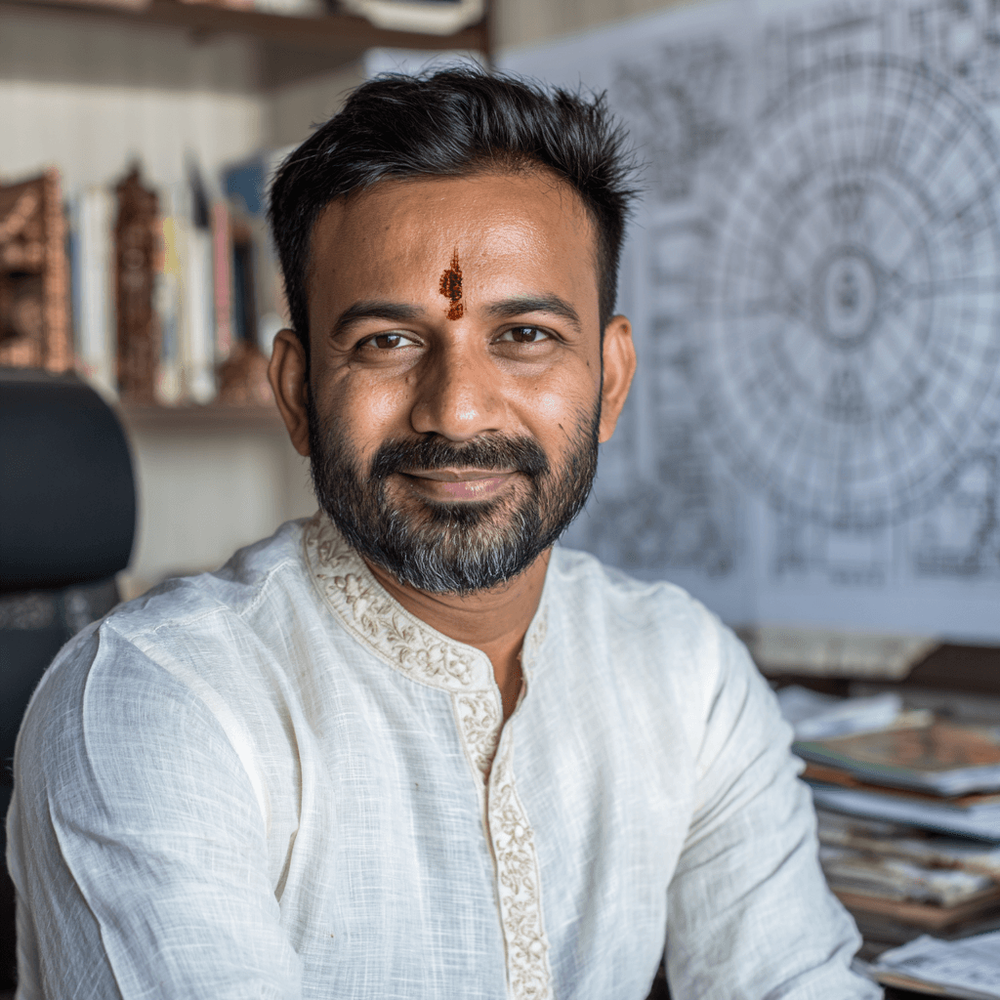
Shri Ankit Bansal
Vedic Astrologer · Numerology and Vastu Expert, 15+ Years
Shri Ankit Bansal is a renowned numerology and Vastu expert with over 15 years of specialized experience in these ancient Indian sciences. His extensive practice encompasses thousands of consultations in numerological analysis, name corrections, business numerology, and comprehensive Vastu assessments for residential and commercial properties. As a contributing writer for AstroSight, Shri Bansal combines his deep understanding of numerical vibrations with practical Vastu principles to provide holistic solutions that harmonize living and working spaces with cosmic energies. His expertise spans personal numerology charts, business name analysis, property Vastu audits, and remedial measures that blend traditional wisdom with modern lifestyle requirements. Through his methodical approach and proven track record, Shri Bansal has established himself as a trusted authority in helping clients optimize their environment and numerical influences for enhanced prosperity, health, and overall well-being.