Dharma and Moksha Meaning in Vedic Astrology
Dharma and moksha in Vedic astrology are two of the four Purusharthas (life aims) recognized in classical Hindu philosophy — alongside artha (wealth) and kama (desire). In Vedic astrology, the 12 houses are organized into 4 trikonas (triangular groupings) each corresponding to one Purushartha: the D
Dharma and moksha in Vedic astrology are two of the four Purusharthas (life aims) recognized in classical Hindu philosophy — alongside artha (wealth) and kama (desire). In Vedic astrology, the 12 houses are organized into 4 trikonas (triangular groupings) each corresponding to one Purushartha: the Dharma Trikona (1st, 5th, 9th houses) governs ethical action and spiritual orientation; the Artha Trikona (2nd, 6th, 10th houses) governs wealth and resources; the Kama Trikona (3rd, 7th, 11th houses) governs desires and relationships; and the Moksha Trikona (4th, 8th, 12th houses) governs spiritual liberation and dissolution of ego. Together, these four trikonas form the complete framework of life-purpose in Vedic astrology, with dharma providing the foundation and moksha representing the final goal.
The classical Vedic framework documenting the 4 Purusharthas dates back over 5,000 years through the Vedas, with detailed elaboration in the Bhagavad Gita (composed approximately 2,500 years ago) and Manu Smriti (200 BCE to 200 CE). The reason understanding dharma and moksha in Vedic astrology matters more than people realise is that modern life-coaching and career advice often focus exclusively on artha (wealth) and kama (desire) — pursuing money and fulfillment of desires without the dharmic foundation (ethical action) or moksha orientation (transcendence of pure materialism). The classical Vedic understanding holds that all four Purusharthas should be pursued in balance, with dharma as the foundation that gives artha and kama their proper context, and moksha as the ultimate spiritual purpose that gives meaning to the entire life-pattern. This guide covers what dharma and moksha mean in Vedic astrology, the 4 Purusharthas in classical philosophy, the Dharma Trikona and Moksha Trikona houses, which planet specifically represents moksha, what dharma karmadhipati yoga is and how rare it is, the integration of all 4 Purusharthas in chart reading, and the practical application for modern life. Reviewed by Shri Ankit Bansal, Vedic astrologer with 12+ years of practice and classical philosophy study. Use the birth chart calculator for personal Purushartha analysis.
What Does Moksha Mean in Vedic Astrology?
Moksha in Vedic astrology means spiritual liberation — the release from the cycle of birth and rebirth (samsara) and the transcendence of ego-identification — and is governed by specific houses, planets, and yogas in the birth chart. Moksha is the fourth and ultimate Purushartha (life aim) according to classical Hindu philosophy, with the other three (dharma, artha, kama) serving as preparatory paths toward this final goal.
| Moksha aspect | Vedic astrological representation |
|---|---|
| Primary houses | Moksha Trikona: 4th, 8th, 12th houses (all water signs in natural zodiac) |
| Primary planets | Ketu (spiritual detachment), Saturn (dissolution), Jupiter (dharmic wisdom) |
| Primary yogas | Moksha Yoga, Vipareeta Raja Yoga in 8th house, strong Ketu in Kendra/trinal |
| Body parts | Beyond physical (spiritual centers) |
| Life-stage | Often peaks in later life-stages |
| Practice path | Bhakti, jnana, karma, raja yoga depending on chart |
The Moksha Trikona houses:
Each of the 12 houses spans 30 degrees of the 360 degree zodiac. The 4th, 8th, and 12th houses form the Moksha Trikona because:
1. All three are water signs in natural zodiac (Cancer 4th, Scorpio 8th, Pisces 12th). 2. Each governs different aspect of dissolution: - 4th house: Inner peace, end of mental restlessness. - 8th house: Transformation through difficulty, occult knowledge. - 12th house: Final dissolution, surrender, transcendence.
The 4th house — Foundation of moksha:
- Represents inner peace and emotional foundation.
- Sukha (happiness) house — foundation for spiritual life.
- Mother's influence on spiritual development.
- Home as spiritual sanctuary.
- Beginning of moksha path.
The 8th house — Transformation toward moksha:
- Represents deep transformation and occult knowledge.
- Death and rebirth themes.
- Hidden patterns surfacing for resolution.
- Spiritual challenges that produce maturation.
- Middle stage of moksha path.
The 12th house — Final liberation:
- Represents dissolution of individual self.
- Vyaya Bhava (house of expenditure) — losing the ego.
- Foreign lands as spiritual setting.
- Hidden environments (ashrams, monasteries).
- Final stage of moksha path.
The planets representing moksha:
| Planet | Moksha role |
|---|---|
| Ketu | Primary moksha-karaka — natural detachment, spiritual dissolution |
| Saturn | Dissolution and discipline — Saturn destroys what doesn't serve spiritual development |
| Jupiter | Dharmic wisdom — Jupiter provides the philosophical framework |
| Moon | Spiritual sensitivity — Moon governs emotional readiness for moksha |
| Sun | Soul (atma) — represents the very seat of consciousness |
Among these, Ketu is most directly the planet of moksha — Ketu is the shadow planet of past-life karma and spiritual detachment, naturally inclining the chart toward transcendence.
The classical Vedic position on moksha:
The Brihat Parashara Hora Shastra describes moksha as:
- The final goal beyond all other pursuits.
- Achievable through dharmic life combined with spiritual practice.
- Indicated by specific yogas in the chart.
- Manifests through dissolution of ego-attachments.
The classical Vedic life-stages (ashramas) align Purusharthas across approximately 100 year framework: Brahmacharya (0-25 years), Grihastha (25-50 years), Vanaprastha (50-75 years), Sannyasa (75+ years). Most modern Hindu households integrate practices from multiple stages simultaneously rather than strict 25 year transitions. The four paths to moksha (described in Bhagavad Gita):
| Path | Planet emphasis | Approach |
|---|---|---|
| Bhakti Yoga | Venus, Moon | Devotion to deity |
| Jnana Yoga | Jupiter, Mercury | Knowledge and discrimination |
| Karma Yoga | Mars, Saturn | Selfless action |
| Raja Yoga | Various | Royal yoga combining all paths |
Each path is suited to different chart configurations and personal temperaments.
For your moksha-related chart analysis, use the birth chart calculator.
What Are the 4 Pursuits of Life (Purusharthas)?
The 4 Purusharthas (pursuits of life) in classical Hindu philosophy are: Dharma (ethical action), Artha (wealth/resources), Kama (desires/relationships), and Moksha (spiritual liberation). Together they form the complete framework of life-purpose in Vedic philosophy, and the Bhagavad Gita and Manu Smriti describe these as the legitimate aims of human life.
| Purushartha | Sanskrit meaning | Life aim |
|---|---|---|
| Dharma | "That which upholds" | Ethical action, duty, righteousness |
| Artha | "Wealth, meaning" | Resources, wealth, profession |
| Kama | "Desire, love" | Desires, relationships, pleasure |
| Moksha | "Liberation, release" | Spiritual liberation, transcendence |
The 4 Trikonas in Vedic astrology:
Each Purushartha corresponds to 3 houses forming a trikona:
| Trikona | Houses | Sign element |
|---|---|---|
| Dharma Trikona | 1st, 5th, 9th | Fire signs (in natural zodiac) |
| Artha Trikona | 2nd, 6th, 10th | Earth signs |
| Kama Trikona | 3rd, 7th, 11th | Air signs |
| Moksha Trikona | 4th, 8th, 12th | Water signs |
This 4×3 = 12 house system covers all life-areas through the 4-Purushartha framework.
Dharma in Vedic astrology:
| Domain | 1st house | 5th house | 9th house |
|---|---|---|---|
| Aspect | Self, identity | Creativity, children, education | Higher dharma, guru, fortune |
| Function | Foundation of dharma | Application of dharma | Higher dharmic principles |
Strong Dharma Trikona indicates:
- Clear sense of right action.
- Capacity for ethical leadership.
- Natural inclination to teach and guide.
- Dharmic family environment.
Artha in Vedic astrology:
| Domain | 2nd house | 6th house | 10th house |
|---|---|---|---|
| Aspect | Wealth, family resources | Work, service, daily routine | Career, public position |
| Function | Foundation of resources | Application of work | Higher career, social standing |
Strong Artha Trikona indicates:
- Wealth accumulation capacity.
- Strong professional life.
- Service-oriented work suitable.
- Public recognition possible.
Kama in Vedic astrology:
| Domain | 3rd house | 7th house | 11th house |
|---|---|---|---|
| Aspect | Siblings, courage, desires | Marriage, partnership | Friends, gains, fulfillment |
| Function | Foundation of desires | Application through relationships | Higher fulfillment of desires |
Strong Kama Trikona indicates:
- Healthy relationships.
- Strong network of friends.
- Marital satisfaction.
- Sibling support.
Moksha in Vedic astrology:
| Domain | 4th house | 8th house | 12th house |
|---|---|---|---|
| Aspect | Inner peace, mother | Transformation, occult | Liberation, dissolution |
| Function | Foundation of moksha | Application through transformation | Final liberation |
Strong Moksha Trikona indicates:
- Spiritual inclination.
- Capacity for meditation.
- Eventually transcending material focus.
- Sustained spiritual practice.
The Purushartha balance:
Classical Vedic philosophy emphasizes balance:
- Dharma + Artha: Right effort in earning.
- Dharma + Kama: Right relationships within ethics.
- Dharma + Moksha: Ethical foundation for spiritual development.
- Artha + Kama: Wealth and relationships in balance.
- All four together: Complete life pattern.
A chart with all 4 Trikonas strong indicates a complete life-purpose pattern — though such charts are rare.
Modern application of Purusharthas:
| Life-area | Dominant Purushartha |
|---|---|
| Career and finances | Artha |
| Marriage and family | Kama (with Dharma) |
| Spiritual practice | Moksha |
| Daily ethical conduct | Dharma |
| Education and learning | Dharma (5th house) |
| Health and service | Artha (6th house) |
The integrated life addresses all four areas with appropriate priority based on life-stage and personal chart.
For your Purushartha analysis, use the birth chart calculator.
What Is Dharma Karmadhipati Yoga and Is It Rare?
Dharma Karmadhipati Yoga is a specific yoga in Vedic astrology formed when the lord of the 9th house (Dharma) and the lord of the 10th house (Karma) are connected through conjunction, mutual aspect, exchange (parivartana), or placement in each other's houses. This yoga produces strong career success through dharmic action — combining the 9th house's spiritual-philosophical principles with the 10th house's practical career manifestation.
| Yoga formation | Effect |
|---|---|
| 9th lord + 10th lord conjunction | Strong dharmic career |
| 9th lord aspects 10th lord | Career guided by dharma |
| 9th and 10th lords exchange (parivartana) | Strong yoga effect |
| 9th lord in 10th house | Dharma fulfilled through career |
| 10th lord in 9th house | Career through dharmic activities |
Is Dharma Karmadhipati Yoga rare?
Yes — Dharma Karmadhipati Yoga is moderately rare because it requires specific planetary configurations:
| Frequency | Approximate occurrence |
|---|---|
| In Ascendant signs | Varies significantly |
| Strong full yoga (mutual exchange or close conjunction) | Approximately 5-10% of charts |
| Partial yoga (mutual aspect or one lord in other's house) | 15-25% of charts |
| Very strong yoga with benefic aspects | 2-5% of charts |
| Charts without any 9-10 connection | 50-65% of charts |
Effects of Dharma Karmadhipati Yoga:
A chart with this yoga typically shows:
1. Career aligned with dharmic principles. 2. Success through ethical action. 3. Reputation for integrity in profession. 4. Natural inclination to teaching, advisory, or principled work. 5. Multi-generational career legacy possible. 6. Recognition for ethical conduct.
Famous examples of Dharma Karmadhipati Yoga:
In B.V. Raman's Notable Horoscopes:
- Spiritual teachers (Sri Aurobindo, Vivekananda).
- Ethical political leaders (Gandhi, Lal Bahadur Shastri).
- Reformist judges and legal figures.
- Principled business leaders.
The chart positions producing strong Dharma Karmadhipati Yoga:
| Ascendant | 9th lord | 10th lord | Yoga strength |
|---|---|---|---|
| Aries | Jupiter (9th) | Saturn (10th) | Strong if connected |
| Taurus | Saturn (9th) | Saturn (10th) — same lord | Lord operates dually |
| Gemini | Saturn (9th) | Jupiter (10th) | Strong if connected |
| Cancer | Jupiter (9th) | Mars (10th) | Strong if connected |
| Leo | Mars (9th) | Venus (10th) | Strong if connected |
| Virgo | Venus (9th) | Mercury (10th) | Both benefic — favorable |
| Libra | Mercury (9th) | Moon (10th) | Both intellectual-emotional |
| Scorpio | Moon (9th) | Sun (10th) | Royal yoga potential |
| Sagittarius | Sun (9th) | Mercury (10th) | Strong if connected |
| Capricorn | Mercury (9th) | Venus (10th) | Both benefic-favorable |
| Aquarius | Venus (9th) | Mars (10th) | Strong if connected |
| Pisces | Mars (9th) | Jupiter (10th) | Mars-Jupiter combination |
The yoga activation in specific dashas:
The yoga produces strongest effects during:
- Dasha of 9th lord (Mahadasha or antardasha).
- Dasha of 10th lord.
- Dasha of planets involved in the yoga.
- Transits activating the 9-10 connection.
Strengthening Dharma Karmadhipati Yoga:
If your chart has this yoga, the following enhance it:
1. Continuous dharmic practice in career. 2. Ethical conduct as foundation of professional life. 3. Education in dharmic principles (study of philosophy, ethics). 4. Mentor-disciple relationships in career. 5. Service-oriented work when possible. 6. Specific mantras for the planets involved.
The honest framing:
Dharma Karmadhipati Yoga is one of many yogas — its absence doesn't preclude career success, and its presence doesn't guarantee it. The yoga indicates tendency toward dharmic career success; conscious action is still required.
For your specific Dharma Karmadhipati Yoga analysis, use the birth chart calculator.
Which Planet Represents Moksha in Vedic Astrology?
Ketu is the primary planet representing moksha in Vedic astrology — the south lunar node, considered the karmic planet of detachment and spiritual dissolution. However, multiple planets contribute to moksha-orientation depending on their placement and connections.
| Planet | Moksha role |
|---|---|
| Ketu | Primary moksha-karaka — detachment, past-life spiritual karma |
| Saturn | Discipline-based dissolution; sacred restriction |
| Jupiter | Dharmic wisdom path |
| Moon | Emotional sensitivity for spiritual practice |
| Sun (Atma Karaka) | Soul-significator |
Why Ketu is specifically the moksha planet:
Ketu has unique characteristics:
1. Shadow planet — operates without physical form. 2. Past-life karma carrier — represents accumulated spiritual karma. 3. Naturally detached — disinterested in material gain. 4. Dissolves illusions — cuts through ego-identifications. 5. Connection to lineage — spiritual parampara (tradition). 6. Final-house affinity (12th house representation).
Ketu's moksha effects by placement:
| Ketu position | Moksha effect |
|---|---|
| Ketu in 12th house | Strongest moksha placement — spiritual completion |
| Ketu in 9th house | Dharma-aligned moksha path |
| Ketu in 8th house | Transformative moksha through difficulty |
| Ketu in 4th house | Inner-peace moksha path |
| Ketu in 1st house | Identity dissolution; personal moksha journey |
| Ketu in Kendra (1, 4, 7, 10) | Karmically intense moksha pattern |
| Ketu in trinal (1, 5, 9) | Dharmic-spiritual moksha |
The Atma Karaka concept:
In Jaimini astrology (a parallel system to Parashari), the Atma Karaka (soul-significator) is the planet with the highest degree in your birth chart. This planet carries the soul's central karmic theme for the lifetime:
| Atma Karaka | Soul theme |
|---|---|
| Sun Atma Karaka | Identity-leadership soul-purpose |
| Moon Atma Karaka | Emotional-nurturing soul-purpose |
| Mars Atma Karaka | Action-courage soul-purpose |
| Mercury Atma Karaka | Communication-intelligence purpose |
| Jupiter Atma Karaka | Wisdom-dharma soul-purpose |
| Venus Atma Karaka | Beauty-relationships purpose |
| Saturn Atma Karaka | Service-discipline purpose |
| Rahu Atma Karaka | Karmic-foreign-unconventional purpose |
| Ketu Atma Karaka | Spiritual-moksha soul-purpose (rare and powerful) |
A person with Ketu as Atma Karaka has the strongest moksha orientation — the entire lifetime is karmically oriented toward spiritual liberation.
The Saturn-moksha connection:
Saturn, while not primary moksha-karaka, plays specific roles:
1. Dissolution agent: Saturn dissolves what doesn't serve. 2. Discipline foundation: Saturn enables sustained spiritual practice. 3. Karmic accountability: Saturn enforces karmic learning. 4. Maturation timing: Saturn returns mark spiritual phases. 5. Sade Sati transformation: Saturn's 7.5-year periods produce spiritual breakthroughs.
The Jupiter-moksha connection:
Jupiter's contribution to moksha:
1. Dharmic framework: Jupiter provides philosophical foundation. 2. Wisdom: Required for proper spiritual practice. 3. Guru-disciple connection: Access to spiritual teachers. 4. Ethical conduct: Foundation of all spiritual progress. 5. 9th house influence: Dharma trikona connection.
The integrated moksha framework:
For optimal moksha development:
| Element | Role |
|---|---|
| Strong Ketu | Natural detachment |
| Disciplined Saturn | Sustained practice |
| Wise Jupiter | Philosophical foundation |
| Sensitive Moon | Spiritual emotional readiness |
| Dharmic conduct | Ethical foundation |
| Service | Karma yoga path |
| Knowledge | Jnana yoga path |
| Devotion | Bhakti yoga path |
| Discipline | Raja yoga path |
The moksha yogas:
Specific yogas indicating moksha potential:
| Yoga | Configuration |
|---|---|
| Moksha Yoga | Specific planetary combinations indicating liberation |
| Pravrajya Yoga | Combinations producing renunciation tendency |
| Vipareeta Raja Yoga in 8th | Difficulty leading to transformation |
| Atma Karaka Ketu | Strongest moksha orientation |
| Strong 12th house | Foreign-spiritual moksha path |
Chart timing of moksha development:
Moksha development typically peaks:
| Life-stage | Activity |
|---|---|
| Youth (15-30) | Initial spiritual interest |
| Early adult (30-45) | Practical spiritual practice |
| Mid-life (45-60) | Intensive practice during specific dashas |
| Elder (60+) | Sustained practice; sometimes renunciation |
For your specific moksha analysis, use the birth chart calculator and identify your Atma Karaka, Ketu placement, and Moksha Trikona houses.
What Are the Moksha Trikona Houses (4-8-12)?
The Moksha Trikona consists of the 4th, 8th, and 12th houses of the birth chart — together governing the complete spiritual liberation framework from foundation (4th) through transformation (8th) to final dissolution (12th). All three houses correspond to water signs in the natural zodiac (Cancer, Scorpio, Pisces respectively), and water represents the dissolution element in classical Indian philosophy.
The complete Moksha Trikona analysis:
| House | Natural sign | Moksha role |
|---|---|---|
| 4th house | Cancer | Foundation of moksha — inner peace, mother, home |
| 8th house | Scorpio | Transformation toward moksha — occult, hidden, longevity |
| 12th house | Pisces | Final liberation — dissolution, foreign, surrender |
The 4th house in moksha framework:
The 4th house provides the foundation for spiritual life:
| Aspect | Moksha contribution |
|---|---|
| Inner peace | Required for sustained spiritual practice |
| Emotional stability | Foundation for meditation |
| Mother's influence | Spiritual upbringing |
| Home as sanctuary | Physical space for practice |
| Education foundation | Knowledge of spiritual texts |
| End of restlessness | Mental settling |
Strong 4th house produces:
- Natural meditation capacity.
- Peaceful family environment.
- Spiritual home life.
- Mother-influence on spiritual development.
- Capacity for sustained practice.
The 8th house in moksha framework:
The 8th house provides transformation through difficulty:
| Aspect | Moksha contribution |
|---|---|
| Death and rebirth themes | Symbolic ego-death |
| Occult knowledge | Hidden spiritual knowledge |
| Longevity | Time required for spiritual development |
| Transformative experiences | Catalysts for spiritual breakthrough |
| Hidden patterns surfacing | Karmic work for resolution |
| Vipareeta Raja Yoga potential | Difficulty producing realization |
Strong 8th house with positive aspects produces:
- Deep transformative experiences.
- Access to occult knowledge.
- Capacity to navigate spiritual challenges.
- Realization through difficulty.
The 12th house in moksha framework:
The 12th house provides final liberation:
| Aspect | Moksha contribution |
|---|---|
| Dissolution of self | Final ego-transcendence |
| Foreign/hidden environments | Ashram life, retreats, monasteries |
| Bed and sleep | Meditation, samadhi states |
| Dreams | Spiritual messages |
| Loss of material attachment | Vyaya-vairagya |
| End-of-life dissolution | Final transition |
Strong 12th house produces:
- Natural inclination to renunciation.
- Foreign spiritual experiences.
- Capacity for sustained retreat.
- End-of-life spiritual completion.
The integration of 4-8-12 houses:
A chart with all three Moksha Trikona houses strong indicates:
1. Complete spiritual potential. 2. Multi-stage moksha development. 3. Capacity for ashram/monastic life if pursued. 4. Significant spiritual achievement. 5. Potential for spiritual leadership.
A chart with weak Moksha Trikona indicates:
1. Less natural spiritual inclination. 2. Material-focused life without conscious effort to spiritual development. 3. Need for conscious spiritual practice to develop moksha orientation. 4. Not impossible but requires more effort.
The Moksha Yogas:
Specific yogas involving Moksha Trikona:
| Yoga | Configuration |
|---|---|
| Strong Moksha Trikona houses | Comprehensive spiritual potential |
| Ketu in 4-8-12 | Spiritual orientation amplified |
| Jupiter in 4-8-12 | Wisdom in spiritual development |
| Saturn in 8th | Vipareeta Raja Yoga potential |
| Moon in 12th | Spiritual sensitivity, dreams |
| Sun in 12th (rare combination) | Hidden spiritual authority |
The Moksha Trikona vs other Trikonas:
| Trikona | Houses | Focus |
|---|---|---|
| Dharma Trikona | 1, 5, 9 | Ethical action |
| Artha Trikona | 2, 6, 10 | Material resources |
| Kama Trikona | 3, 7, 11 | Desires and relationships |
| Moksha Trikona | 4, 8, 12 | Spiritual liberation |
A balanced life requires all four Trikonas functioning, with emphasis shifting based on life-stage:
- Youth: Dharma (foundation), Kama (relationships).
- Adulthood: Artha (career), Kama (family).
- Mid-life: All four in balance.
- Elder life: Moksha (final goal).
Modern interpretation:
For modern householders:
1. Don't ignore Moksha Trikona in favor of pure career focus. 2. Develop spiritual practice alongside material life. 3. Recognize that Moksha Trikona strengthens during specific life-periods. 4. Use 4-8-12 house themes for self-understanding. 5. Integrate practice into daily routine.
For your specific Moksha Trikona analysis, use the birth chart calculator.
How Do the 4 Purusharthas Integrate in Modern Life?
The 4 Purusharthas integrate in modern life through conscious balance across all four pursuits — recognizing that dharma provides the ethical foundation, artha provides the material resources, kama provides the relational fulfillment, and moksha provides the ultimate meaning. Modern Indian and Hindu philosophy strongly emphasizes this integrated framework rather than pursuing one Purushartha exclusively.
The classical integration framework:
| Life-stage | Primary Purushartha emphasis |
|---|---|
| Brahmacharya (youth, 0-25) | Dharma (learning) + foundational artha |
| Grihastha (householder, 25-50) | Artha + Kama + ongoing Dharma |
| Vanaprastha (forest-dweller, 50-75) | Reducing kama/artha + increasing Moksha |
| Sannyasa (renunciation, 75+) | Moksha primary, others minimal |
This 4-stage framework (ashramas) was the classical organization. Modern life doesn't strictly follow this but can adapt principles.
The modern householder integration:
For modern educated householders, the integrated approach:
| Domain | Application |
|---|---|
| Career (Artha) | Pursue with dharmic foundation |
| Marriage (Kama + Dharma) | Loving partnership with mutual respect |
| Children (Dharma + Kama) | Raise with ethical values |
| Wealth (Artha) | Accumulate through ethical means |
| Spiritual practice (Moksha) | Daily practice alongside daily life |
| Service (Dharma + Moksha) | Charity, volunteering |
| Learning (Dharma) | Lifelong education |
The daily integration practice:
A typical balanced day for modern householder:
| Time | Activity | Purushartha |
|---|---|---|
| Morning (5:30-7 AM) | Meditation, mantra, yoga | Moksha + Dharma |
| Morning (7-9 AM) | Family breakfast, time | Kama + Dharma |
| Work day (9 AM-6 PM) | Career activities | Artha + Dharma |
| Evening (6-8 PM) | Family time, dinner | Kama |
| Evening (8-9 PM) | Reading, learning | Dharma |
| Night (9-10 PM) | Reflection, prayer | Moksha |
This integration produces a complete daily pattern across all 4 Purusharthas.
The chart-based integration:
Each person's chart shows which Purusharthas need emphasis:
| Chart pattern | Likely emphasis needed |
|---|---|
| Strong Dharma Trikona, weak Artha | Consciously develop career |
| Strong Artha, weak Dharma | Consciously develop ethical foundation |
| Strong Moksha Trikona | Develop spiritual practice naturally |
| Weak Moksha Trikona | Consciously develop spiritual practice |
| Balanced Trikonas | Maintain natural balance |
The integration tools:
For conscious integration:
1. Daily routine covering all 4 Purusharthas. 2. Annual goal-setting in each Purushartha area. 3. Quarterly review of balance. 4. Astrological consultation for understanding chart-pattern. 5. Reading classical texts for framework reinforcement. 6. Community engagement with like-minded people.
The common modern imbalances:
| Imbalance | Symptoms | Solution |
|---|---|---|
| Artha dominance | Workaholism, neglected relationships | Increase Kama and Moksha |
| Kama dominance | Hedonism, lack of meaning | Increase Dharma and Moksha |
| Spiritual bypassing | Avoiding worldly responsibilities | Develop Artha and Kama mindfully |
| Materialistic excess | Money pursuit without meaning | Develop Dharma and Moksha |
| Emotional turbulence | Lack of inner peace | Develop Moksha Trikona |
The dharmic life-purpose:
The classical Hindu understanding:
- Dharma is the foundation of all other pursuits.
- Artha and Kama are legitimate when pursued within Dharma.
- Moksha is the ultimate goal that gives meaning to the entire framework.
- None of the four should be ignored in a complete life.
This integrated approach is specifically Hindu and Vedic — different from purely materialistic worldviews or purely renunciate worldviews.
The Vedic astrology consultation framework:
For chart-based Purushartha guidance:
1. Identify strongest Trikonas in your chart. 2. Identify weakest Trikonas for conscious development. 3. Understand life-stage emphasis. 4. Implement remedial practices for weak areas. 5. Develop integrated daily routine. 6. Annual review and adjustment.
For your personal Purushartha analysis, use the birth chart calculator and examine all 4 Trikonas (Dharma, Artha, Kama, Moksha).
How Does the Dharma Trikona Compare to the Moksha Trikona?
The Dharma Trikona (1st, 5th, 9th houses) and the Moksha Trikona (4th, 8th, 12th houses) are two of the four Trikonas that organize the 12 houses by Purushartha. Both are spiritual in nature but address different dimensions of spiritual life — Dharma represents active ethical engagement with the world while Moksha represents dissolution and transcendence beyond the world.
| Dimension | Dharma Trikona | Moksha Trikona |
|---|---|---|
| Houses | 1st, 5th, 9th | 4th, 8th, 12th |
| Natural element | Fire signs (Aries, Leo, Sagittarius) | Water signs (Cancer, Scorpio, Pisces) |
| Direction | Active engagement | Internal dissolution |
| Energy | Outward-projecting | Inward-receiving |
| Primary planet | Sun, Jupiter | Ketu, Saturn |
| Life-stage | Active life | Renunciation tendency |
| Path | Karma yoga, dharmic action | Bhakti, jnana, raja yoga |
The Dharma Trikona character:
Fire-element dharma:
- 1st house: Personal identity and dharmic self.
- 5th house: Application of dharma in education, creativity, children.
- 9th house: Higher dharma, guru, fortune, foreign dharmic learning.
Active ethical engagement through:
- Visible leadership.
- Educational pursuits.
- Teaching dharma.
- Dharmic action in career.
- Public ethical conduct.
The Moksha Trikona character:
Water-element moksha:
- 4th house: Inner peace, mental dissolution of restlessness.
- 8th house: Transformation through difficulty, occult.
- 12th house: Final liberation, surrender.
Internal dissolution through:
- Meditation.
- Surrender.
- Renunciation.
- Foreign/hidden spiritual life.
- End-of-life dissolution.
The integration of both Trikonas:
A truly developed spiritual life requires both Trikonas:
| Without Moksha | Without Dharma |
|---|---|
| Active engagement without depth | Spiritual escape without foundation |
| Ethical action without transcendence | Renunciation without ethics |
| Worldly success without meaning | Withdrawal without wisdom |
The classical synthesis:
The Bhagavad Gita (Chapter 6) describes the integration:
- Karma yoga (active dharma) is preparation for jnana (knowledge).
- Dharmic action done with detachment leads to moksha.
- Renunciation in action is preferred over renunciation of action.
This means: Engage with the world dharmically while developing inner detachment — Dharma + Moksha integration.
Specific yogas involving both Trikonas:
| Yoga | Trikona combination |
|---|---|
| Strong 9th + 12th houses | Foreign dharmic learning |
| Strong 5th + 8th houses | Education + transformation |
| Strong 1st + 4th houses | Self + inner peace |
| 9th lord in 12th | Dharma fulfilled through spiritual life |
| 12th lord in 9th | Spiritual practice in dharmic context |
These configurations indicate integrated Dharma-Moksha development.
The life-stage progression:
Classical understanding of progression:
| Stage | Dominant Trikona |
|---|---|
| Youth and early adult | Dharma Trikona |
| Career and family | Dharma + Artha + Kama |
| Mid-life maturation | Increasing Moksha Trikona |
| Later life | Moksha Trikona dominant |
| End of life | Moksha completion |
The chart-based emphasis:
Different charts indicate different natural emphasis:
| Chart pattern | Natural orientation |
|---|---|
| Strong Dharma + weak Moksha | Active dharmic life; consciously develop spiritual practice |
| Strong Moksha + weak Dharma | Natural spiritual depth; consciously develop ethical engagement |
| Both strong | Comprehensive spiritual life potential |
| Both weak | Material focus; conscious development needed for both |
Modern interpretation:
For modern householders:
1. Don't choose between Dharma and Moksha — develop both. 2. Recognize life-stage shifts in emphasis. 3. Use Dharma Trikona for active engagement. 4. Use Moksha Trikona for inner development. 5. Integration produces complete spiritual life.
Famous chart examples:
Spiritual figures often show strong both Trikonas:
- Sri Aurobindo: Strong Dharma (philosophical teaching) + strong Moksha (spiritual practice).
- Vivekananda: Strong Dharma (mission, teaching) + strong Moksha (spiritual depth).
- Ramana Maharshi: Strong Moksha (silence, self-inquiry) + Dharma (teaching by presence).
Different proportions of Dharma and Moksha produce different types of spiritual lives.
For your personal Dharma-Moksha analysis, use the birth chart calculator and examine houses 1, 5, 9 (Dharma) and 4, 8, 12 (Moksha).
How Do You Develop Moksha Orientation in Modern Life?
To develop moksha orientation in modern life, the 5-element practical framework combines regular meditation, scripture study, ethical conduct, service, and chart-based remedies. Modern moksha development doesn't require monastic renunciation — it can be cultivated within householder life through consistent practice and conscious orientation.
The 5-element moksha development framework:
Element 1 — Regular meditation:
| Practice | Duration | Frequency |
|---|---|---|
| Morning meditation | 30-45 min | Daily |
| Evening meditation | 20-30 min | Daily |
| Specific techniques | Vipassana, mantra, breath | Choose one main, supplement others |
| Weekly extended practice | 60-90 min | Once weekly |
| Annual retreat | 3-10 days | Annual |
Meditation is the most direct moksha development practice.
Element 2 — Scripture study:
| Text | Approach |
|---|---|
| Bhagavad Gita | Read 1 chapter weekly; reflect deeply |
| Upanishads | Study key Upanishads systematically |
| Patanjali Yoga Sutras | Foundation for meditation theory |
| Brihat Parashara Hora Shastra | For Vedic astrology framework |
| Modern commentaries | Hart de Fouw, Vivekananda, Aurobindo |
Daily reading of 30-60 minutes builds the philosophical foundation for moksha development.
Element 3 — Ethical conduct:
| Practice | Application |
|---|---|
| Truth-telling | Daily commitment |
| Non-violence (ahimsa) | In thought, word, deed |
| Honesty in dealings | Personal and professional |
| Respect for all beings | Humans, animals, environment |
| Dharmic action | Doing what's right even when difficult |
Ethical conduct provides the dharmic foundation without which moksha practice is unstable.
Element 4 — Service (seva):
| Service type | Purushartha integration |
|---|---|
| Family service | Daily, Kama+Dharma |
| Community service | Weekly or monthly, Dharma |
| Charitable giving | Regular, Dharma+Moksha |
| Volunteering | Periodic, Dharma+Moksha |
| Mentoring others | When opportunities arise, Dharma |
Service integrates dharma with moksha — selfless action leads to inner liberation.
Element 5 — Chart-based remedies:
Specific to your chart:
| If your chart shows | Recommended practice |
|---|---|
| Strong Ketu | Develop natural detachment consciously |
| Strong Moksha Trikona | Intensify meditation |
| Strong Jupiter | Study scriptures deeply |
| Strong Saturn | Disciplined daily practice |
| Weak spiritual indicators | Consciously develop through practice |
The 30-day moksha development starter:
For someone beginning serious moksha development:
| Week | Daily commitment |
|---|---|
| Week 1 | 15 min meditation + 15 min scripture reading |
| Week 2 | 20 min meditation + 20 min reading + service once |
| Week 3 | 30 min meditation + 30 min reading + service twice |
| Week 4 | 30 min meditation + 30 min reading + daily service contemplation |
After 30 days, the practices become integrated into daily life.
The annual moksha development cycle:
| Activity | Frequency |
|---|---|
| Daily meditation | Daily |
| Daily reading | Daily |
| Weekly satsanga (spiritual community) | Weekly |
| Monthly temple visit | Monthly |
| Quarterly extended retreat | Quarterly (1-2 days) |
| Annual extended retreat | Annual (5-10 days) |
| Annual pilgrimage | Annual (when possible) |
The integration with householder life:
Moksha development for householders:
| Stage | Approach |
|---|---|
| Young adult (25-35) | Foundation building; balance with career |
| Mature adult (35-50) | Sustained practice alongside family/career |
| Mid-life (50-60) | Intensification of practice |
| Senior (60+) | Renunciation tendency natural; sustained practice |
The honest framing:
Moksha development:
- Takes years and decades, not weeks.
- Operates incrementally.
- Doesn't require renunciation of householder life.
- Combines with Dharma + Kama + Artha harmoniously.
- Shows results in inner peace rather than external transformation initially.
The chart consultation:
For personalized moksha development guidance:
1. Run your Vedic chart via the birth chart calculator. 2. Identify Atma Karaka (soul-significator). 3. Examine Moksha Trikona houses (4, 8, 12). 4. Check Ketu placement. 5. Identify natural spiritual orientation. 6. Customize practices based on chart.
For optimal moksha development specific to your chart, consult an experienced Vedic astrologer alongside personal practice.
Align Your Spiritual Path with Your Purpose
Your birth chart reveals your dharma — the path aligned with your soul purpose. Get expert analysis connecting spiritual direction with practical life choices.
Explore Our Reports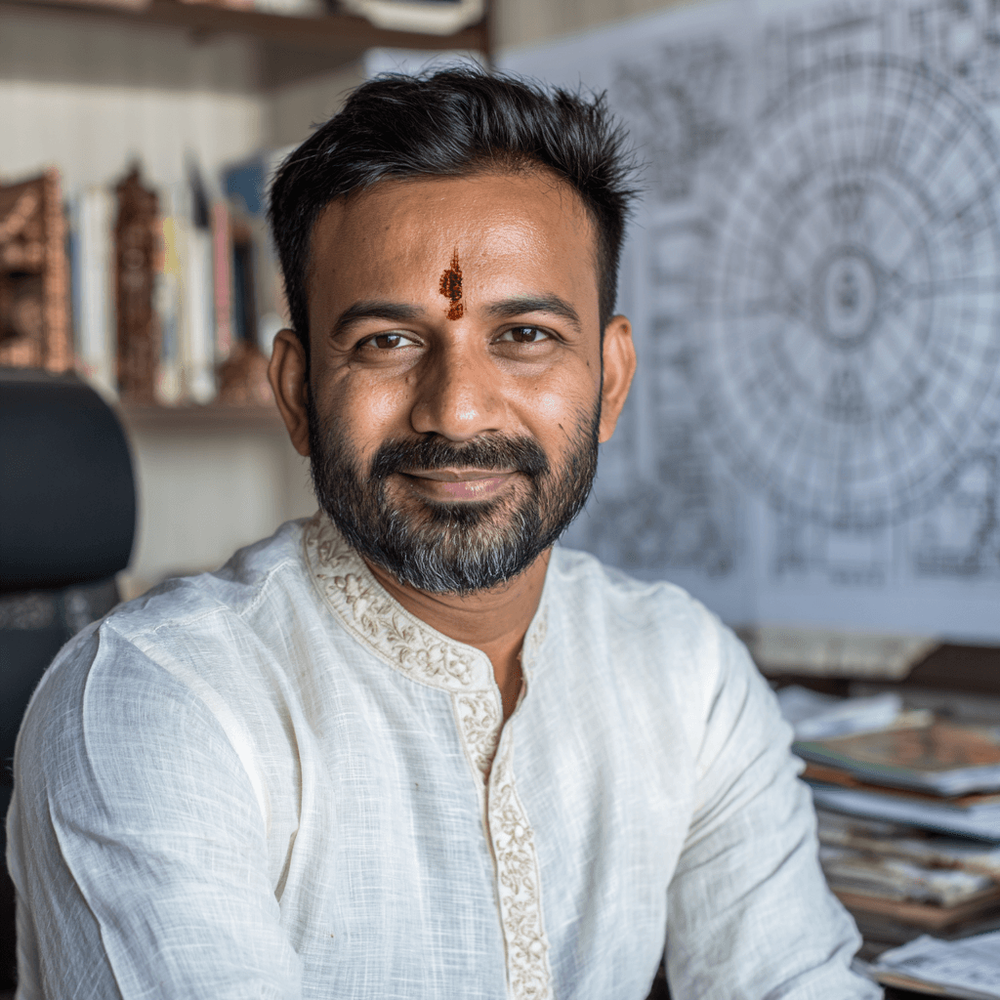
Shri Ankit Bansal
Vedic Astrologer · Numerology and Vastu Expert, 15+ Years
Shri Ankit Bansal is a renowned numerology and Vastu expert with over 15 years of specialized experience in these ancient Indian sciences. His extensive practice encompasses thousands of consultations in numerological analysis, name corrections, business numerology, and comprehensive Vastu assessments for residential and commercial properties. As a contributing writer for AstroSight, Shri Bansal combines his deep understanding of numerical vibrations with practical Vastu principles to provide holistic solutions that harmonize living and working spaces with cosmic energies. His expertise spans personal numerology charts, business name analysis, property Vastu audits, and remedial measures that blend traditional wisdom with modern lifestyle requirements. Through his methodical approach and proven track record, Shri Bansal has established himself as a trusted authority in helping clients optimize their environment and numerical influences for enhanced prosperity, health, and overall well-being.