Punjabi Baby Names: Sikh & Hindu Tradition
As of 2026, Punjabi is spoken by over 125 million people worldwide, with major communities in Punjab (India), Pakistan, the United Kingdom, Canada, the United States, and Australia. The Punjabi community is the largest South Asian diaspora in Canada and the UK, and Punjabi naming traditions are ther
As of 2026, Punjabi is spoken by over 125 million people worldwide, with major communities in Punjab (India), Pakistan, the United Kingdom, Canada, the United States, and Australia. The Punjabi community is the largest South Asian diaspora in Canada and the UK, and Punjabi naming traditions are therefore among the most globally visible of all Indian regional traditions. Punjab's naming heritage is shaped by two distinct and equally powerful traditions: the Sikh naming system rooted in the Guru Granth Sahib, and the Hindu Punjabi naming system rooted in Vedic and Puranic traditions. Each tradition has its own principles, ceremonies, and naming vocabulary. Use the birth chart calculator to see how this applies to your personal Vedic chart.
Reviewed by Shri Ankit Bansal, Vedic Astrologer & Founder of AstroSight, 2026
---
Sikh Naming Ceremony (Naam Karan) Explained
> Quick Answer: The Sikh naming ceremony (Naam Karan) is performed at the Gurdwara. The Guru Granth Sahib is opened at random, and the first letter of the first word of the hymn on that page becomes the baby's name letter. The family then chooses a name beginning with that letter from the Guru Granth Sahib or from Gurmukhi tradition. Gender is indicated by Singh (male) or Kaur (female) after the name.
The Naam Karan ceremony (naam = name, karan = creating/making) is typically performed 40 days after birth for both boys and girls, though the exact timing varies by family. The ceremony occurs at the Gurdwara, in the presence of the sangat (congregation).
The ceremony's steps:
1. The family takes amrit (holy water, prepared with Kirpan stirring) and the new baby is given a drop of amrit on the tongue. 2. Ardas (the Sikh prayer) is offered. 3. The Granthi (priest who reads the Guru Granth Sahib) performs Hukamnama — opening the Guru Granth Sahib at random to a page. 4. The first letter of the first word of the first complete line on the left-hand page becomes the name letter (the Hukam letter). 5. The family selects a name beginning with that letter. 6. The name is announced as: Name] Singh (for a boy) or Name] Kaur (for a girl).
The key feature of Sikh naming: The name itself is gender-neutral. Harpreet Singh is male; Harpreet Kaur is female. The same base name — Harpreet, Gurpreet, Mandeep, Simran — is shared by men and women. The gender marker is not in the name but in the title Singh or Kaur.
This contrasts with Hindu naming, where names typically have gender (though some are shared), and with most Western naming traditions. The Sikh system was established by Guru Gobind Singh (the 10th Guru) in 1699 at the Baisakhi Amrit Sanchar — the founding of the Khalsa.
Use the birth chart calculator to understand the astrological context of the birth. Use the moon sign calculator for the rashi-based consideration of complementary names.
Sikh Baby Names: Gender-Neutral Names from Gurbani
The following names are drawn from or inspired by the Guru Granth Sahib. They are all gender-neutral — used with Singh (male) or Kaur (female) as the gender identifier.
Name | Meaning | Gurbani Root
- Harpreet — God's love (Har = Waheguru/God, Preet = love) — Har-naam usage in Gurbani
- Gurpreet — Guru's love; love for the Guru — Gur = Guru, Preet = love
- Mandeep — Lamp of the mind (Man = mind, Deep = lamp) — Mind-illumination theme
- Jaspreet — Love of fame/beauty (Jas = fame, Preet = love) — Jas-naam (God's fame)
- Amarjit — Immortal victory (Amar = immortal, Jit = victory) — Amar-naam in Gurbani
- Navneet — Always new; fresh butter (Nav = always new, Neet = butter/ethics) — Newness theme
- Satnam — True name — Waheguru's name — Satnam Waheguru mantra
- Ramandeep — Lamp of Ram's love — Ram-naam in Gurbani
- Simranpreet — Love through meditation (Simran = remembrance/meditation) — Simran practice
- Gurjot — Guru's light (Gur = Guru, Jot = light) — Jot (light) theme
- Manjot — Light of the mind (Man = mind, Jot = light) — Mind-light theme
- Balpreet — Love of strength — Bal = strength
- Prabhjot — God's light (Prabh = God, Jot = light) — Prabh-naam theme
- Harmeet — God's friend (Har = God, Meet = friend) — Har-naam theme
- Diljit — Winner of hearts (Dil = heart, Jit = winner) — Heart-victory theme
- Simran — Remembrance; meditation on God's name — Core Sikh spiritual practice
- Gurkirat — Praising the Guru; singing the Guru's praises — Kirtan (devotional singing)
- Amritpal — Protector of the nectar (Amrit = nectar/holy water, Pal = protector) — Amrit ceremony
- Karanveer — Brave one of mercy (Karan = mercy/ear, Veer = brave) — Warrior-devotion theme
- Waheguru — The wonderful Guru — the Sikh name for God (used as a rare devotional name) — The Sikh name of God
Common Sikh Boy Names with Meanings
> Quick Answer: Sikh boy names use Singh as a mandatory surname/title. The given name is gender-neutral but boys are predominantly given names with warrior-devotional qualities: Harjinder, Sukhwinder, Gurwinder, Navdeep, Maninder. The -inder suffix (from Indra — king of gods) is extremely common in Sikh male naming.
Name | Meaning
- Harjinder — Indra of God's love (Har + Jinder/Indra)
- Sukhwinder — Indra of peace (Sukh = peace, Winder = Indra/victory)
- Gurwinder — Indra of the Guru
- Navdeep — New lamp; the fresh light
- Maninder — Indra of the mind; master of the mind
- Balwinder — Indra of strength; powerful Indra
- Kulwinder — Indra of the kul (family lineage)
- Avtar — Incarnation; avatar of the divine
- Darshan — Divine sight; auspicious viewing
- Gurnam — Name of the Guru
- Iqbal — Prosperity; good fortune (Punjabi-Urdu crossover name)
- Jagdeep — Lamp of the world
- Kuldeep — Lamp of the family lineage
- Narvinder — Indra of humans; foremost human
- Surinder — Indra of the sun; the greatest Sura
Common Sikh Girl Names with Meanings
> Quick Answer: Sikh girl names use Kaur as the mandatory title. The given name is the same gender-neutral pool as boys, but for girls names with soft, devotional qualities — Simran, Gurpreet, Manpreet, Jaspreet — are particularly popular. In the diaspora, names like Jasmine (fully adopted into Punjabi culture) are also used.
Name | Meaning
- Simran — Remembrance of God; meditation
- Gurpreet — Love for the Guru
- Manpreet — Love of the mind; the mind's beloved
- Jaspreet — Love of the Guru's fame
- Harpreet — Love of God (Har-naam)
- Navneet — Always fresh; eternally new
- Sukhjit — Peaceful victory; winning through peace
- Parminder — Supreme Indra; the greatest
- Gurleen — Absorbed in the Guru
- Satinderjit — Victory of Indra of Truth
- Jasmine — The jasmine flower — fully adopted into Punjabi naming
- Kiranjot — Ray of divine light
- Harjit — Victory of God
- Navjot — New light; fresh divine light
- Dilpreet — Love of the heart
Hindu Punjabi Baby Boy Names
> Quick Answer: Hindu Punjabi naming follows standard Sanskrit-Vedic principles with Punjabi phonological characteristics. Common Punjabi Hindu boy names include Vikram, Rajiv, Ajay, Amit, Sanjay, Rahul, Rohit, Manish. Many Hindi film actors are from Punjabi Hindu families, giving their names wide cultural visibility: Sunny, Bobby, Rocky are popular Punjabi informal names.
Hindu Punjabi families follow the naamkaran samskara (Vedic naming ceremony) based on the birth nakshatra. The Jyotishi determines the auspicious syllable and the family selects a Sanskrit-origin name. Surnames in Hindu Punjab families often indicate caste/subcaste: Sharma (Brahmin), Khanna (Khatri), Bhatia (Khatri), Arora (Khatri), Malhotra (Khatri), Kapoor (Khatri/Arora). The Khatri community (warrior-merchant class) is particularly prominent in Hindu Punjabi culture and in Bollywood.
Name | Meaning
- Vikram — Valor; courage; step — after Vikramaditya
- Rajiv — Lotus; striped — also Rajiv Gandhi's name
- Ajay — Unconquered; invincible (A + Jay = not + defeated)
- Amit — Infinite; boundless; immeasurable
- Sanjay — Victorious in every way; thoroughly victorious
- Rahul — Able; efficient — also the Buddha's son's name
- Rohit — Red; the sun
- Manish — Lord of the mind (Manas + Ish = mind + lord)
- Arjun — White; bright; Mahabharata hero
- Anil — Wind; air
- Sunil — Very blue; intensely blue
- Deepak — Lamp; the enlightening one
- Rajesh — Lord of kings
- Mohit — Enchanted; one who is attracted
- Sunny — Popular Punjabi informal name — now formal
- Vikas — Development; progress
- Nitin — Master of the right path
- Kapil — Tawny-colored; sage Kapila
- Ashok — Without sorrow — the great Mauryan emperor
- Gaurav — Pride; honor; dignity
- Tarun — Young; tender
- Sachin — Pure; consciousness
Hindu Punjabi Baby Girl Names
> Quick Answer: Hindu Punjabi girl names follow standard Sanskrit naming with Punjabi cultural flavor. Simran is shared between Sikh and Hindu Punjabi girls (it means meditation and was widely used before the film Dilwale Dulhania Le Jayenge made it even more popular in 1995). Other favorites: Neha, Priya, Pooja, Anita, Reena, Seema, Sonia, Ritu.
Name | Meaning
- Simran — Remembrance; meditation — used by both Sikh and Hindu Punjabis
- Priya — Beloved; dear
- Pooja — Worship; ritual
- Neha — Affection; love; rain
- Anita — Grace; leader; without end
- Reena — Song; melody; pure
- Seema — Boundary; the borderline
- Sonia — Golden; wisdom (Sanskrit + English crossover)
- Kavita — Poem; poetic composition
- Ritu — Season; the natural order of seasons
- Kiran — Ray of light
- Mona — Alone; thoughtful; silent
- Pinky — Pink-colored — informal but extremely common in Punjab
- Meenu — Fish; also a pet name for Meenakshi
- Sunita — Well-behaved; of good conduct
- Rekha — Line; groove; drawn
- Poonam — Full Moon
- Sapna — Dream
- Vandana — Worship; salutation
- Kamya — Desirable; lovable
- Supriya — Very dear; most beloved
- Richa — Vedic hymn; mantra
How Sikh Names Differ from Hindu Punjabi Names
> Quick Answer: Sikh names are gender-neutral (gender marked only by Singh/Kaur), drawn exclusively from Gurbani vocabulary, and often use Punjabi-language components (Har, Gur, Man, Pal, Preet, Jot, Deep, Jit, Veer). Hindu Punjabi names are gendered, drawn from Sanskrit-Vedic vocabulary, and follow the nakshatra-syllable naming tradition. Both communities share Punjab's culture but have distinct naming systems.
The key differences are systematic:
Feature | Sikh Naming | Hindu Punjabi Naming
- Gender in name — Name is neutral; Singh/Kaur marks gender — Name itself is gendered
- Name source — Guru Granth Sahib; Gurbani — Sanskrit Vedic texts; Puranas
- Ceremony — Naam Karan at Gurdwara; Hukamnama — Naamkaran samskara with Jyotishi
- Letter determination — Random opening of Guru Granth Sahib — Birth nakshatra's pada syllable
- Language of name — Punjabi (Gurmukhi script origin) — Sanskrit
- Surname system — All Sikhs: Singh/Kaur — Caste-surname (Sharma, Khanna, Arora)
- Deity references — Waheguru, Har, Gur (no specific Hindu deities) — Vishnu, Shiva, Rama, Krishna
- Mixed-gender use — Harpreet Singh and Harpreet Kaur both exist — Rahul is male; Ritu is female
Shared names: Simran is used by both Sikh and Hindu Punjabis. Kiran, Anil, Priya, Pooja, and many other Sanskrit names are used in both communities without strong religious coloring.
The Singh/Kaur system: Guru Gobind Singh established the Singh (lion) and Kaur (princess/lioness) titles in 1699 to eliminate caste distinctions — by removing caste surnames and replacing them with Singh/Kaur, he made all Sikhs equal in name. This was a revolutionary social act: a Brahmin Sikh and a Dalit Sikh both became "Singh." The naming system itself carries the Sikh principle of equality.
Numbers Reveal Patterns — Charts Complete the Picture
Combine numerology insights with your career birth chart analysis for the most accurate guidance on career path, timing, and financial decisions.
Get Your Wealth ReportPersonalized Report
Wealth & Lifestyle Report
Your numbers and your chart are more connected than you think — combined timing report
- Personalized analysis based on YOUR exact birth chart
- Expert-prepared by Dr. Meenakshi Sharma
- Delivered as PDF within 24-48 hours
- Unlimited follow-up clarifications
By Dr. Meenakshi Sharma · Delivered in 24-48 hours
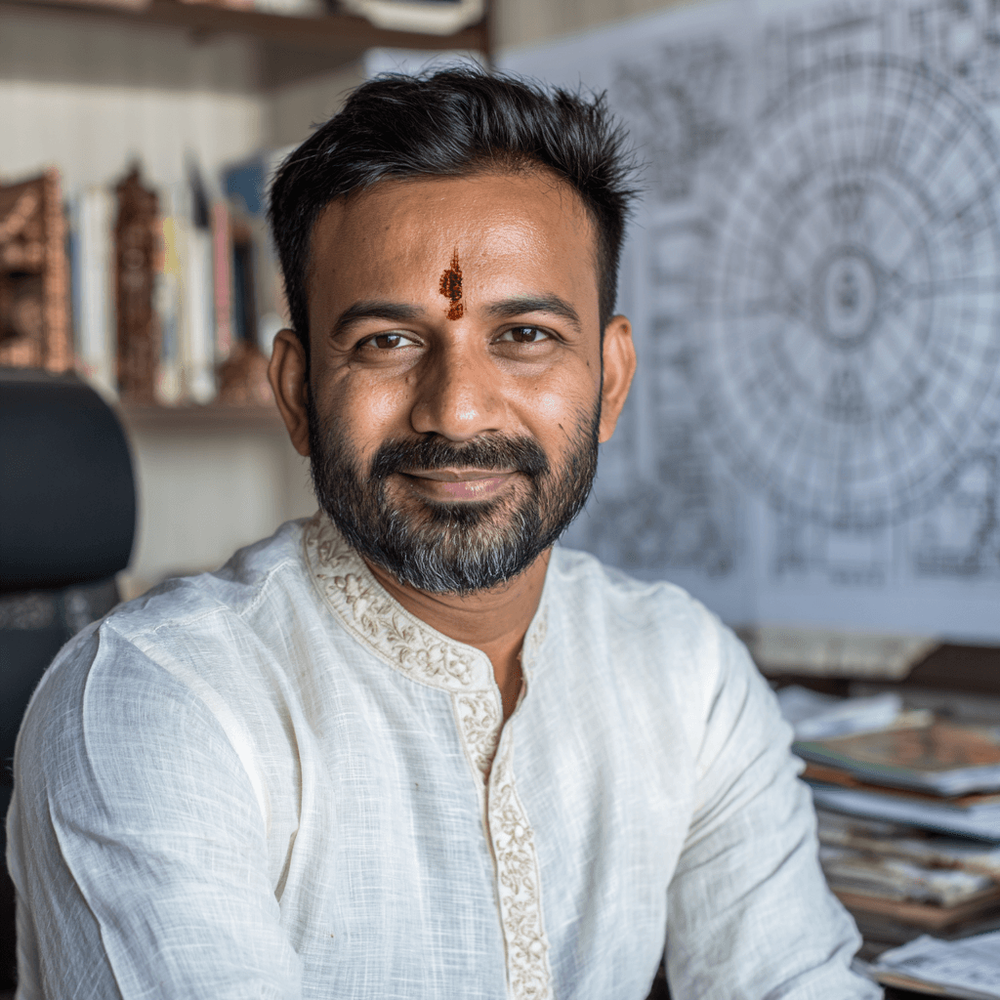
Shri Ankit Bansal
Vedic Astrologer · Numerology and Vastu Expert, 15+ Years
Shri Ankit Bansal is a renowned numerology and Vastu expert with over 15 years of specialized experience in these ancient Indian sciences. His extensive practice encompasses thousands of consultations in numerological analysis, name corrections, business numerology, and comprehensive Vastu assessments for residential and commercial properties. As a contributing writer for AstroSight, Shri Bansal combines his deep understanding of numerical vibrations with practical Vastu principles to provide holistic solutions that harmonize living and working spaces with cosmic energies. His expertise spans personal numerology charts, business name analysis, property Vastu audits, and remedial measures that blend traditional wisdom with modern lifestyle requirements. Through his methodical approach and proven track record, Shri Bansal has established himself as a trusted authority in helping clients optimize their environment and numerical influences for enhanced prosperity, health, and overall well-being.