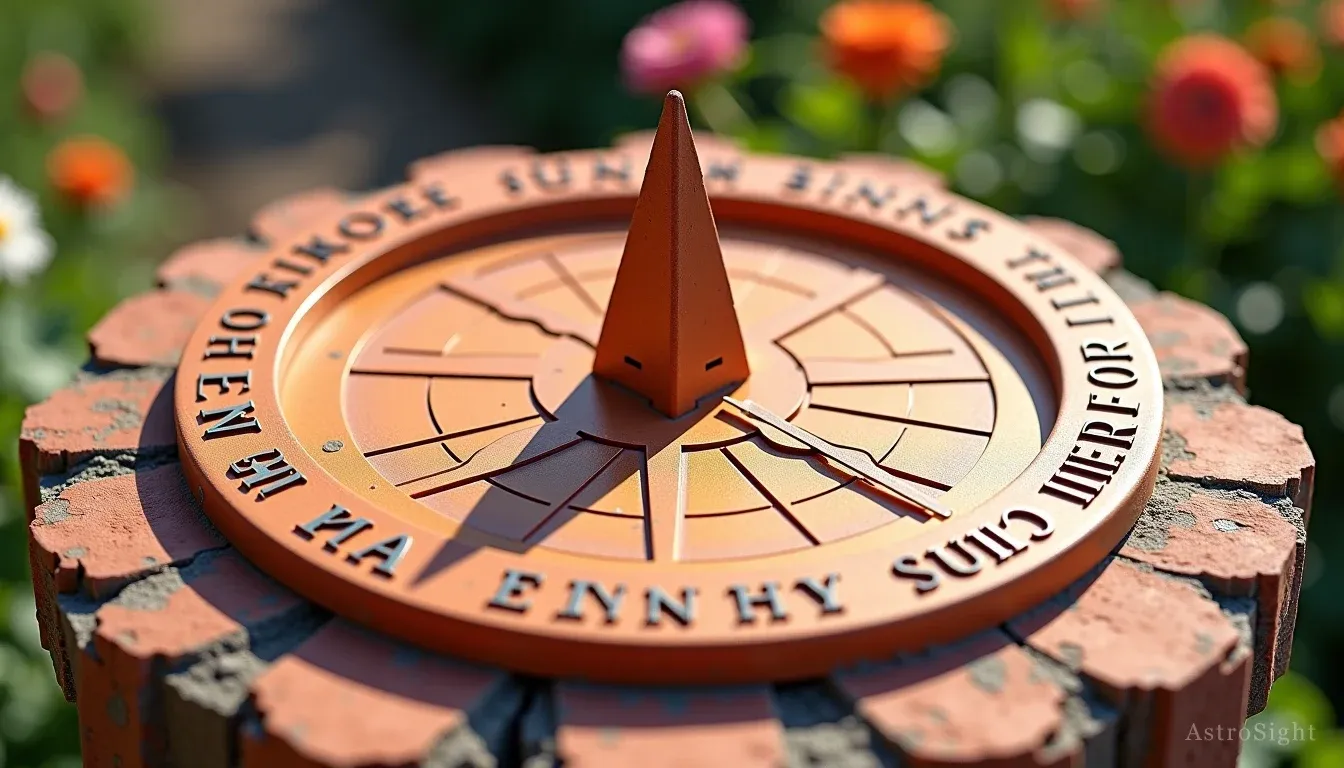
Aaj Ka Panchang: Complete Guide to Daily Panchang
Reviewed by Dr. Meenakshi Sharma, M.A. Sanskrit & Vedic Studies, Varanasi — as of May 2026.
Reviewed by Dr. Meenakshi Sharma, M.A. Sanskrit & Vedic Studies, Varanasi — as of May 2026.
Aaj Ka Panchang — "today's almanac" — is the daily Hindu calendar entry that every household in India has consulted for thousands of years before beginning any important activity. As of 2026, the Panchang remains the foundation of Vedic time-keeping, used by priests, astrologers, farmers, and families alike to identify auspicious windows, avoid inauspicious periods, and align daily life with cosmic cycles. The word Panchang comes from Sanskrit: pancha (five) + anga (limb). These five limbs encode the complete astronomical state of a given day. Check the live reading at /panchang.
> Answer capsule: Aaj Ka Panchang is the daily Hindu almanac entry comprising five astronomical elements — Tithi (lunar day), Vara (weekday), Nakshatra (Moon's asterism), Yoga (Sun-Moon combination), and Karana (half-day unit). Together they define the quality and suitability of a day for any planned activity.
The Historical Roots of Panchang
The Panchang system is one of the oldest documented astronomical frameworks in the world. The Vedanga Jyotisha, composed around 1400 BCE, is the earliest surviving Vedic text dealing systematically with time-keeping for ritual purposes. It establishes the relationship between lunar and solar cycles that the Panchang still uses today. Later, the Surya Siddhanta (circa 400 CE) refined the mathematical foundations, providing precise formulae for computing Tithi, Nakshatra, and planetary positions. The Brihat Samhita of Varahamihira (505–587 CE) extended Panchang applications into everyday decisions — travel, agriculture, marriage, and medical treatment.
> Answer capsule: The Panchang tradition traces to the Vedanga Jyotisha (1400 BCE) and was mathematically formalized in the Surya Siddhanta (400 CE). Varahamihira's Brihat Samhita systematized its application to daily life across agriculture, medicine, and social events.
The First Limb: Tithi (Lunar Day)
Tithi is the angular distance between the Sun and Moon, measured in 12-degree arcs. Each full 360-degree cycle contains 30 Tithis — 15 in the waxing fortnight (Shukla Paksha) and 15 in the waning fortnight (Krishna Paksha). The 15th Tithi of Shukla Paksha is Purnima (full moon); the 15th of Krishna Paksha is Amavasya (new moon).
Each Tithi carries a distinct quality. Prathama (1st) is auspicious for new beginnings. Panchami (5th) favors medical treatments. Saptami (7th) supports travel. Ekadashi (11th) is sacred for fasting and devotion. Chaturdashi (14th) is inauspicious for most new ventures. The Surya Siddhanta defines Tithi as the fundamental unit of Vedic time, and no ritual calendar bypasses it.
> Answer capsule: Tithi is one-thirtieth of a lunar month, defined by the Sun-Moon angular gap of 12 degrees. The 30 Tithis each carry specific qualities — some favor new beginnings, some favor devotion, and some are avoided for major undertakings. Tithi changes throughout the day, sometimes twice.
The Second Limb: Vara (Weekday)
Vara is the day of the week, each ruled by a planet. Ravivara (Sunday) is ruled by Surya (Sun); Somavara (Monday) by Chandra (Moon); Mangalavara (Tuesday) by Mangala (Mars); Budhavara (Wednesday) by Budha (Mercury); Guruvara (Thursday) by Guru (Jupiter); Shukravara (Friday) by Shukra (Venus); Shanivara (Saturday) by Shani (Saturn).
The planetary ruler of the day colors all activities undertaken on it. Thursday (Guru's day) is ideal for beginning education, initiating contracts, and spiritual practices. Friday (Venus's day) favors arts, relationships, and luxury purchases. Tuesday (Mars's day) is strong for physical effort but is avoided for major new starts due to Mars's aggressive energy. The Vara is the only limb of the Panchang that is fixed — it never changes mid-day.
> Answer capsule: Vara is the weekday, each governed by one of the seven classical planets. The planetary ruler of the day imprints its qualities on all activities. Thursday (Jupiter) favors learning and contracts; Friday (Venus) favors relationships; Saturday (Saturn) favors slow, deliberate work.
The Third Limb: Nakshatra (Lunar Mansion)
The Nakshatra is the asterism (star cluster) in which the Moon is located at any given time. The ecliptic is divided into 27 Nakshatras of 13 degrees 20 minutes each. The Moon takes approximately one day to traverse each Nakshatra, completing the full cycle in 27.3 days.
Each Nakshatra has a ruling planet, a presiding deity, a symbol, and a set of activities it supports or inhibits. Ashvini (ruled by Ketu, deity Ashvini Kumaras) is excellent for medical treatments and quick actions. Rohini (ruled by Moon, deity Brahma) is one of the most fertile and auspicious Nakshatras — favored for all auspicious ceremonies. Mula (ruled by Ketu, deity Nirrti) is inauspicious for most new work. Bharani (ruled by Venus) supports bold ventures. Pushya (ruled by Saturn) is universally auspicious — considered the best Nakshatra for beginning almost any important activity.
> Answer capsule: Nakshatra is the asterism occupied by the Moon. Of the 27 Nakshatras, Pushya is the most universally auspicious, Rohini the most fertile, and Mula among the most inauspicious for new starts. The Moon's Nakshatra shapes the emotional and practical quality of the entire day.
The Fourth Limb: Yoga (Sun-Moon Combination)
Yoga in the Panchang is not a posture — it is an astronomical calculation. It is derived by adding the longitude of the Sun to the longitude of the Moon and dividing the result into 27 equal arcs of 13 degrees 20 minutes each. This produces 27 Yogas, from Vishkambha to Vaidhriti.
Nine Yogas are considered inauspicious (the Ashubha Yogas): Vishkambha, Atiganda, Shoola, Ganda, Vyaghata, Vajra, Vyatipata, Parigha, and Vaidhriti. The remaining 18 are auspicious to varying degrees, with Siddha, Shiva, Siddhi, and Amrit being the most favorable. Amrit Yoga is especially powerful — new projects, surgeries, and ceremonies commenced in Amrit Yoga have the full cosmic momentum behind them.
> Answer capsule: Panchang Yoga is calculated by adding the Sun's and Moon's longitudes and dividing into 27 arcs. Of the 27 Yogas, 9 are inauspicious — including Vishkambha and Vaidhriti — and 18 are auspicious, with Amrit and Siddha Yoga being the most favorable for new starts.
The Fifth Limb: Karana (Half-Day Unit)
Karana is half a Tithi — each Tithi contains two Karanas, making the Karana the smallest standard unit in the Panchang. There are 11 Karanas in total: 4 fixed (Shakuni, Chatushpada, Naga, Kimstughna) and 7 moveable (Bava, Balava, Kaulava, Taitila, Garaja, Vanija, Vishti). The 7 moveable Karanas repeat in a cycle throughout the lunar month.
Vishti Karana (also called Bhadra) is the most inauspicious — it is strictly avoided for initiating travel, marriage, new business, or any auspicious ceremony. Bava Karana is excellent for beginning auspicious work. Vanija Karana is especially favorable for trade and commerce — its name means "merchant." Knowing the Karana active at the time of your planned activity allows for precise timing within a given day.
> Answer capsule: Karana is half a Tithi — approximately 6 hours. Of the 11 Karanas, Vishti (Bhadra) is strictly avoided for new starts. Bava is the most auspicious for ceremonies, and Vanija is ideal for commercial activity. The Karana gives Panchang its finest time-resolution.
Pancha Shuddhi: The Five Pure Elements for a Perfect Day
Classical Panchang texts describe Pancha Shuddhi — the ideal state where all five limbs of the Panchang are simultaneously pure and auspicious. When Tithi, Vara, Nakshatra, Yoga, and Karana are all favorable at the same moment, that window is considered supremely auspicious. Such days are rare and are given names in regional calendars — Sarvottama Muhurta or "the best of all moments."
The Surya Siddhanta lays out the mathematical conditions for Pancha Shuddhi. In practice, astrologers look for days where at least three of the five limbs are clean and no inauspicious element is dominant. Full Pancha Shuddhi moments are reserved for rare, life-defining events — laying a temple foundation, a royal coronation, or an important diplomatic agreement.
> Answer capsule: Pancha Shuddhi is the state where all five Panchang limbs are simultaneously auspicious. It is extremely rare and marks the most powerful moments for life-defining ceremonies. Even three clean limbs out of five constitute a good muhurta for major undertakings.
How to Read Aaj Ka Panchang Step by Step
Reading the Panchang for today follows a clear sequence. First, note the Hindu date: the month (masa), the fortnight (paksha — Shukla or Krishna), and the Tithi number. Second, confirm the weekday (Vara) and its planetary ruler. Third, look up the Nakshatra the Moon occupies — this changes roughly every 24 hours. Fourth, find the Yoga currently active. Fifth, note which Karana is running and when it transitions to the next.
Check whether Rahu Kalam, Yamaganda Kalam, or Gulika Kalam falls during your planned activity — these are supplementary inauspicious periods within the day derived from planetary calculations. Finally, identify the Shubha Muhurta — the specifically auspicious windows within the day. The live Panchang at /panchang calculates all of these elements for your city automatically.
> Answer capsule: To read today's Panchang: (1) note the Tithi, (2) confirm the Vara, (3) find the Moon's Nakshatra, (4) check the Yoga, (5) identify the Karana. Then cross-reference with inauspicious periods like Rahu Kalam before choosing your activity window.
Why Panchang Is Consulted Before Auspicious Activities
The Panchang is not superstition — it is a system for aligning human activity with natural astronomical rhythms. The Moon's position affects ocean tides, plant growth cycles, and human biological rhythms. The Sun's daily arc governs light, temperature, and energy levels. By reading the Panchang, a person synchronizes their decisions with these cycles rather than working against them.
Vedic tradition holds that the quality of a beginning determines the quality of what follows — Adau nishchitam kartavyam (first, fix the auspicious moment). A marriage begun on Vishti Karana with Bhadra active and the Moon in Mula Nakshatra carries the signature of difficulty from its very start. A business launched during Amrit Yoga on a Thursday with the Moon in Pushya Nakshatra carries the opposite signature. This is the practical logic of Panchang consultation.
> Answer capsule: Panchang consultation is based on the Vedic principle that a beginning's quality shapes what follows. Astronomical cycles affect physical reality — tides, plant growth, human energy — and the Panchang maps these cycles so that important activities can be timed to ride favorable cosmic currents.
Regional Variations in Panchang Systems
India has multiple regional Panchang traditions, each with slight variations. The Vishva Panchang follows the Lahiri ayanamsha (sidereal zodiac). South Indian Panchangs (Tamil, Telugu, Kannada) follow the Drik system — observational astronomy. Maharashtra follows the Chitrapaksha system. Rajasthan and North India use the Vakya Panchang in some traditions.
These systems differ primarily in how they calculate the ayanamsha (the precessional offset between the tropical and sidereal zodiacs) and in minor tithi calculation conventions. The core five-limb structure remains identical across all regional traditions. For digital Panchangs, Drik calculations are the standard because they align with modern ephemeris data.
> Answer capsule: India's regional Panchang traditions — Vishva, Drik, Chitrapaksha, Vakya — use the same five-limb structure but differ in ayanamsha calculation and regional conventions. Drik Panchang, based on observational astronomy, is the standard for modern digital tools including AstroSight's calculator.
Using Panchang in Daily Life: Practical Applications
The Panchang applies to every scale of decision, from the personal to the civic. Before a job interview, check that the Vara is auspicious for your purpose (Thursday for career advancement, Wednesday for communication-intensive roles). Before a medical procedure, avoid Vishti Karana and the inauspicious Nakshatras (Mula, Jyeshtha, Ardra for sensitive surgeries). Before travel, favor Vara ruled by benefic planets and avoid Rahu Kalam at departure time.
For business decisions, Vanija Karana and an auspicious Yoga during a benefic Vara create the strongest window for signing contracts or launching products. For spiritual practices, the pre-dawn hours coinciding with auspicious Nakshatra (Pushya, Ashvini, Rohini) amplify the effect of meditation and mantra recitation significantly.
> Answer capsule: Panchang guides specific decisions: Thursday and favorable Nakshatras for career moves, Vanija Karana for commerce, avoidance of Vishti Karana for medical procedures and travel. Each of the five limbs contributes a specific recommendation layer that together define the optimal window for each activity type.
---
Frequently Asked Questions About Aaj Ka Panchang
1. What does "Aaj Ka Panchang" mean in English? Aaj Ka Panchang translates to "Today's Almanac" or "Today's Hindu Calendar." Aaj means "today" in Hindi, and Panchang means the five-limbed Vedic almanac.
2. How often does the Panchang change during a day? The Tithi and Karana can change mid-day. The Nakshatra typically changes once per day. The Vara is fixed for the entire day. The Yoga changes roughly once per day. This means the Panchang at 6 AM can be significantly different from the Panchang at 6 PM.
3. Which element of the Panchang is most important? The Tithi is considered the most fundamental limb — it establishes the basic lunar quality of the day. However, the Nakshatra is equally important for activity-specific timing, especially for ceremonies.
4. Can I use Panchang if I don't know astrology? Yes. The Panchang simply states which activities are favored or avoided for each element. No astrological calculation knowledge is required — just the ability to match your planned activity to the day's Panchang conditions.
5. Is Panchang the same across all of India? The five-limb structure is universal across India. Regional differences exist in calculation methods (Drik vs. Vakya), ayanamsha choice, and local festival dates, but the core framework is identical.
6. What is the difference between Panchang and Kundali? The Panchang is a daily almanac — it applies to everyone equally for a given day and location. The Kundali (birth chart) is a personal horoscope unique to each person's birth time and place. They serve different but complementary purposes.
7. Why does Panchang vary by city? Panchang timings depend on local sunrise, sunset, and moonrise times, which vary by geographic location. A Rahu Kalam that begins at 7:30 AM in Chennai begins at a different time in Delhi or Mumbai. The five limbs themselves (Tithi, Nakshatra, Yoga) are location-independent, but their start and end times within the day are local.
8. What is a Tithi Kshaya (lost Tithi)? When the Sun moves from one sign to another in a single Tithi, that Tithi may be "skipped" in the calendar — it is called Tithi Kshaya (lost Tithi). This is a known astronomical occurrence and is accounted for in both Drik and traditional Panchang systems.
9. Which Tithi is best for starting a new business? Prathama (1st), Tritiya (3rd), Panchami (5th), Saptami (7th), Dashami (10th), and Dwadashi (12th) Tithis are generally favored for new beginnings. Chaturdashi (14th), Ashtami (8th), and Amavasya are avoided for new commercial ventures.
10. Where can I get today's Panchang for my city? AstroSight's Panchang tool at /panchang calculates the complete five-limb Panchang for any Indian city, updated daily with Drik (observational) calculations.
Get Your Personalized Career Analysis
Stop reading generic advice. Get a complete Vedic astrology analysis of your career path, financial timing, and life direction based on your exact birth chart.
Get Your Career Report
Dr. Meenakshi Sharma
PhD in Vedic Astrology, 20+ Years Experience
Dr. Meenakshi Sharma is a distinguished Vedic astrologer with a PhD in Vedic Astrology and over 20 years of professional experience in the ancient science of Jyotisha. Her extensive practice encompasses thousands of chart readings, predictive analyses, and remedial consultations, making her uniquely qualified to bridge traditional Vedic wisdom with contemporary applications. As a contributing writer for AstroSight, Dr. Sharma specializes in natal chart analysis, predictive astrology, and Vedic remedial measures, sharing her deep knowledge through insightful articles that make complex astrological concepts accessible to practitioners at all levels. Her approach combines rigorous academic training with ethical consultation standards, empowering clients through education and practical guidance while maintaining authentic adherence to classical Vedic principles.