Navaratri 2025 Remedies: 9 Nights of Divine Power
Discover the most powerful period for goddess worship and planetary remedies. Each of Navaratri's nine nights corresponds to a specific goddess form and planet, offering targeted remedial opportunities through proper worship, mantras, and fasting practices.
What Makes Navaratri the Most Powerful Time for Remedies?
Navaratri—the nine sacred nights—represents the pinnacle of goddess worship in the Vedic tradition. During this period, divine feminine energy (Shakti) becomes extraordinarily accessible, making it the most powerful window for remedies related to protection, courage, prosperity, and spiritual transformation. In my consultation practice, I consistently observe that clients who properly utilize Navaratri's remedial power experience more pronounced shifts than those who perform the same practices at other times.
The Markandeya Purana, which contains the revered Devi Mahatmyam, establishes Navaratri as the goddess's primary worship period. The text describes how Mahishasura-mardini (the goddess who slays the buffalo demon) manifested her full power during these nine nights, making this timing cosmically significant for overcoming obstacles, defeating negativity, and invoking divine protection.
What makes Navaratri particularly effective for astrological remedies is its correspondence with the Navagrahas (nine planets). Each of the nine nights connects to a specific goddess form (Navadurga) and planetary energy, allowing practitioners to address specific chart afflictions through targeted worship. This systematic approach to planetary propitiation through goddess devotion has been practiced for millennia.
Sharad Navaratri 2025 Dates
Sharad Navaratri 2025 begins Monday, September 22 and concludes Tuesday, September 30, 2025. Vijayadashami (Dussehra) falls on Wednesday, October 1, 2025. Key dates include Ghatasthapana on Day 1 for kalash installation, Durga Ashtami on Day 8 (September 29) for major worship, and Maha Navami on Day 9 (September 30) for Kanya Pujan.
Other Navaratris in 2025 include Chaitra Navaratri (April 1-9), Ashada Gupta Navaratri (June 29-July 7), and Magha Gupta Navaratri (January 21-29). However, Sharad Navaratri carries the greatest remedial potency as it occurs during the most spiritually receptive season and represents Goddess Durga's primary festival period.
How Do the Nine Nights Correspond to Planets?
The correlation between Navaratri's nine nights and the Navagrahas represents one of the most elegant synthesis points in Vedic tradition. According to texts like the Shakta Pramoda and various Tantric sources, each Navadurga form embodies the energy of a specific planet while simultaneously offering remedies for its afflictions. Understanding these correspondences allows practitioners to focus their worship strategically.
Day 1: Shailputri and Moon (Chandra)
Shailputri—the Daughter of the Mountains—governs the Moon's energy. Her worship addresses mental peace, emotional stability, and psychological well-being. Those experiencing Moon afflictions in their charts (Moon conjunct Rahu/Ketu, debilitated Moon, or weak Moon in the 6th/8th/12th houses) should intensify their Day 1 observance. The prescribed color is yellow, and offerings include ghee, white flowers, and milk.
Day 2: Brahmacharini and Mars (Mangal)
Brahmacharini—the Celibate One who performed severe austerities—corresponds to Mars. Her worship builds courage, vitality, and determination while pacifying Manglik dosha effects. Mars afflictions (Manglik dosha, Mars in 8th house, debilitated Mars) receive special attention on this day. The prescribed color is green, and offerings include sugar and red sweets.
Day 3: Chandraghanta and Venus (Shukra)
Chandraghanta—bearing a half-moon on her forehead—resonates with Venus energy. Her worship addresses love, marriage, beauty, and artistic abilities. Venus afflictions (Venus combust, debilitated Venus, Venus with Rahu/Ketu) receive special attention. The prescribed color is grey, and offerings include milk sweets and kheer.
Day 4: Kushmanda and Sun (Surya)
Kushmanda—the Creator of the cosmic egg who illuminates the universe—corresponds to the Sun. Her worship addresses authority, health, paternal relationships, and career success. Sun afflictions (weak Sun, Sun in 6th/8th/12th, Pitru dosha) receive special attention. The prescribed color is orange, and the traditional offering is malpua (sweet pancake).
Day 5: Skandamata and Mercury (Budha)
Skandamata—Mother of Kartikeya—resonates with Mercury. Her worship enhances intelligence, communication, analytical abilities, and business acumen. Mercury afflictions (debilitated Mercury, Mercury with malefics, weak Mercury in Navamsa) receive special attention. The prescribed color is white, and bananas are the traditional offering.
Day 6: Katyayani and Jupiter (Guru)
Katyayani—born in Sage Katyayana's family—corresponds to Jupiter. This is among the most important days for marriage-related remedies. Her worship addresses marriage delay, prosperity, wisdom, and children. Jupiter afflictions and marriage obstacles receive special attention. The prescribed color is red, and honey is the traditional offering. The Bhagavata Purana describes the Gopis worshipping Katyayani for the blessing of marrying Krishna, establishing this form's specific power for marriage.
Day 7: Kaalratri and Saturn (Shani)
Kaalratri—the Dark Night, most fearsome of the Navadurga—resonates with Saturn. Her worship directly addresses Sade Sati effects, Saturn transits, and all Saturn-related afflictions. Those experiencing Shani Mahadasha or Sade Sati should intensify Day 7 observance. The prescribed color is blue, and jaggery is the traditional offering.
Day 8: Mahagauri and Rahu
Mahagauri—the Extremely Fair One—corresponds to Rahu. Her worship addresses Rahu's chaotic influences, including confusion, obsession, and material entanglement. Rahu afflictions (Rahu in Lagna, Rahu-Moon conjunction, Rahu Mahadasha challenges) receive special attention. The prescribed color is pink, and coconut is the traditional offering.
Day 9: Siddhidatri and Ketu
Siddhidatri—the Giver of Siddhis (spiritual powers)—resonates with Ketu. Her worship addresses spiritual advancement, liberation, and Ketu-related challenges. Ketu afflictions (Ketu in Lagna, Ketu Mahadasha, spiritual confusion) receive special attention. The prescribed color is purple, and sesame (til) is the traditional offering.
What Are the Essential Daily Practices for Navaratri?
Proper Navaratri observance requires a structured daily approach that balances devotion, discipline, and practical life requirements. The Kalika Purana and Devi Bhagavata provide the classical framework for observance, which experienced practitioners have refined over centuries.
Morning Practice (5:00-8:00 AM)
Rise early during Brahma Muhurta if possible, bathe, and approach your altar. Light the lamp (deepa) and incense (dhoop). Offer fresh flowers to the goddess, particularly those corresponding to the day's color. Chant your morning mantras—minimum 108 repetitions of "Om Dum Durgayei Namaha" plus 108 of the day-specific mantra. Meditate for 15-30 minutes, visualizing the day's goddess form. Take only permitted fasting food if observing strict vrat.
Midday Observance
Brief mantra recitation (11-21 repetitions) maintains the devotional connection. Continue with permitted fasting food if applicable. Throughout the entire nine days, strictly avoid non-vegetarian food, alcohol, onion, and garlic—these are considered tamasic and interfere with the sattvic energy being cultivated.
Evening Practice (Sunset to 9:00 PM)
The evening constitutes the main elaborate puja of each day. Light multiple lamps to create a sacred atmosphere. Recite the Durga Saptashati (or your chosen portion) with full attention. Offer bhog (food offering) to the goddess. Perform aarti with camphor, singing traditional hymns. Distribute prasad to family members.
Fasting Options by Capacity
- Nirjala (water only) — Most powerful but demanding; only for those with health capacity and prior experience
- Phalahar (fruit fast) — Most commonly observed; permits fruits, milk, sendha namak, sabudana, kuttu, singhare ka atta
- Single meal — One phalahar meal per day, preferably in evening after puja
- First and last day — Minimum observance; fast Days 1 and 9 only, maintain vegetarian diet other days
- Sattvic diet — Regular vegetarian food without onion, garlic, or alcohol for those unable to fast
Discover Your Planetary Afflictions
Understanding which planets need remedial attention in your chart helps you focus your Navaratri worship strategically. Get personalized analysis of your planetary positions and specific remedial recommendations.
Get Your JanampatriWhich Mantras Are Most Powerful During Navaratri?
Mantras form the vibrational core of Navaratri practice. The Tantric texts emphasize that during this period, Devi mantras carry amplified potency due to the goddess's heightened presence. Practitioners should establish a consistent mantra practice using these sacred formulas.
Primary Durga Mantra
"Om Dum Durgayei Namaha" (pronunciation: Om Doom Door-gaa-yay Nuh-muh-huh) serves as the foundation mantra. Chant minimum 108 times during both morning and evening puja. This mantra invokes Durga's protective and transformative energy, addressing obstacles across all life domains.
Chamunda Mantra for Protection
"Om Aim Hreem Kleem Chamundayei Vichche" invokes the fierce goddess Chamunda. This mantra provides extreme protection and is traditionally used when facing enemies, legal troubles, or persistent obstacles. Chant 108 times daily for protection-focused remedies.
Day-Specific Navadurga Mantras
- Day 1: "Om Devi Shailputryai Namah"
- Day 2: "Om Devi Brahmacharinyai Namah"
- Day 3: "Om Devi Chandraghantayai Namah"
- Day 4: "Om Devi Kushmandayai Namah"
- Day 5: "Om Devi Skandamatayai Namah"
- Day 6: "Om Devi Katyayanyai Namah"
- Day 7: "Om Devi Kaalratryai Namah"
- Day 8: "Om Devi Mahagauryai Namah"
- Day 9: "Om Devi Siddhidatryai Namah"
Chant the day's specific mantra 108 times in addition to the primary Durga mantra. This targeted approach allows the practitioner to connect with each goddess form's unique energy and corresponding planetary influence.
Durga Saptashati Practice
The Durga Saptashati (also called Devi Mahatmyam or Chandi Path) contains 700 verses across 13 chapters describing the goddess's cosmic victories. For complete reading over nine days: Day 1 covers Chapter 1, Days 2-3 cover Chapters 2-4, Days 4-7 cover Chapters 5-10, and Days 8-9 cover Chapters 11-13.
For those with limited time, reading Durga Kavach, Argala Stotra, and Keelakam daily (30-45 minutes total) provides substantial benefit. The minimum alternative is Durga Chalisa (40 verses) recited daily, taking approximately 15 minutes.
What Special Rituals Mark Ashtami and Navami?
Days 8 (Durga Ashtami) and 9 (Maha Navami) constitute the culmination of Navaratri, carrying the most concentrated spiritual energy. The Devi Bhagavata Purana particularly emphasizes these days for major rituals and worship.
Day 8: Durga Ashtami Rituals
Ashtami represents the peak of devotional intensity. Perform major puja with elaborate offerings, including all the items accumulated over previous days. Astra (weapon) puja—worshipping the goddess's divine weapons—holds special significance on this day. Many practitioners observe late night jaagaran (staying awake in worship), as the goddess's presence is considered most tangible during these nighttime hours.
Kanya Pujan: Worshipping the Divine Feminine
Kanya Pujan—worship of young girls as living manifestations of the goddess—represents one of Navaratri's most profound rituals. Traditionally performed on Day 8 or 9, nine young girls (representing the nine Navadurga forms) are invited, their feet washed, tilak applied, and offerings made of puri, halwa, chana, along with gifts such as clothes, bangles, and dakshina. Touching their feet and receiving their blessings channels the goddess's grace directly.
Day 9: Maha Navami
Maha Navami involves the final elaborate puja of the nine-day period. If a havan (fire ritual) is being performed, Navami is the traditional day for it. Kanya Pujan, if not done on Ashtami, is completed on this day. The night may include a final vigil in preparation for Vijayadashami.
Day 10: Vijayadashami Completion
Vijayadashami (Dussehra) celebrates the goddess's victory over Mahishasura. Perform final aarti and puja. The kalash water is respectfully immersed in flowing water or poured at the base of a sacred tree. Sprouted barley from the Ghatasthapana is distributed or planted. This day is considered highly auspicious for beginning new ventures—the Muhurta Chintamani specifically marks it as ideal for initiating education (Vidyarambham) and starting new projects.
Which Specific Life Issues Can Navaratri Address?
The systematic planetary correspondences of Navaratri allow for targeted remedial work on specific life challenges. In my consultation experience, I guide clients to focus their worship based on their chart analysis and current difficulties.
Marriage Delay Remedies
Katyayani worship on Day 6 specifically addresses marriage obstacles. The Bhagavata Purana narrates how the Gopis worshipped Katyayani for the blessing of marrying Lord Krishna, establishing this form's particular efficacy for marriage. Chant "Om Katyayani Mahamaye" 108 times daily, with special intensity on Day 6. Offer lotus flowers and honey. Those seeking marriage should maintain this practice throughout all nine days while focusing additional attention on Day 6.
Saturn and Sade Sati Relief
Day 7's Kaalratri worship directly addresses Saturn afflictions. Her fierce form parallels Saturn's sometimes harsh lessons, and worshipping her creates alignment with Saturn's transformative energy rather than resistance to it. Offer jaggery and black til, wear blue or dark clothing, and chant the Saturn mantra alongside her specific mantra. Donate to the poor specifically on Day 7 to enhance Saturn propitiation.
Protection and Enemy Issues
The Chamunda mantra daily, combined with focused Day 7 worship, addresses enemies, legal troubles, and persistent obstacles. Kaalratri's fearsome form specifically destroys negativity directed at her devotees. Offering lemons with black til represents the destruction of negative forces. Visualize obstacles dissolving during meditation.
Mental Peace and Emotional Healing
Moon afflictions manifesting as anxiety, depression, or emotional instability receive attention through Day 1's Shailputri worship. Offer white flowers and milk. Chant the Moon mantra alongside her specific mantra. The cooling, nurturing energy of this first goddess form soothes mental disturbances and establishes emotional equilibrium.
Spiritual Advancement and Liberation
Day 9's Siddhidatri—the giver of spiritual powers—addresses seekers focused on moksha and spiritual development. Her worship, combined with Ketu propitiation, supports detachment from material entanglement and deepening of spiritual insight. Those in Ketu Mahadasha or experiencing spiritual confusion should intensify Day 9 practices.
How Should Ghatasthapana Be Performed?
Ghatasthapana—the installation of the sacred kalash on Day 1—establishes the altar that serves as the goddess's seat throughout Navaratri. This ritual invokes her presence into the consecrated space. The Kalika Purana provides detailed instructions for this foundational ceremony.
Traditional Procedure
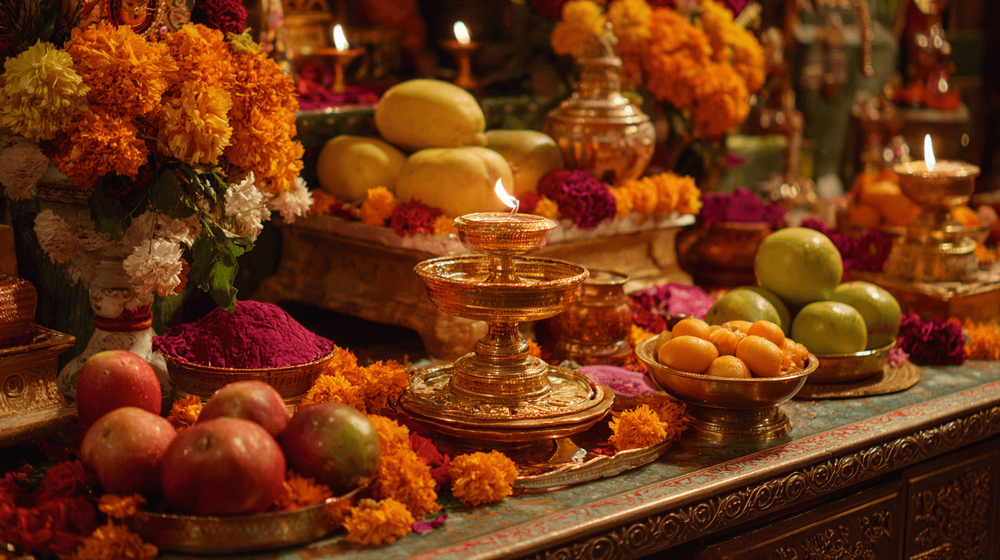
Clean your puja area thoroughly. Spread a red or yellow cloth on the altar platform. Place soil or clay in the center and sow barley or wheat seeds. Fill a copper or silver kalash (pot) with water, adding betel nut, coins, and turmeric. Place five mango leaves around the pot's rim with a coconut atop. Draw a swastika on the kalash using kumkum or sandalwood paste.
Invoke the goddess into the kalash with mantras and deep devotion. This kalash remains in place throughout all nine days—do not move it. Sprinkle water on the barley/wheat seeds daily to encourage sprouting. The sprouts represent life force growing through goddess energy.
Apartment-Friendly Adaptation
For those in smaller living spaces, the ritual scales appropriately. Use a small copper or clay pot. A plate with minimal soil can hold a few barley seeds. The essential elements—water-filled pot, sprouting seeds, and devoted invocation—matter more than scale. Many sincere practitioners in apartments maintain beautiful Navaratri observances with simplified setups that honor the essential symbolism.
How Do You Conclude Navaratri Properly?
Proper conclusion of Navaratri honors the goddess's departure and integrates the accumulated spiritual energy. The transition from intense worship to daily life requires mindful attention.
Day 9 Completion Rituals
Complete all pending mantra counts. Perform the final elaborate puja, offering all accumulated items from the nine days. Thank the goddess explicitly for her presence during this period. Express your intention to maintain connection beyond Navaratri through continued devotion.
Vijayadashami Practices
On Day 10, perform final aarti with full devotion. The goddess visarjan involves respectfully immersing the kalash water in flowing water or pouring it at the base of a sacred tree—never discard it carelessly. Plant the sprouted barley in earth or distribute sprouts to family members. Prasad should be distributed as widely as possible to share the accumulated blessings.
Post-Navaratri Integration
Maintain your vegetarian diet for some additional days as a gentle transition. Continue daily minimum mantra practice (21-108 repetitions) to sustain the connection. Weekly Durga puja on Fridays maintains the relationship with the goddess. Monthly observance during Shukla Navami (ninth day of bright fortnight) keeps the Navaratri energy accessible throughout the year.
Document any dreams, insights, or shifts that occurred during your observance. These often contain guidance for the year ahead. Plan for next year's Navaratri based on this year's experience—note what practices felt most powerful and what you might deepen in future observances.
Explore AstroSight Services
Personalized Report
Janampatri (Birth Chart Report)
Understand how this dosha affects your full chart — get your complete Janampatri
- Personalized analysis based on YOUR exact birth chart
- Expert-prepared by Dr. Meenakshi Sharma
- Delivered as PDF within 24-48 hours
- Unlimited follow-up clarifications
By Dr. Meenakshi Sharma · Delivered in 24-48 hours

Dr. Meenakshi Sharma
PhD in Vedic Astrology, 20+ Years Experience
Dr. Meenakshi Sharma is a distinguished Vedic astrologer with a PhD in Vedic Astrology and over 20 years of professional experience in the ancient science of Jyotisha. Her extensive practice encompasses thousands of chart readings, predictive analyses, and remedial consultations, making her uniquely qualified to bridge traditional Vedic wisdom with contemporary applications. As a contributing writer for AstroSight, Dr. Sharma specializes in natal chart analysis, predictive astrology, and Vedic remedial measures, sharing her deep knowledge through insightful articles that make complex astrological concepts accessible to practitioners at all levels. Her approach combines rigorous academic training with ethical consultation standards, empowering clients through education and practical guidance while maintaining authentic adherence to classical Vedic principles.